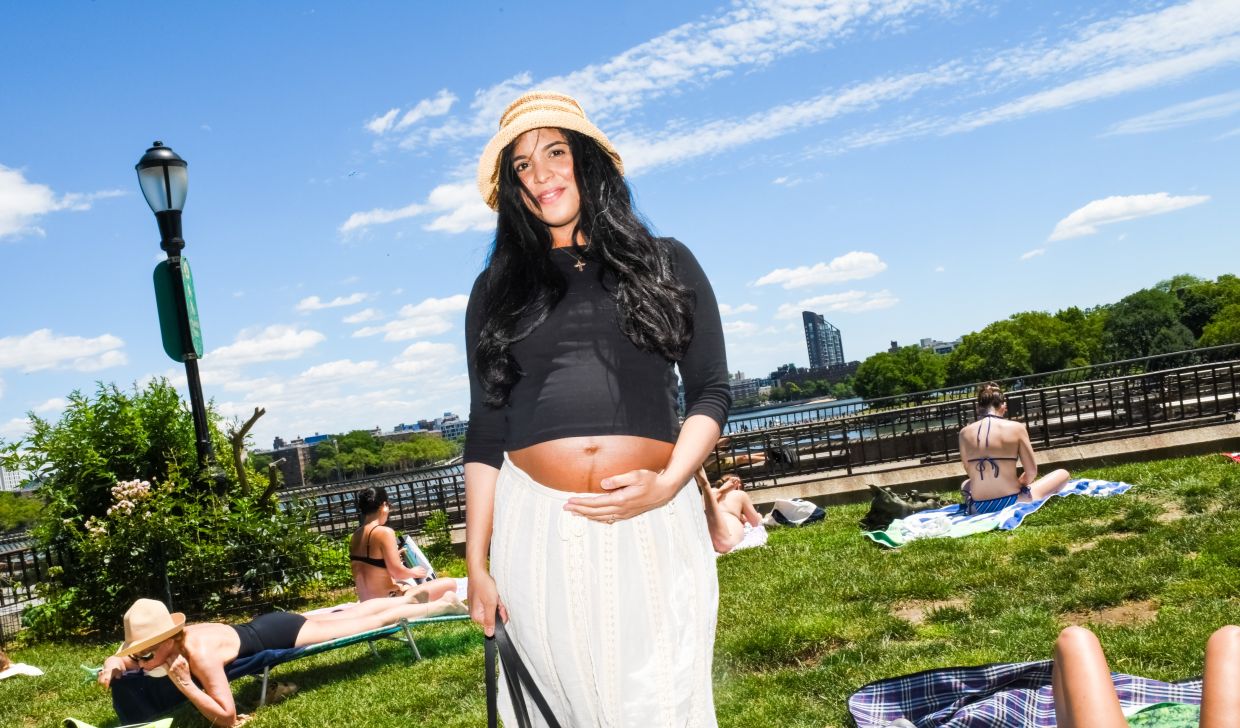
Expectant mothers are rewriting the rules of pregnancy fashion, moving decisively away from decades of concealment towards deliberate celebration of the pregnant form. The shift reflects broader cultural attitudes about body positivity and the normalisation of pregnancy as something to showcase rather than hide—a transformation that gained momentum with high-profile celebrity pregnancies and resonates particularly strongly among millennials and Generation Z women navigating their own maternal journeys.
Sarah Brown, a 36-year-old handbag designer and stylist, exemplifies this new approach. When she was 22 weeks pregnant, she began posting images on social media featuring her exposed belly paired with carefully curated pieces—a grey T-shirt riding up over her rounded midriff, layered beneath a beige blazer, paired with her husband's APC jeans sitting low on her waist. Her well-meaning mother's suggestion to purchase a maternity jumpsuit highlighted the generational divide; Brown had deliberately styled her wardrobe to celebrate her pregnancy rather than conceal it.
The visibility of this trend extends far beyond social media. Pregnant women now appear on concert stages in revealing outfits, on beaches in minimal bikinis with exposed bumps, in pregnancy announcement photographs, and throughout public spaces—all with intentional visibility rather than apologetic coverage. This represents a striking departure from the era of voluminous maternity tents that characterised pregnancy dressing in the 1990s and earlier decades, when expectant mothers were expected to minimise their visible transformation.
Laura McAndrews, an associate professor in Kent State University's fashion school who specialises in Generation Z attitudes toward maternity wear, traces this evolution to evolving cultural messaging. Young women raised on body positivity rhetoric now approach every life stage, including pregnancy, with the mindset of embracing and celebrating their bodies rather than concealing them. This represents a fundamental philosophical shift from older generations who received messages that pregnancy should be quietly endured and hidden from public view.
The celebrity influence on this transformation cannot be overstated. Demi Moore's iconic naked seven-months-pregnant cover from decades past planted seeds in the cultural consciousness, but contemporary examples have become the defining visual language. In 2017, Beyoncé released photographs of her bare belly at her second pregnancy baby shower that captivated millions online. More significantly, in 2022, Rihanna announced her first pregnancy wearing a half-buttoned bright pink Chanel puffer jacket with her bare bump prominently displayed—an image that became the cultural touchstone for a new maternity aesthetic. Anne Hathaway followed suit in June with a white crop top and white skirt pregnancy announcement. Rihanna's approach, in particular, has inspired a wave of celebrities adopting similar fashion-forward, revealing maternity styles.
Michelle Zauner, a singer and author, spoke directly to this influence when she performed at New York's Governors Ball music festival in June whilst visibly pregnant, wearing an unbuttoned cardigan that revealed a lacy black bra and her bare pregnant belly. She acknowledged being inspired directly by Rihanna's approach. For Zauner, the choice also reflected practical aesthetic preferences; she actively rejected traditional maternity clothing that she described as oversized, shapeless garments resembling muumuu sacks. By styling her own wardrobe deliberately around her pregnant form, she maintained her personal aesthetic whilst celebrating her body's transformation.
Historically, maternity clothing served an entirely different cultural function. For centuries, pregnancy itself was treated as somewhat scandalous—visible evidence of sexual activity that polite society preferred to ignore. Isabel Davis, author of studies on historical attitudes toward pregnancy, notes that this cultural discomfort shaped how expectant mothers dressed; concealment was not merely about comfort but about social propriety and respectability. Women were expected to make their pregnancies invisible through clothing.
Ariane Goldman, chief creative officer of Hatch—a maternity clothing company she founded in 2011—began her entrepreneurial journey during an era when discussing pregnancy remained taboo and women routinely hid their conditions from employers out of fear of dismissal. Over the past decade, Goldman has witnessed a dramatic cultural inversion. The conversation has shifted from managing the embarrassment of visible pregnancy to celebrating and owning the power of carrying a child. This represents not just a fashion trend but a fundamental recalibration of how pregnancy sits within broader conversations about women's bodies and agency.
Yet this evolution raises intriguing questions for the maternity wear industry. If younger women feel empowered to bypass dedicated maternity clothing entirely—instead layering partners' oversized pieces, styling their existing wardrobes creatively, and selectively sourcing items like elastic-waist pants and unbuttoned tops—what role does the maternity market play? Goldman acknowledges this tension, discussing it regularly with her team. The answer, she suggests, lies not in aesthetic cover-up but in functional engineering. Even women confidently mixing their own wardrobes eventually need garments designed specifically to adapt to pregnancy's physical demands—clothes that must stretch, support, and evolve as the body transforms across nine months.
Brown herself navigated her entire pregnancy with minimal dedicated maternity purchases: two pairs of Los Angeles Apparel elastic-waist pants and two Paloma Wool tops featuring unbuttoned sides for accessibility and comfort. This pared-down approach allowed her to maintain her personal style whilst meeting functional requirements. The strategy reflects a broader pattern where younger mothers view pregnancy not as requiring a separate, specialised wardrobe but as a temporary phase demanding strategic styling and selective functional pieces integrated into their existing fashion vocabulary.
For Malaysian and Southeast Asian readers, this shift carries particular resonance. In many Asian societies where modesty and traditional presentations of the female body carry deep cultural significance, the Western trend of celebrating visible pregnancy may provoke reflection about evolving attitudes toward women's bodies, motherhood, and public presentation. The maternity fashion revolution occurring in Western markets suggests generational shifts in body positivity and female agency that are increasingly influencing young Asian women through social media and global fashion influences, creating interesting tensions between traditional cultural expectations and contemporary global messaging.
The maternity fashion landscape now accommodates multiple valid approaches simultaneously. Some women choose bold visibility and celebration; others prefer selective coverage; still others navigate hybrid approaches. What unites them is agency—the ability to make conscious choices about how pregnancy is presented to the world, rather than defaulting to inherited assumptions about concealment and invisibility. This autonomy represents the true transformation in maternity wear, with fashion serving as both symbol and practical expression of shifting attitudes about women, bodies, and motherhood.

