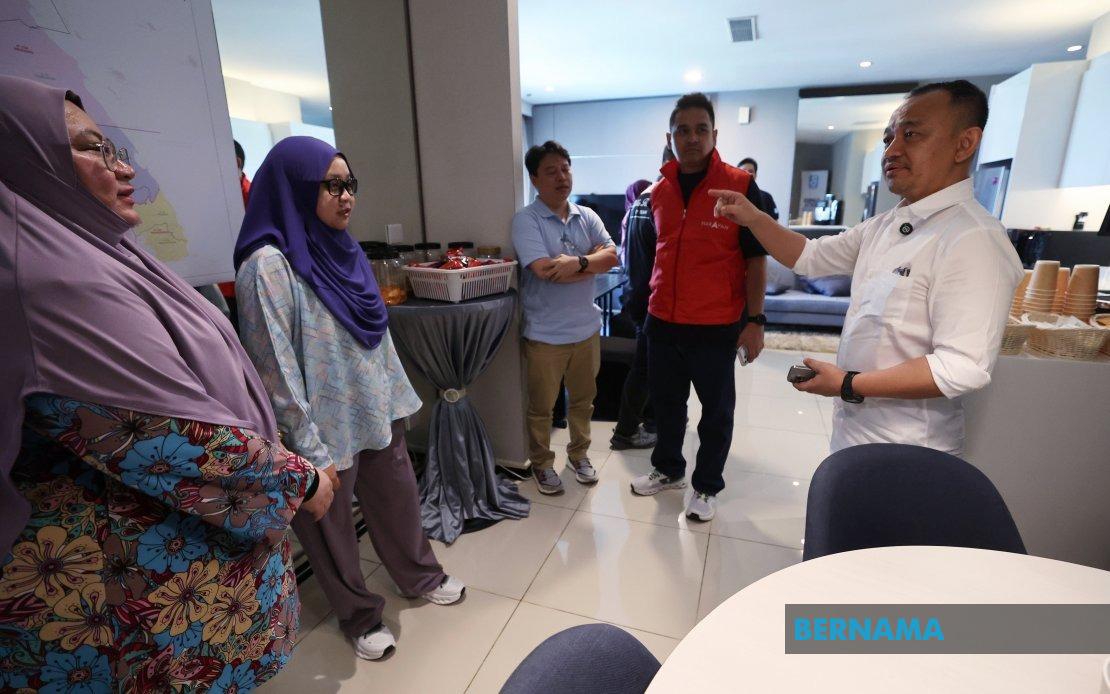
Dr Maszlee Malik, the Pakatan Harapan candidate contesting the Puteri Wangsa seat in the upcoming 16th Johor state election, is positioning technology as central to how he would serve constituents if elected. The former education minister plans to roll out a dedicated mobile application designed to enable residents to report neighbourhood problems and lodge complaints with greater ease and efficiency. Speaking ahead of polling day on July 11, Maszlee outlined his intention to combine digital innovation with grassroots engagement to address the particular challenges posed by his constituency's geography and social composition.
The Puteri Wangsa constituency encompasses considerable geographical spread alongside substantial population diversity, encompassing both prosperous residential zones such as Austin Heights and more rural areas including Felda Ulu Tebrau. This demographic and geographic complexity, Maszlee argues, demands pragmatic solutions that transcend traditional constituent service methods. By introducing a purpose-built application, he believes his office would be better positioned to respond swiftly to resident concerns whilst simultaneously identifying service gaps that affect the constituency's most vulnerable members. The digital approach reflects broader trends across Malaysian politics towards data-driven governance and constituent relationship management, particularly as younger voters increasingly expect online channels for civic participation.
Beyond simply allowing residents to submit complaints, Maszlee envisions the app functioning as a tool for identifying overlooked segments of the population, particularly single mothers and persons with disabilities who may qualify for government assistance programmes but remain unaware of their eligibility or struggle with procedural complexities. This preventative dimension distinguishes his proposal from reactive complaint-handling systems; rather than waiting for residents to approach his office with problems, the platform would enable his team to proactively locate and support those in greatest need. Such an approach acknowledges that bureaucratic barriers and information deficits often prevent vulnerable groups from accessing benefits they are entitled to receive, a structural problem that technological intermediation could partially address.
Maszlee's inspiration for this model draws from international examples, specifically citing New York City Mayor Zohran Mamdani's approach to digital community engagement. Mamdani has gained recognition for deploying dedicated applications alongside social media platforms to facilitate direct feedback from residents, creating multiple channels through which constituents can communicate grievances and suggestions to their elected representatives. Maszlee views this model as transferable to Malaysian contexts, though acknowledging that implementation would require adaptation to local conditions, infrastructure capabilities and constituent expectations. The reference to a US politician's methods also reflects how political innovation increasingly circulates across jurisdictional boundaries, with Malaysian candidates increasingly drawing on international best practices even as they tailor approaches to their specific electoral environments.
The candidate's engagement strategy encompasses layers beyond the proposed app. Maszlee intends to sustain regular interaction with non-governmental organisations active within Puteri Wangsa, residents' associations representing different neighbourhoods, and government agencies responsible for service delivery in the constituency. Town hall meetings remain central to his plans, providing forums where constituents can raise concerns directly whilst enabling him to understand local priorities across different communities. This multi-channel approach reflects recognition that no single platform perfectly reaches all demographic groups; combining digital tools with traditional townhall formats maximises the likelihood of connecting with residents regardless of their technological facility or preference for communication method.
Campaign strategy for reaching voters presents distinct challenges given Puteri Wangsa's composition. Maszlee's team is deploying targeted social media campaigns designed to reach constituencies traditionally difficult to engage through conventional door-to-door canvassing. Young voters and Malaysian citizens employed in Singapore represent particular focus areas; these groups often lack availability for face-to-face campaign interactions during standard campaign periods. By concentrating resources on social media platforms where these voters spend substantial time, the campaign attempts to communicate policy positions and constituent service pledges through channels where target audiences remain reachable. This tactical adjustment acknowledges that campaigning has fundamentally changed, with digital engagement increasingly determining electoral competitiveness, particularly among younger demographics whose political participation increasingly occurs online.
However, Maszlee openly acknowledges obstacles inherent in digital campaigning. Social media algorithms filter content based on user behaviour patterns, potentially creating information silos where voters primarily encounter campaign messages reinforcing their existing preferences. Echo chamber effects limit exposure to differing viewpoints and can inadvertently narrow the breadth of voters a candidate reaches despite heavy social media investment. Rather than dismissing these limitations, his campaign addresses them through deliberate content customisation targeting distinct voter communities with messaging reflecting their particular concerns and priorities. This granular segmentation strategy recognises that Puteri Wangsa is not a monolithic entity but rather a collection of communities with divergent interests, concerns and demographic characteristics requiring differentiated communication approaches.
The campaign's targeting framework reflects sophisticated demographic analysis. Generation Z voters, Malaysian professionals working in Singapore particularly from the Chinese community, residents in less densely urbanised parts of the constituency, and working professionals represent distinct constituencies with different socio-economic circumstances, cultural backgrounds and policy priorities. Rather than deploying identical messaging to all voters, Maszlee's team tailors communication to reflect these differences, ensuring that particular community concerns receive appropriate emphasis. A message resonating with young urban professionals may not effectively persuade rural residents; content addressing concerns of expatriate workers may differ substantially from messaging targeting those firmly rooted in the constituency. This approach represents a significant evolution from mass-broadcast campaign models, requiring substantially greater analytical sophistication and resource investment but potentially delivering superior electoral efficiency.
The Puteri Wangsa contest features a crowded field, with five candidates competing for the seat. Alongside Maszlee, the race includes Rashifa Aljunied representing the Malaysian United Democratic Alliance, Teow Chia Ling fielding Barisan Nasional's candidacy, Nicholas Paul Vincent standing for Parti Bersama Malaysia, and independent candidate Wang Wee Siong. This five-way contest means winning votes depends not simply on out-campaigning opponents but on constructing a plurality coalition across diverse voter segments. Maszlee's emphasis on digital engagement tools and constituent service innovation potentially differentiates his campaign from competitors, particularly if he succeeds in channelling younger voters and technology-oriented constituents towards his candidacy. The breadth of the field also suggests that ground operations and identifying untapped voter blocs could prove determinative; his technology-focused constituent service proposals position him to attract voters prioritising efficient governance and digital accessibility.

