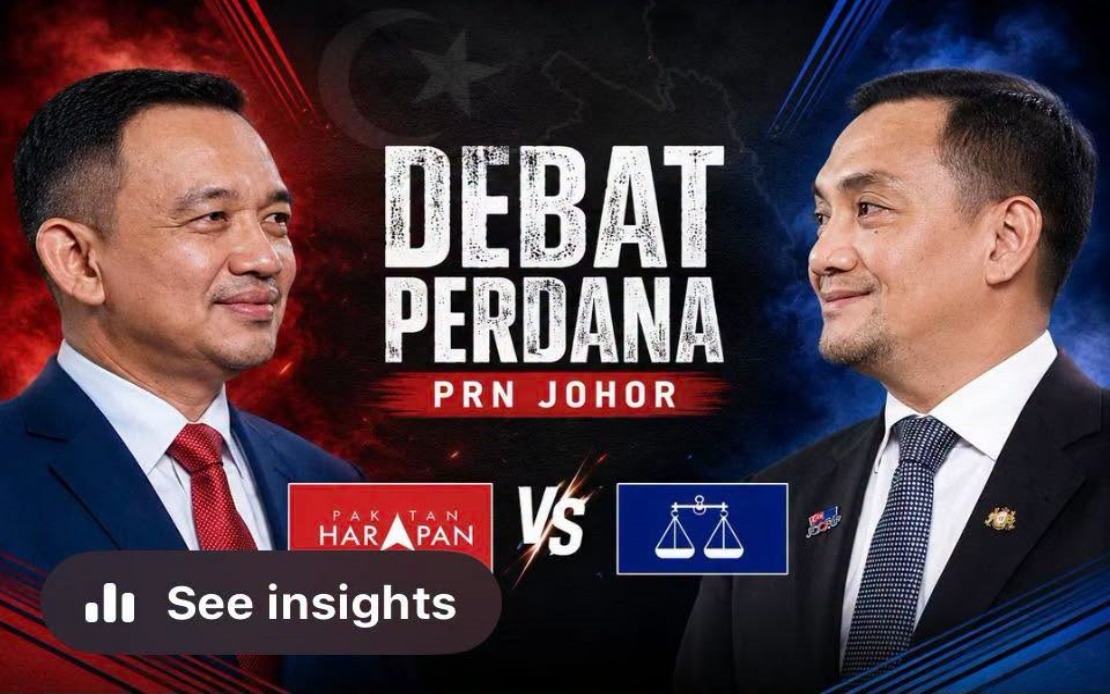
Maszlee Malik, the former Education Minister and Pakatan Harapan candidate contesting the Puteri Wangsa seat, has publicly confirmed his willingness to participate in a face-to-face debate with Johor Menteri Besar Onn Hafiz Ghazi in the lead-up to the state election. The announcement marks a significant moment in the campaign, as high-level electoral debates remain relatively uncommon in Malaysian politics, particularly at the state level. Maszlee's acceptance signals a shift toward more direct political engagement between senior figures, potentially setting a precedent for how future campaigns might be conducted.
The debate proposal originated from social media influencer Muhamad Harris Nasril and subsequently gained traction through the Redaksi.com Facebook page after Pakatan Harapan chairman Anwar Ibrahim announced all 56 candidates fielded by the coalition for the Johor election in Muar. The initiative reflects growing grassroots demand for substantive political discourse, particularly among younger and digitally-engaged voters who increasingly expect candidates to defend their positions publicly. This bottom-up origination of the debate concept demonstrates how social media platforms have become legitimate drivers of electoral dynamics, capable of compelling political figures to respond directly to citizen demands for transparency and accountability.
In his Facebook statement accepting the challenge, Maszlee emphasized that his participation stems from a commitment to democratic principles and his conviction that structured debates elevate the standard of political discourse within society. He framed the debate not merely as a personal contest but as an opportunity to educate voters and normalize more mature forms of political engagement. This framing is significant, as it suggests Maszlee views the forum as serving a broader civic purpose beyond individual electoral advantage. By explicitly invoking democratic values and principles, he has positioned acceptance as a matter of principle rather than political calculation, which may resonate particularly with voters fatigued by conventional campaign rhetoric.
The timing of this debate challenge is strategically important given the compressed election schedule. With nomination day fixed for June 24, early voting scheduled for July 7, and polling day set for July 11, the campaign period is extraordinarily brief, lasting just over two weeks. This compressed timeline means debates must occur almost immediately to have meaningful impact on voter decision-making. For a debate to influence electoral outcomes under such constraints, it must capture sustained media attention and generate discussion that extends far beyond the initial broadcast or live event. The fact that various parties have already contacted Maszlee seeking confirmation of his participation suggests the event has generated sufficient public interest to warrant that extensive coverage.
Maszlee's candidacy for Puteri Wangsa represents PH's attempt to field a prominent, recognizable figure in a competitive seat. His profile as a former minister and prominent Islamist intellectual distinguishes him from typical candidates and potentially attracts voters seeking both competence and ideological grounding. The debate provides him with an ideal platform to rehabilitate his public image following his resignation as Education Minister in 2019, an event that marked a significant turning point in his political career. Public debate performance often becomes the defining narrative of a politician's campaign, and success could substantially enhance his credibility and viability in the Johor context.
Packatan Harapan's overall strategy for the Johor election reflects a calculated approach to coalition management and vote distribution. The coalition is fielding 20 candidates from PKR, 19 from Amanah, and 17 from DAP, a distribution that suggests careful negotiation among the three partners. This balance attempts to maintain coalition cohesion while maximizing seat allocation across the three parties. The inclusion of prominent figures like Maszlee in the candidate slate indicates PH's intention to contest aggressively and project an image of substance and seriousness. The debate challenge adds another dimension to this strategy, allowing the coalition to position itself as more willing to engage directly with the governing Barisan Nasional than might have been evident in previous electoral contests.
Onn Hafiz Ghazi's role as Menteri Besar invests him with significant incumbent advantages, including media access, government machinery, and the ability to claim credit for state-level achievements. However, incumbent status in Malaysian state elections has become increasingly fragile in recent years, as voters have demonstrated willingness to punish parties perceived as complacent or disconnected from grassroots concerns. A debate with Maszlee forces Onn Hafiz to engage substantively with opposition arguments rather than relying solely on government platforms and controlled messaging. The challenge, therefore, carries implicit risk for the incumbent, as debate performance becomes a metric by which voters assess his fitness for continued leadership.
The broader significance of this debate for Malaysian electoral politics extends beyond the immediate Johor contest. If successfully executed and widely covered, it could establish a template for how state and federal elections might incorporate more direct public accountability mechanisms. Malaysian politics has traditionally relied heavily on hierarchical party structures and controlled campaign narratives, with direct confrontation between rival candidates remaining comparatively rare. The normalization of debate formats would represent a structural shift toward more adversarial, transparent political competition. This shift would particularly benefit opposition parties, which typically lack the institutional resources and media access available to government-aligned parties.
The generational and demographic dimensions of this debate merit consideration as well. Younger voters, particularly those influenced by social media discourse, increasingly expect political figures to demonstrate communication skills, intellectual flexibility, and ability to respond to challenging questions in real time. Debates provide precisely this opportunity, allowing voters to assess not merely policy positions but also personality, temperament, and capacity for complex reasoning. For Maszlee particularly, debate performance offers a chance to demonstrate that his intellectual credentials as a respected scholar are matched by political acumen and campaign prowess. Conversely, any perceived stumbles or evasiveness could reinforce existing perceptions among skeptics.
The logistics and format of the debate remain to be finalized, but these practical considerations will substantially influence the event's ultimate impact. Questions of moderation, time allocation, question selection, and broadcast platforms will determine whether the debate genuinely educates voters or devolves into performative point-scoring. A well-structured debate moderated by a credible, neutral figure and addressing substantive policy questions concerning Johor's development, education, healthcare, and economic opportunities would serve genuine civic purposes. Conversely, a poorly organized affair dominated by personal attacks and uncontrolled rhetoric could further alienate voters from electoral politics. The maturity with which both candidates and organizers approach these logistical decisions will largely determine whether this debate elevates Malaysian political culture or simply provides theater.
The Johor state election itself carries significance beyond state-level politics, as it will serve as a bellwether for broader shifts in Malaysian electoral sentiment. Johor, as the largest state by Muslim-majority population after Selangor, occupies strategically important terrain in the broader contest for national political supremacy between Pakatan Harapan and Barisan Nasional. Results in Johor will shape perceptions of momentum heading toward the next federal election, currently scheduled for 2025. A strong Pakatan Harapan performance would suggest that the coalition has recovered from recent electoral setbacks and retains viability as a national governing option. Conversely, continued Barisan Nasional dominance would reinforce the impression that the federal government enjoys resilient support despite governance challenges.
Maszlee's acceptance of the debate challenge represents a calculated political move that positions him as confident in his ability to articulate PH's vision while simultaneously satisfying grassroots demand for more substantive electoral engagement. The debate will likely become a pivotal moment in the Johor campaign, potentially driving voter interest and media coverage throughout the brief campaign period. For Malaysian politics more broadly, the event signals a possible evolution toward more transparent, adversarial forms of electoral competition that rely less on institutional power asymmetries and more on the ability of political figures to persuade voters through direct engagement. Whether this represents a durable shift in political culture or a temporary phenomenon will become clearer as subsequent elections incorporate or abandon similar formats.