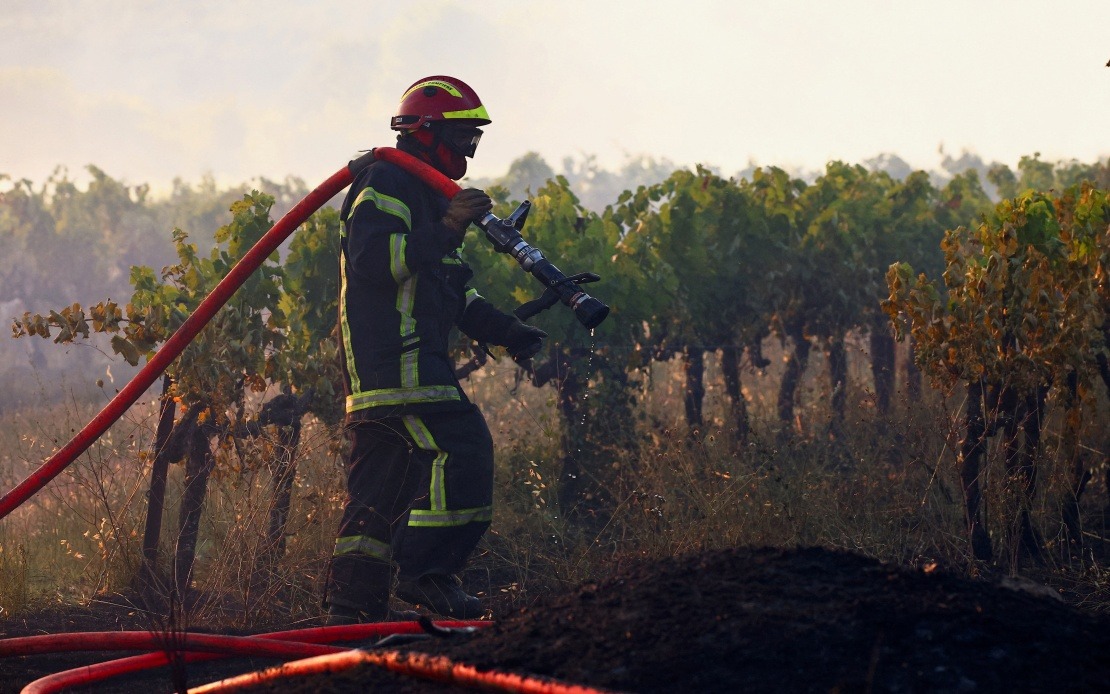
A sprawling wildfire tearing through the Var department in southeastern France consumed 1,700 hectares of land as of late Wednesday, marking the latest in a series of catastrophic blazes sweeping across the country during an exceptional heat wave. The prefecture reported that the uncontrolled fire had forced the evacuation of approximately 400 residents from multiple communes across the affected region, while simultaneously cutting electrical supplies to 2,300 households, with Cotignac experiencing the heaviest disruption to its power infrastructure.
The geographic scale of the evacuation underscores the fire's rapid progression through populated areas. Communities including Ponteves, Cotignac, Sillans-la-Cascade, Correns, and Montfort-sur-Argens were all affected by the blaze, demonstrating how wildfire risk in densely inhabited regions forces difficult decisions between protecting property and preserving human life. The coordinated withdrawal of residents from these interconnected communes required significant logistical coordination among local authorities, who had to balance the need for swift evacuation with maintaining order in what would inevitably be chaotic circumstances.
The response to the crisis mobilised substantial firefighting resources across departmental boundaries, reflecting the severity authorities judged the situation to warrant. A combined force of 900 firefighters drawn from the Var and neighbouring departments arrived at the scene alongside 350 vehicles equipped for aerial and ground-based suppression efforts. The deployment also included 60 gendarmes tasked with managing evacuations and securing perimeters around the fire zone, illustrating how modern wildfire management demands coordination between multiple emergency services operating under unified command structures.
France has found itself battling an unusually intense fire season this year, a phenomenon directly linked to the extraordinary atmospheric conditions prevailing across much of Western Europe. President Emmanuel Macron characterised the current wildfire outbreak as unprecedented in the post-World War II era, a stark observation that places contemporary environmental challenges in historical perspective. The president's remarks suggest that whatever fire management strategies proved adequate in previous decades have been overwhelmed by the scale and intensity of current conditions, raising uncomfortable questions about infrastructure resilience and climate adaptation.
The meteorological context behind these fires reveals the extent of the climatic pressures now bearing down on the region. At the end of June, France's weather service activated its maximum alert level across 72 of the country's 96 departments—itself a record-breaking milestone—as temperatures approached and in some locations exceeded 40°C, the psychological and physiological threshold beyond which heat-related impacts accelerate exponentially. The breadth of this alert coverage indicates that the heat wave was not a localised phenomenon but rather a continent-spanning atmospheric pattern of a magnitude rarely witnessed during the modern meteorological record.
For Southeast Asian observers and policymakers, the French wildfire situation offers instructive parallels and cautionary insights. While Malaysia and its regional neighbours experience fire events driven by peatland degradation, agricultural practices, and seasonal drought patterns, the French experience demonstrates how even temperate, developed nations with sophisticated infrastructure face mounting challenges in containing fire spread when climatic extremes intensify. The technological and personnel resources deployed in Var—hundreds of firefighters, hundreds of vehicles, military-style coordination—represent a level of response capacity that underscores just how resource-intensive fire suppression becomes under extreme conditions.
The power cuts affecting 2,300 households carry implications that extend beyond temporary inconvenience. In contemporary societies where grid disruption cascades through communications, healthcare, and emergency response systems, electrical disconnection during an active crisis multiplies vulnerabilities. Elderly residents, those dependent on electrical medical equipment, and families with young children face heightened risks when cooling and communication systems fail simultaneously during an extreme heat event. The concentration of outages in Cotignac suggests that infrastructure hardening and underground cable systems, where feasible, merit renewed investment as climate extremes become more frequent.
The sequential nature of these disasters—record heat alerts, followed by unprecedented wildfires, followed by cascading infrastructure disruption—illustrates how climate change operates not as discrete events but as interconnected systemic failures. Each component of France's natural and built environment, when stressed beyond historical parameters, creates secondary and tertiary problems that compound initial damage. Emergency services struggle not merely with fire suppression but with managing heat illness among rescue workers, transporting evacuees through dangerous atmospheric conditions, and maintaining operational capacity across multiple simultaneous crises.
The evacuation of four to five hundred people from rural and semi-rural communes, while necessary and appropriate, raises questions about long-term habitability in regions increasingly exposed to fire risk. Insurance costs escalate, reconstruction becomes economically marginal, and demographic renewal becomes challenging when young families assess risk-benefit calculations about settling in chronically fire-threatened areas. Over decades, such pressures generate landscape-level changes in settlement patterns and land use, potentially rewilding some areas while concentrating populations in zones deemed safer—a slow-motion restructuring of human geography driven by environmental pressures.
The response deployed in Var demonstrates current-generation wildfire management at scale, yet even this substantial commitment proved insufficient to prevent major damage. Nine hundred firefighters represent a massive commitment of trained personnel, yet across a 1,700-hectare front of active flame, such forces remain stretched and reactive rather than fully commanding events. This gap between available resources and actual needs suggests that future fire seasons, should climate trends persist in the direction recent years indicate, will test emergency management systems in ways for which conventional response models may prove inadequate.
France's struggles carry particular weight within European energy and economic contexts. During summer months when cooling demands peak and agricultural productivity matters most, large-scale power disruptions carry consequences that ripple through connected economies. Supply chains dependent on just-in-time logistics struggle when regional infrastructure fails. Industrial operations halt. Hospital systems shift to backup generators. The Var fire, substantial as it is in local terms, also represents a data point in a larger pattern of climate-driven infrastructure stress that will increasingly demand adaptation investment and resilience planning at every level of governance and private sector operation.

