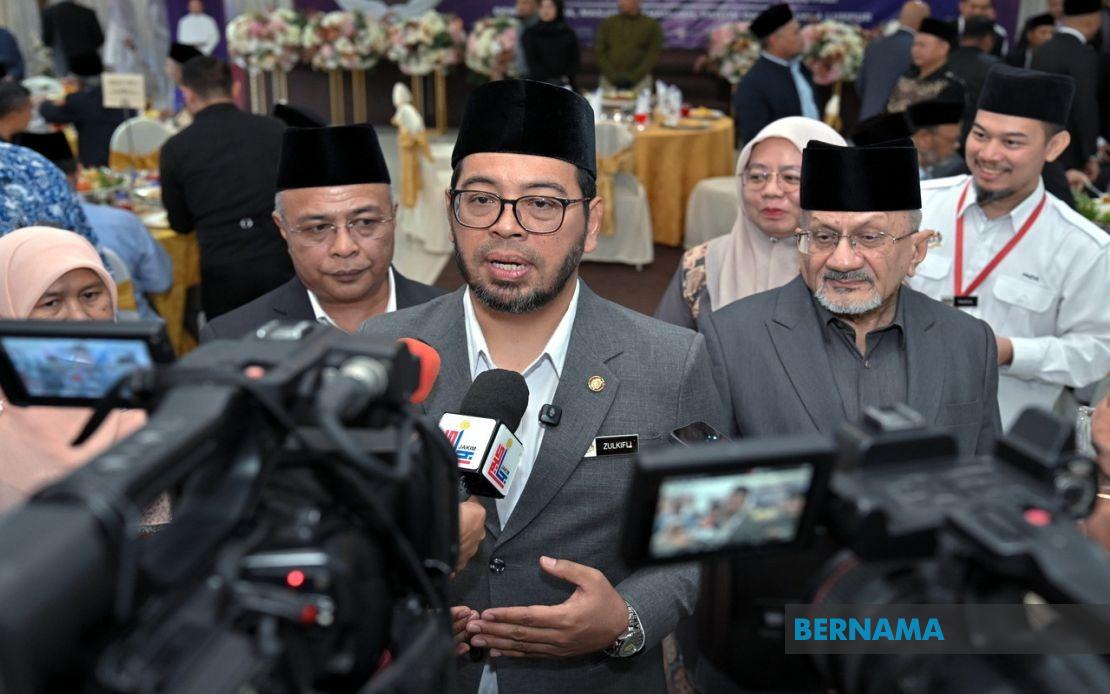
Malaysia's Religious Affairs Minister Dr Zulkifli Hasan has confirmed that the Masjid Warisan project, positioned in front of the Tun Razak Exchange (TRX) tower, will advance according to its established timeline. Speaking to the media in Kuala Lumpur on June 23, the Minister in the Prime Minister's Department emphasised that this long-standing initiative represents a deliberate commitment to strengthening mosques as vital institutions promoting social cohesion across the nation.
The minister's announcement comes amid public discourse surrounding the project's relevance and appropriateness. Various groups have previously raised objections, with some commentators suggesting that the mosque's construction might potentially generate discord among residents or provoke wider community apprehension. Rather than retreating from these criticisms, Zulkifli doubled down on the government's resolve, framing the development as an integral part of long-term urban planning that has been under consideration for an extended period.
The rationale underpinning the project extends beyond simple infrastructure addition. Zulkifli articulated a philosophical position that positions mosques as generators of tranquillity within metropolitan environments. He drew parallels with major international cities where mosques function as established community landmarks, their calls to prayer serving as anchors for spiritual and social life. This framing attempts to situate the Masjid Warisan initiative within a broader global context rather than treating it as anomalous or controversial.
For residents and stakeholders with lingering doubts about the undertaking, Zulkifli directed inquiries toward the Federal Territories Islamic Religious Council (MAIWP). By channelling concerns through formal institutional channels, the minister has positioned the council as the appropriate forum for dialogue, transparency, and resolution of specific queries. This administrative approach signals that the government remains open to addressing legitimate questions whilst maintaining its foundational commitment to the project's realisation.
The Masjid Warisan initiative reflects broader efforts to enhance religious infrastructure within the federal territories. On the same occasion, Zulkifli presented appointment letters to members of the Federal Territories Mosque and Friday prayer surau committee for the 2026-2029 term during a ceremony at Masjid Al-Khadijah in Kampung Pantai Dalam. This administrative refresh demonstrates systematic attention to governance structures overseeing religious institutions across Kuala Lumpur.
The appointment process itself underscores institutional rigour. The selection mechanism involved substantial participation, with 3,010 nominations received across 91 mosques and 124 Friday prayer surau throughout the federal territories. Rather than proceeding with all candidates, authorities implemented comprehensive integrity vetting, partnering with the Royal Malaysia Police, the Malaysian Anti-Corruption Commission, and the Insolvency Department to evaluate nominees. Ultimately, 2,914 candidates advanced following this multi-agency screening process.
This stringent selection methodology reflects evolving standards for religious institution governance in Malaysia. The involvement of anti-corruption and police authorities indicates recognition that mosque committees wield significant community influence and financial responsibility, warranting thorough character assessment. The vetting process protects institutional credibility whilst ensuring that appointed representatives maintain the highest ethical standards.
The Masjid Warisan project's positioning near the TRX tower carries particular symbolic weight within Kuala Lumpur's urban transformation narrative. The TRX represents Malaysia's ambitions as a global financial centre, whilst the adjacent mosque grounds religious identity and spiritual practice within this modernised landscape. The juxtaposition embodies a deliberate Malaysian approach to development: integrating religious institutions alongside commercial and residential progress rather than treating these spheres as mutually exclusive.
For Southeast Asian observers, the Malaysian government's determination to proceed despite controversy illustrates how religious infrastructure development increasingly intersects with urban planning and commercial interests across the region. Many major Southeast Asian cities face similar tensions between rapid modernisation and preservation of traditional religious spaces. Malaysia's approach—whereby authorities pursue development whilst creating institutional channels for stakeholder concerns—offers one model for managing these competing pressures.
The minister's remarks also implicitly address concerns that religious development might be perceived as accommodating particular communities at others' expense. By emphasising mosques' universal role as centres of harmony and invoking international precedents, Zulkifli attempted to reframe the project as socially unifying rather than divisive. This rhetorical strategy acknowledges underlying sensitivities whilst resisting pressure to abandon the initiative.
Looking forward, the Masjid Warisan project will likely serve as a test case for religious infrastructure development within Malaysia's premier commercial districts. Its successful completion could normalise mosque construction in high-value urban precincts, whilst controversy or complications might discourage future similar ventures. The project thus carries implications extending beyond its immediate context, potentially influencing how subsequent religious institutions are proposed, approved, and implemented in Malaysian cities.