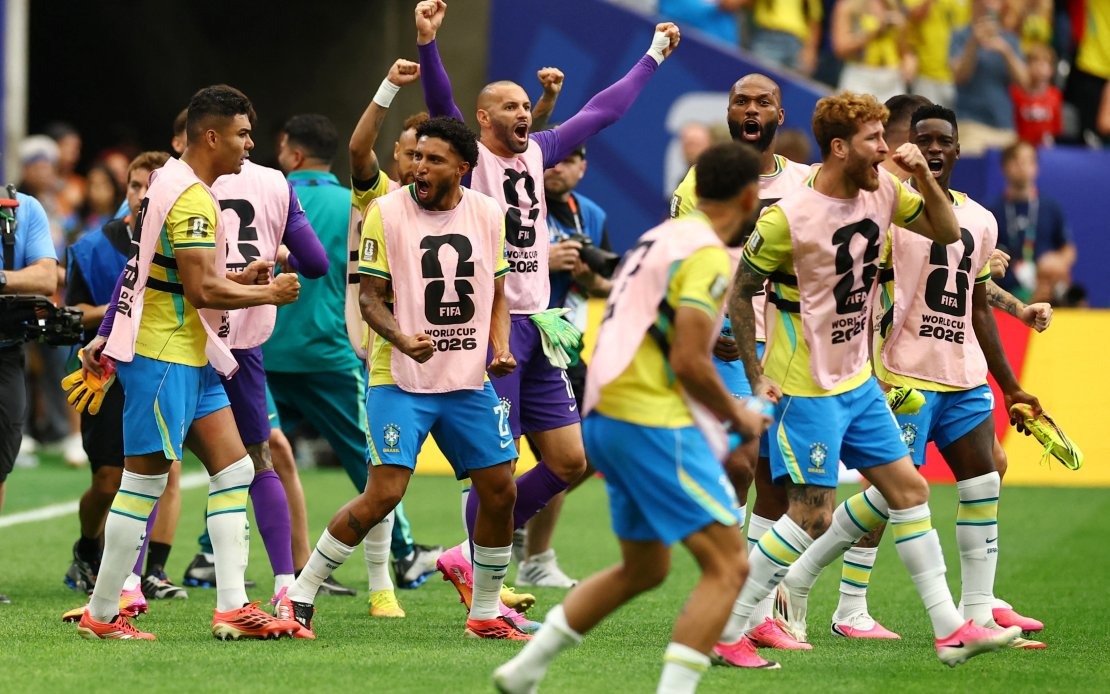
Gabriel Martinelli's clinical finish deep in stoppage time delivered Brazil a 2-1 triumph over Japan in their World Cup round-of-32 encounter on Monday in Houston, securing passage to the knockout stage and a potential last-16 meeting with either Côte d'Ivoire or Norway. The dramatic conclusion capped an intense contest between two teams that had navigated their respective group phases without defeat, with the five-time world champions ultimately proving too resilient for their determined Asian opponents.
Brazil's path to the final stages was commanding, topping Group C with seven points from their opening matches. Japan, meanwhile, claimed second place in Group F courtesy of a single victory alongside two draws, demonstrating the competitive balance that has emerged in recent international football tournaments. The statistical contrast between the teams' traditional performances and their group-phase displays offered intrigue heading into their knockout encounter, though Brazil's experience in such high-stakes situations figured prominently in the eventual outcome.
Historically, the South American powerhouse held significant advantage in direct competition. Their solitary prior World Cup meeting ended in a comfortable 4-1 victory for the Seleção, a result that appeared to suggest a predictable hierarchy. However, the most recent clash between the nations just months earlier had seen Japan overturn a deficit to secure a stunning 3-2 away triumph, suggesting the gap between the sides had narrowed considerably and that Monday's fixture would prove genuinely competitive.
Brazil controlled proceedings during the opening exchanges, dictating possession and probing for openings. Matheus Cunha created the first genuine opportunity in the 14th minute when his effort forced Japanese goalkeeper Zion Suzuki into a demanding one-handed save, indicating the clinical threat the South Americans could pose when finding spaces in advanced areas. Yet despite this dominance, Brazil's finishing remained imprecise, allowing Japan to remain within striking distance.
The breakthrough came unexpectedly in the 29th minute when Japan capitalised on a Brazilian lapse. Danilo's careless pass fell straight to Kaishu Sano, who seized the opportunity with decisive action. Sano surged forward, slipped past Casemiro with composure, and unleashed a powerful strike that sailed beyond goalkeeper Alisson's reach, handing the underdogs a shock lead that belied Brazil's possession advantage.
The setback stirred Brazil into more purposeful action as the half progressed, though genuine quality chances remained limited. Suzuki proved largely untroubled until the interval, suggesting Japan's defensive organisation was proving more resilient than Brazil's attacking craft could penetrate. The psychological dimension of taking a lead against Brazil brought tangible benefits for the Japanese, who resisted the anticipated onslaught with disciplined positioning.
Brazil emerged with renewed intensity after the restart, immediately applying pressure through sustained attacking play. Bruno Guimarães saw a strike blocked, while Casemiro's header from a promising position was denied by alert defending. The pattern suggested Brazil would eventually breakthrough through sheer weight of numbers and territorial dominance. That breakthrough arrived in the 56th minute when Casemiro, atoning for his earlier defensive vulnerability, connected with a Bruno Guimarães cross at the back post to restore parity and shift momentum decisively.
Momentarily after equalising, Vinícius Júnior delivered a display of individual brilliance. The winger executed a dazzling mazy run that showcased his technical qualities and left Japanese defenders stranded, but his subsequent strike cannoned against the post rather than nestling in the net, a narrow miss that proved costly. Brazil maintained relentless pressure throughout the second half, pinning Japan back and creating numerous opportunities, yet the conversion rate remained frustratingly inconsistent.
The decisive moment arrived when the referee's watch had ticked well into stoppage time. Bruno Guimarães executed a precisely weighted pass that found Gabriel Martinelli unmarked inside the penalty area, and the forward remained composed to beat Suzuki in a one-on-one situation. The late goal delivered a crushing blow to Japan's hopes of forcing extra time, deflating the spirit of a team that had battled admirably against a superior opponent for the majority of the contest.
Japan mounted a final desperate push for an equaliser, but Brazil's defensive resolve held firm. The South American side completed their advance to the knockout rounds, where they would face their next opponent depending on the outcome of the parallel group stages still unfolding. For Japan, despite the disappointing finish, the tournament had underscored significant progress in their development as a competitive force on the world stage, having secured passage beyond the group phase and mounted a genuine challenge against one of football's established powers.
The result highlighted Brazil's experience and resilience in knockout football, qualities that have underpinned their historical dominance. Yet it also demonstrated Japan's improved standing in international competition, with their first-half performance and sustained resistance offering optimism for future tournaments. The dramatic manner of Brazil's victory, snatching success in the final moments, captured the unpredictability and intensity that defines World Cup football at its highest level, where narrow margins often determine which teams advance and which face elimination.

