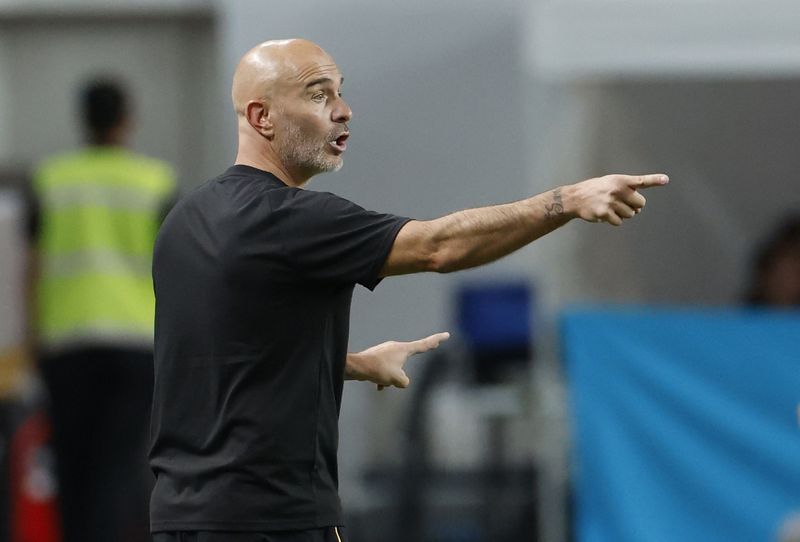
Manchester City embarks on a new era this season with the absence of Pep Guardiola from the dugout for the first time in a decade, marking a pivotal transition for the English club. Guardiola's tenure has left an indelible imprint on City's trajectory, transforming them into the pre-eminent force in English football through a trophy haul that includes six Premier League titles and the 2023 Champions League crown. The challenge of replacing such a transformative figure falls to Enzo Maresca, who must navigate the delicate balance between preserving the winning culture whilst establishing himself as a leader in his own right.
Maresca's appointment represents a calculated choice by City's hierarchy, rooted in institutional continuity rather than revolutionary change. The 46-year-old Italian is intimately familiar with the club's inner workings, having served as part of Guardiola's coaching infrastructure during City's treble-winning season, when they captured the Premier League title, FA Cup and League Cup simultaneously. This insider knowledge provides Maresca with considerable advantage as he inherits one of Europe's most expensively assembled squads. His prior managerial credentials—restoring Leicester City to Premier League status and securing silverware during his tenure at Chelsea—demonstrate he possesses the tactical acumen and trophy-winning pedigree expected at the Etihad.
The foundation upon which Maresca must build remains exceptionally strong. Erling Haaland, the Norwegian striker who has led the Premier League scoring charts in three of the past four seasons, provides a proven goal-scoring mechanism that few clubs can replicate. Complementing Haaland is Rodri, the Spanish midfielder whose excellence in ball distribution, positional awareness and defensive reading proved instrumental in propelling Spain to the 2024 UEFA European Championship title, an achievement for which he earned the tournament's Golden Ball. These two players represent the spine around which any title-challenging team must be constructed, and their presence significantly reduces the rebuilding task Maresca faces.
City's summer transfer activity has been selective but meaningful. The acquisition of England midfielder Elliot Anderson from Nottingham Forest for approximately £116 million introduces additional vitality and ball-winning capacity to the midfield engine room, addressing a depth concern that could prove consequential during the rigorous demands of a multi-competition campaign. The emergence of young talents such as Rayan Cherki and Nico O'Reilly provides fresh impetus within the squad, suggesting an internal regeneration alongside the external recruitment strategy. These additions maintain the squad's competitive profile while signalling a managed evolution rather than wholesale reconstruction.
Yet the departure of established figures such as Bernardo Silva and John Stones represents a notable loss of experience and dressing-room leadership. These players were not merely contributors to City's successes but cultural custodians who embodied the standards and professionalism Guardiola embedded throughout the organisation. Their exits create a void in institutional memory that cannot easily be filled through tactical instruction alone. Maresca must therefore assume greater responsibility for transmitting the values and work ethic that have defined City's era of dominance, a task complicated by the natural personnel turnover any club experiences during transitions.
The significance of Guardiola's departure extends beyond tactical considerations; it represents the conclusion of an era that fundamentally altered English football's competitive landscape. For much of the previous decade, City's opponents essentially competed for second place, a reality that bred both resentment and resignation across the Premier League. Maresca's inaugural campaign will reveal whether City have institutionalised their excellence or whether much of their dominance was attributable to Guardiola's individual genius. The outcome will carry ramifications for English football's competitive health, as other clubs will calibrate their ambitions based on whether they perceive an opening in City's apparent supremacy.
Last season's outcome—capturing the domestic cup double whilst finishing second to Arsenal in the Premier League—provides telling context for evaluating Maresca's challenge. At most institutions, such an achievement would merit celebration; at Manchester City under Guardiola's stewardship, it represented underperformance. This baseline expectation, whilst demanding, reflects the standards Guardiola established and the mentality he cultivated. Maresca cannot afford an adjustment period that translates to championship regression; City's ownership and supporter base anticipate immediate title contention. The pressure to perform is therefore acute, and any stumbling during the opening weeks will generate uncomfortable scrutiny.
Maresca's familiarity with City's philosophical approach—positional play, relentless ball retention, and tactical adaptability—should theoretically facilitate a seamless transition. He understands the technical language, the training methodologies, and the cultural expectations embedded within the organisation. However, significant distinctions exist between functioning as a trusted lieutenant within an established hierarchy and bearing ultimate responsibility as chief architect. Players accustomed to receiving direction from Guardiola must now absorb Maresca's interpretations and emphases. Whether they accept these adjustments with the same deference they afforded his predecessor remains uncertain, particularly if results momentarily dip during the inevitable adaptation phase.
The fixture list provides limited respite; City's season commences with a home encounter against Bournemouth on August 23, initiating what promises to be an unforgiving examination of the squad's readiness and Maresca's preparedness. Many squad members will return late from summer international tournaments, their conditioning potentially compromised and their focus potentially fragmented. Maresca must rapidly synthesise these returning players into a cohesive unit operating according to his tactical specifications whilst maintaining the championship mentality City's recent history demands. The convergence of these pressures—transition management, squad integration, expectation management—creates a demanding opening sequence that will substantially shape perceptions of his stewardship.
Despite these challenges, Manchester City's fundamental qualities ensure they remain legitimate contenders across all competitions they enter. The assembly of world-class talent, combined with the financial resources to address any identified deficiencies, provides genuine competitive advantages. Rodri's excellence, Haaland's potency, and the supporting cast's quality create a ceiling of achievement that remains remarkably high. If Maresca successfully synthesises continuity—preserving the tactical philosophy and cultural standards Guardiola established—with sufficient innovation to invigorate a squad that has operated under one dominant managerial voice for an extended period, Manchester City could swiftly reassert their dominance over English football. The coming months will determine whether Maresca possesses the leadership capacity and tactical creativity to navigate this generational transition successfully.

