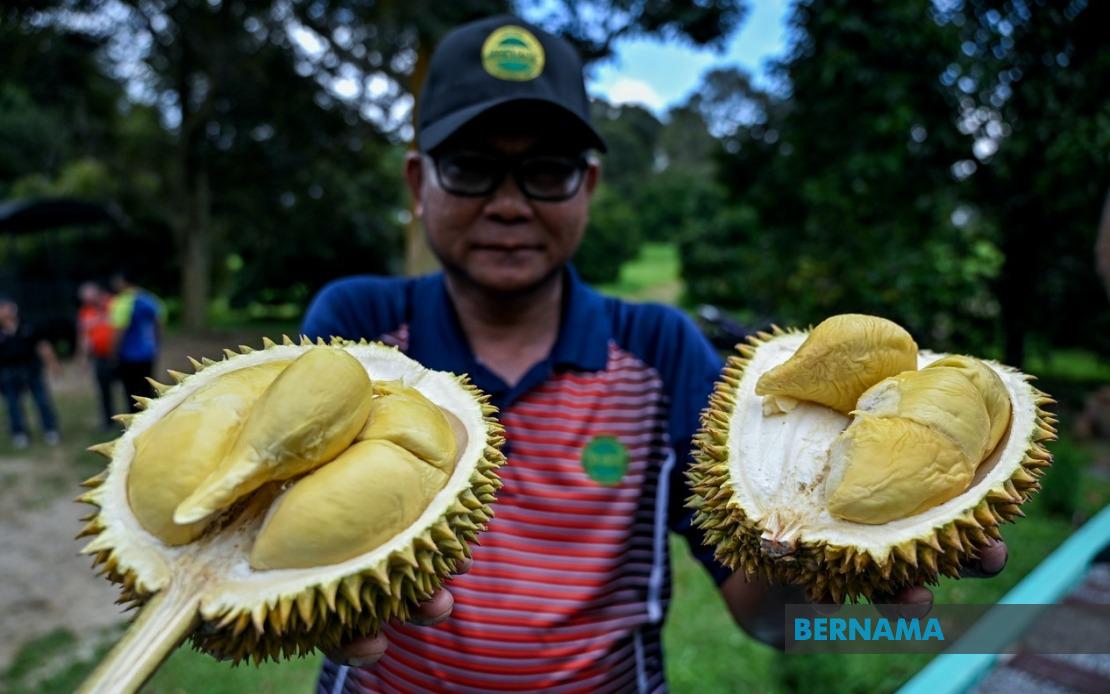
Malaysia's fruit agriculture sector is receiving a significant boost as the Malaysian Agricultural Research and Development Institute (MARDI) continues its ambitious expansion of premium hybrid durian cultivation. According to Datuk Dr Mohamad Zabawi Abdul Ghani, the institution's director-general, the MS88 variety has now been planted across roughly 25,000 trees throughout the country, representing a major agricultural investment covering approximately 242 hectares of cultivated land. The distribution pattern reveals a strategic concentration of plantings in Selangor and the east coast states, positioning these regions as emerging hubs for commercial durian production.
The MS88 represents one of three successful hybrid varieties that MARDI has developed since the early 2000s, complemented by the MDUR78 and MDUR79 strains. These cultivars have proven popular with domestic consumers and international durian connoisseurs, establishing MARDI as a significant player in agricultural innovation within Southeast Asia. The systematic development of these varieties reflects Malaysia's broader agricultural modernization strategy, moving beyond traditional farming methods towards scientifically enhanced cultivation techniques that promise improved yields, consistency, and quality.
The timing and scale of this expansion matter considerably for Malaysia's agricultural economy. Durian exports have become increasingly valuable as global demand for premium tropical fruits continues climbing, particularly from China and other Asian markets. By developing superior hybrid varieties suited to local growing conditions, MARDI is essentially strengthening Malaysia's competitive position in the international durian trade while simultaneously supporting domestic farmers seeking higher-value production alternatives.
Beyond the established MS88 programme, MARDI's research pipeline demonstrates institutional commitment to continuous improvement and innovation. The institute is currently advancing three new hybrid durian varieties through rigorous evaluation protocols, each undergoing assessment across multiple critical dimensions including fruit quality metrics, consumer acceptance patterns, and farmer-level cultivation suitability. This multi-criteria evaluation approach ensures that new varieties introduced to the market will satisfy both commercial viability and quality standards that protect Malaysia's premium durian reputation.
The evaluation process reflects sophisticated agricultural science rather than simple intuition. Researchers are examining how these hybrids perform under diverse Malaysian climatic and soil conditions, whether their fruit characteristics meet consumer expectations regarding flesh texture, sweetness, and aroma, and whether smallholder and commercial farmers can feasibly grow them using existing resources and knowledge. This comprehensive testing minimizes risks associated with introducing untested varieties to the agricultural market where farmer livelihoods depend upon reliable crop performance.
MAR DI's deliberate strategy to withhold variety names until an opportune market launch demonstrates sophisticated product development thinking. By timing announcements during peak durian season, the institution creates marketing moments that maximize consumer attention while allowing the public direct access to taste and evaluate the new varieties. This consumer-centric approach builds confidence in new products and generates organic demand through firsthand experience rather than relying solely upon promotional claims.
For Malaysian farmers, particularly those in Selangor and east coast regions, these developments carry significant economic implications. Premium hybrid durian varieties typically command higher market prices than traditional cultivars, offering pathways to improved farm incomes and better financial sustainability. The transition from conventional to hybrid production may require initial investment in new trees and cultivation adjustments, yet the long-term revenue potential justifies such transitions for many agricultural operators.
The broader context includes Malaysia's efforts to diversify agricultural income streams and adapt to shifting global food preferences. Climate patterns are gradually changing, water availability is becoming more contested, and traditional agricultural employment is declining as younger generations pursue urban opportunities. High-value specialty crops like premium durian varieties offer economic incentives that keep farming viable and attractive as a livelihood option for rural communities.
Regionally, Malaysia's durian research capabilities position the country as an agricultural innovator within Southeast Asia. Thailand, Indonesia, and Vietnam are significant durian producers, yet MARDI's systematic hybrid development programme demonstrates technical sophistication that enhances Malaysia's reputation as both a quality producer and a source of improved genetic material. This could create opportunities for technology transfer and international collaboration that generate additional economic returns.
The duriotourism initiative mentioned in the announcement also reflects Malaysia's evolving agricultural sector strategy, combining production with experience-based tourism. Agritourism ventures allow farmers to capture value across the production chain while educating consumers about modern agricultural methods, thereby building social support for farming communities and encouraging domestic consumption of premium local products.
Looking forward, the success of MARDI's hybrid durian programme depends upon coordinated efforts extending beyond the research institute. Market infrastructure, including reliable transportation networks and appropriate storage facilities, must support the distribution of perishable premium fruit. Export regulatory frameworks must remain competitive relative to rival durian-producing nations. Educational campaigns must familiarize farmers with hybrid cultivation techniques while building consumer awareness of new varieties and their distinctive qualities.
For investors and entrepreneurs in Malaysia's agricultural sector, MARDI's expansion of hybrid durian cultivation signals institutional confidence in the variety's commercial viability and market potential. The combination of established MS88 plantings covering significant acreage alongside promising next-generation varieties in development suggests a dynamic research programme positioned to deliver ongoing innovations that maintain Malaysia's prominence in global premium fruit markets throughout coming years.

