President Ferdinand Marcos Jr has doubled down on his confidence in the Armed Forces of the Philippines, despite mounting concerns that serving uniformed personnel may be implicated in an alleged conspiracy to assassinate the nation's leader. The extraordinary declaration came as the country grapples with serious questions about institutional loyalty and internal security threats at the highest levels of government.
The revelation emerged during proceedings related to Vice President Sara Duterte's impeachment trial, when National Bureau of Investigation Director Melvin Matibag disclosed that active military officers feature prominently on investigators' radar as potential conspirators. The NBI chief's testimony added a troubling dimension to an already volatile political crisis, suggesting that the plot may involve coordination among individuals within both executive protection frameworks and the broader defence establishment.
Matibag's investigation has also identified another significant person of interest: someone attached to the Vice President's own security detail. This detail is particularly concerning, as it indicates potential vulnerabilities in the personal security arrangements of top state officials and raises uncomfortable questions about the compartmentalisation of sensitive information within security agencies.
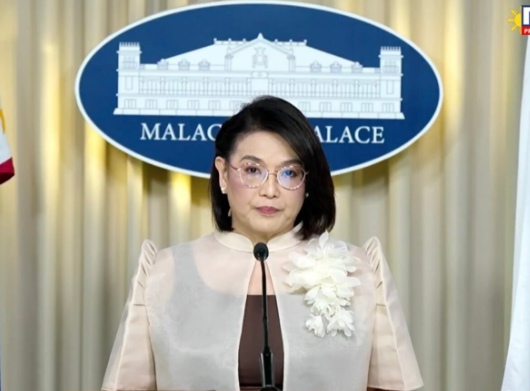
When confronted with these unsettling details, the Presidential Communications Office moved swiftly to project an image of stability and unwavering institutional trust. Spokeswoman Claire Castro addressed reporters at a regular media briefing, emphasizing that Marcos maintains "full trust" in the armed forces as an institution. However, Castro's formulation proved notably nuanced: while the President stands by the military establishment generally, she acknowledged that any personnel who deviate from their constitutional mandate must be identified and held accountable for the sake of presidential security.
Castro's language reflected the delicate balance the administration must strike in the current environment. The Palace clearly wants to avoid suggesting widespread institutional rot or systematic disloyalty within the defence sector, which could undermine public confidence in the state apparatus and regional security. Simultaneously, officials must demonstrate that internal threats are being taken seriously and that individual malefactors will face consequences. Castro noted pointedly that anyone contemplating illegal actions to serve narrow factional interests should expect identification and prosecution.
The Press Secretary indicated that no formal loyalty verification programme has been initiated across the military ranks. Rather, she positioned the investigation as a matter for security sector leadership to manage through their own institutional channels. This suggests the administration believes internal military discipline mechanisms can adequately address any misconduct without requiring extraordinary presidential intervention or sweeping purges that might destabilize the institution.
During her impeachment testimony, Vice President Duterte made startling public claims about her own protective measures, stating in apparent jest—though with an underlying gravity—that she had instructed someone to eliminate her along with three other prominent figures if she herself were killed. She named President Marcos, businesswoman Liza Araneta, and House Speaker Martin Romualdez as the intended targets of her contingency instructions. While framed with dark humour, Duterte's remarks underscored the atmosphere of existential threat permeating the upper echelons of Philippine governance.
The NBI subsequently issued a formal subpoena requiring Duterte to appear for questioning and produce relevant materials related to the alleged assassination conspiracy. However, the Vice President declined to comply with the investigative demand, creating yet another friction point between her office and the administration's law enforcement agencies. This defiance raises questions about the legal mechanisms available to compel cooperation from high-ranking officials in national security investigations.
The broader context of these revelations reflects the deteriorating relationship between Marcos and Duterte, whose political alliance fractured spectacularly during the current presidential term. What began as an unlikely partnership has devolved into open institutional conflict, with the Vice President's office and the President's administration engaged in increasingly combative exchanges. The assassination plot allegations, whether they prove substantive or not, have weaponized national security concerns as an instrument of political struggle.
For regional observers and the Malaysian business and diplomatic communities, these developments underscore the fragility of political institutions in the Philippines and the potential for security crises to emerge from internal factional disputes. The involvement of uniformed military personnel in alleged conspiracy raises uncomfortable questions about civil-military relations and the potential for institutional tensions to spill over into broader regional security dynamics.
The incident also highlights weaknesses in institutional checks on executive power and the absence of politically neutral investigative bodies insulated from partisan pressures. When the highest offices of state find themselves in direct conflict, security agencies and law enforcement become frontline combatants in political warfare, compromising their capacity to serve broader national interests. The Philippines' experience offers cautionary lessons about the importance of maintaining institutional distance from electoral politics.

