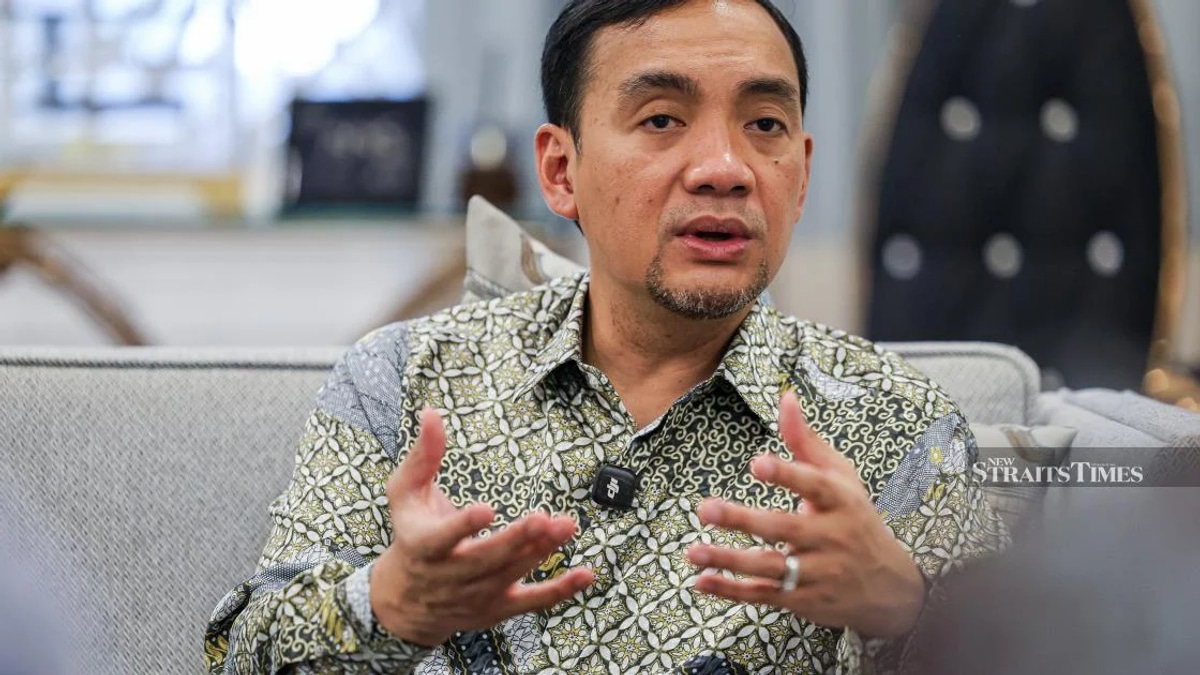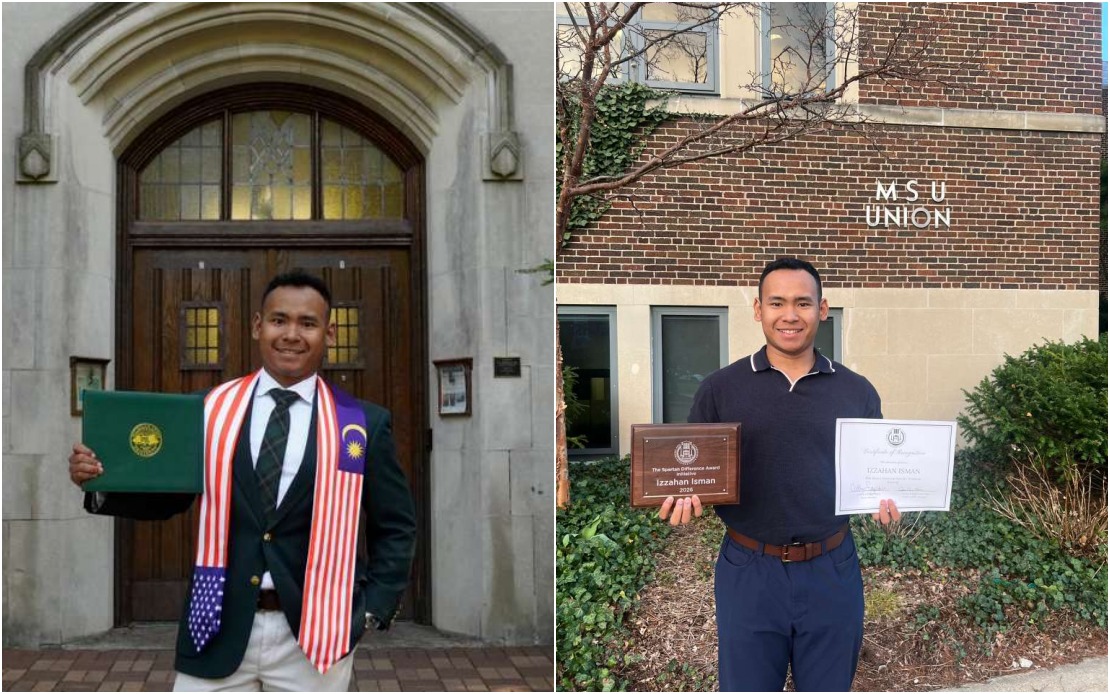
Muhammad Izzahan Isman's journey from a Malaysian tahfiz school to graduating with honours from Michigan State University illustrates the growing recognition that Quranic memorisation develops cognitive capabilities extending far beyond religious learning. The 22-year-old MARA scholar, who completed his Bachelor of Arts in Economics under the Young Talent Development Programme, recently returned to Malaysia with an impressive track record that challenges assumptions about the compatibility of traditional Islamic education with advanced Western academics. His experience offers valuable insights for Malaysian policymakers and educators exploring how different educational pathways can reinforce one another rather than compete.
Izzahan's educational background at Sekolah Berasrama Penuh Integrasi Rawang provided him with what he describes as a mental training ground for the rigorous analytical work required in higher learning. The discipline necessary to memorise and comprehend the Quran, he explains, fundamentally reshapes how the brain approaches complex material across any subject. Rather than memorisation being a rote exercise disconnected from understanding, the tahfiz methodology he experienced emphasised the cognitive integration required to retain vast amounts of information while simultaneously grasping nuanced meanings and interconnections. This dual-layer approach to knowledge acquisition proved directly transferable to economics coursework, where memorising data and theoretical frameworks must coexist with critical analysis of economic systems and their real-world implications.
The connection between tahfiz education and academic performance reflects broader neuroscientific understanding of how intensive memory training strengthens cognitive architecture. When students engage in Quranic memorisation, they simultaneously exercise multiple brain functions: auditory processing, spatial memory, sequential reasoning, and semantic comprehension. These neural pathways, once developed, create a foundation for approaching any discipline requiring sustained concentration and multi-layered understanding. Izzahan's perspective suggests that Malaysian educators may be underutilising the cognitive benefits of tahfiz programmes by failing to explicitly connect their skills to secular subjects. If students recognised that memorisation techniques perfected in Islamic education directly apply to mastering chemistry equations, historical dates, or economic models, the transition between traditional and contemporary learning environments would feel less like a shift between separate worlds and more like a natural progression.
His academic record at Michigan State University reflected this integrated approach. Achieving a cumulative GPA of 3.72 while balancing the social and cultural adjustments required of an international student demonstrated sustained intellectual engagement. Beyond the grade point average, Izzahan earned recognition through several institutional awards. The ROTC Academic Ribbon acknowledged his maintenance of a GPA exceeding 3.5, while the Spartan Difference Award and Green Cranium Award recognised his contributions to operational excellence in his workplace role as a management assistant. These distinctions indicate that his performance extended beyond examinations into practical problem-solving and institutional engagement, areas where the discipline cultivated through tahfiz education manifested in tangible workplace innovations.
One particular achievement illustrates how Izzahan translated cognitive strengths into organisational improvement. Observing that experienced student employees consistently departed upon graduation, leaving managers facing recurring training cycles and institutional knowledge loss, he developed a comprehensive training manual that systematised the onboarding process. This initiative reduced training time while improving overall operational efficiency—a practical application of analytical thinking and process optimisation that demonstrates how individuals formed in traditional Islamic educational contexts can drive contemporary workplace innovation. The recognition his work received suggests that institutions increasingly value employees capable of identifying inefficiencies and implementing scalable solutions, competencies that his hybrid educational background had cultivated.
The psychological resilience Izzahan maintained throughout his American tenure speaks to another dimension of tahfiz education often overlooked in academic discussions. Adapting to life in a foreign country, managing homesickness, and navigating cultural differences while maintaining academic focus represents a significant psychological challenge. Yet he describes purposefully grounding himself through clarity about long-term objectives and alignment with personal values. This deliberate cultivation of internal direction—the capacity to remain focused on meaningful goals amid distracting or destabilising external circumstances—reflects the spiritual and psychological training embedded within tahfiz programmes. Students accustomed to sustained memorisation and Quranic reflection develop introspective habits and value-alignment practices that prove invaluable when facing unfamiliar social environments. For Malaysian students studying abroad, this dimension of tahfiz education may provide psychological infrastructure that secular educational programmes alone do not develop.
Izzahan's success arrives at a moment when Malaysia's financial services sector faces talent pipeline challenges. The country's aspiration to strengthen its position as a regional financial hub requires professionals who combine technical expertise with ethical grounding and the analytical capacity to navigate complex markets. His plans to contribute to Malaysia's financial industry represent exactly the type of talent migration that benefits the national economy. A professionally trained economist with strong analytical foundations, values clarity, and demonstrated workplace problem-solving capabilities represents precisely the calibre of professional the sector requires. Furthermore, his return to Malaysia rather than remaining in the United States reflects a commitment to domestic contribution that represents a reversal of previous brain-drain patterns.
The social media attention Izzahan previously attracted for balancing rigorous academics with institutional recognition underscores growing interest in success stories that transcend traditional demographic categories. His profile challenged narratives suggesting that religious education necessarily constrains scientific or economic achievement, while simultaneously challenging assumptions that secular Western education automatically produces individuals disconnected from traditional values. In an increasingly polarised discourse about education in Malaysia, his example demonstrates that these frameworks need not be oppositional. Students can be simultaneously grounded in Islamic intellectual traditions and excel in contemporary technical fields, remain connected to Malaysian identity while thriving in international academic environments, and maintain personal values while succeeding in competitive professional contexts.
For MARA as an institution, Izzahan's achievement validates the Young Talent Development Programme's approach to identifying and nurturing promising students across different educational backgrounds. The programme's willingness to recruit from tahfiz institutions rather than exclusively from conventional secondary schools reflects recognition that merit and potential manifest across diverse pathways. This inclusive talent identification strategy positions MARA as an institution genuinely invested in developing Malaysia's human capital rather than reproducing existing elite networks. As other Malaysian scholarship programmes consider their own recruitment criteria, the demonstrated success of tahfiz-educated scholars like Izzahan provides empirical foundation for expanding opportunities beyond traditional feeder institutions.
The implications extend beyond individual achievement to questions about curriculum integration and educational philosophy. If tahfiz education genuinely develops cognitive capabilities transferable to secular disciplines, Malaysian educators might explore explicit bridging approaches. Rather than treating religious and secular education as parallel but separate systems, institutions could deliberately incorporate metacognitive reflection—encouraging students to recognise and articulate how skills developed in one context apply to another. Such approaches would validate the intellectual legitimacy of Islamic education while simultaneously demonstrating its practical utility within Malaysia's broader educational ecosystem. Teachers in both tahfiz schools and secular institutions might benefit from professional development highlighting these interconnections, transforming what currently appears as educational fragmentation into a more coherent system.
Looking forward, Izzahan's expressed commitment to advancing Malaysia's financial sector suggests the next phase of his professional development. Economists with his profile—intellectually rigorous, ethically grounded, and oriented toward national development—represent valuable resources for policy formation and institutional leadership. Whether through roles in central banking, financial regulation, or private sector institutions, his expertise combined with his values framework could contribute meaningfully to Malaysia's economic trajectory. His career trajectory will provide instructive data about whether professionals from tahfiz backgrounds, when equipped with advanced technical training, bring distinctive perspectives or approaches to contemporary professional challenges. In this sense, his post-graduation path matters as much as his academic record, offering insights into how Malaysia's diverse educational traditions can collectively strengthen institutional performance across sectors.