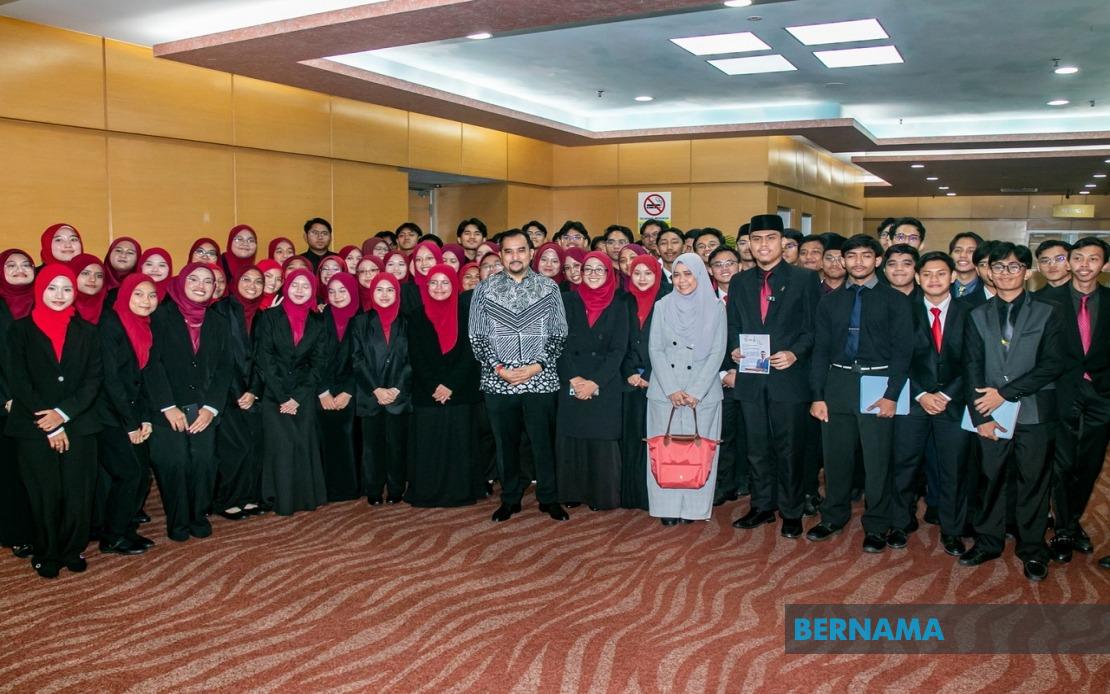
Majlis Amanah Rakyat (MARA) has revived its long-dormant medical education partnership with Al-Azhar University in Egypt, marking a significant expansion of Malaysia's overseas student placement strategy. The resumption comes after a seven-year gap since the programme's discontinuation in 2019, with this year's intake comprising 78 aspiring medical professionals. The move received Cabinet endorsement and represents a fresh commitment to diversifying where Malaysian scholars pursue advanced qualifications, particularly in healthcare disciplines where domestic capacity remains constrained.
The financial case for the Egyptian arrangement appears compelling within Malaysia's education financing framework. MARA chairman Datuk Dr Asyraf Wajdi Dusuki outlined that the total expenditure per student across the five-year medical course, encompassing accommodation and related expenses, stands at RM350,000. This figure reflects a 50 per cent discount negotiated directly with Al-Azhar University, effectively halving what would otherwise represent a substantially larger investment. By contrast, pursuing medical qualifications through Malaysian institutions incurs expenses ranging between RM700,000 and RM800,000 per graduate, rendering the Egyptian pathway a cost-efficient alternative that does not compromise academic standing or professional credentials.
The resurrection of this particular scheme carries broader implications for how Malaysia manages talent development across strategic sectors. Prime Minister Datuk Seri Anwar Ibrahim's approval signals governmental prioritisation of expanding medical education pipelines through partnerships with established international institutions. Al-Azhar University, despite its primarily religious orientation, maintains accreditation and recognition sufficient to qualify graduates for professional licensing across multiple jurisdictions. This dual benefit—financial prudence combined with internationally recognised qualifications—addresses a persistent challenge in Malaysian higher education policy, where balancing accessibility with quality remains perpetually contested.
Concurrent with the Al-Azhar initiative, MARA is orchestrating a substantially larger overseas deployment exercise affecting 600 students who have completed preparatory studies across its three premier colleges. Kolej MARA Seremban in Negeri Sembilan, Kolej MARA Banting in Selangor, and Kolej MARA Kuala Nerang in Kedah are dispatching cohorts to multiple destination countries, reflecting a deliberate diversification of geographical placement options. These scholars are heading toward New Zealand, Canada, Australia, South Korea, the United Kingdom, and Egypt, indicating a strategy that neither over-concentrates enrollment in any single nation nor restricts opportunities to Western tertiary systems exclusively.
The diversity of destination countries reflects MARA's recalibrated approach to matching student aspirations with institutional partnerships. New Zealand and Australia represent established pathways with proven integration outcomes, whilst Canada's universities offer distinct specialisation opportunities across engineering and applied sciences. South Korea's inclusion signals strategic engagement with Asia-Pacific educational ecosystems, particularly relevant as Malaysian students increasingly seek alternatives to traditionally favoured English-speaking destinations. Egypt's inclusion, beyond the medical cohort, suggests broader relationship-building with Middle Eastern institutions that offer competitive tuition structures without compromising educational prestige.
Performance metrics highlighted by MARA indicate substantial placement success within elite global institutions, a factor that legitimises the overseas scholarship model within Malaysian society. Eleven sponsored students secured admission to Imperial College London for the current academic year, whilst 40 beneficiaries have gained acceptance to universities ranked globally within the top 10 echelon. An additional 107 students qualified for entry into top-20 ranked institutions, collectively representing nearly 160 placements at institutions of demonstrable international standing. These placements carry significance beyond individual achievement; they represent tangible evidence that MARA-sponsored scholars compete effectively within the world's most selective educational environments.
The implications of reinstating the Al-Azhar medical programme extend to Malaysia's healthcare workforce planning horizon. Medical education at tertiary level typically spans five years, indicating that this first cohort of 78 students will emerge as qualified practitioners approximately 2029. When combined with domestically trained graduates, these international placements contribute measurably toward ameliorating projected physician shortages, particularly in specialised disciplines. The geographic distribution of training sites also introduces workforce dynamics; graduates trained in different systems may return with diverse clinical perspectives and research orientations, potentially enriching Malaysia's healthcare innovation landscape.
For Malaysian families, particularly those aspiring toward medical careers but facing substantial financial barriers, the Al-Azhar pathway presents a materially significant opportunity. The RM350,000 aggregate cost, whilst substantial, becomes accessible through MARA sponsorship mechanisms and represents a decisive saving relative to private institutional alternatives. This accessibility dimension carries equity implications; MARA's mandate explicitly encompasses expanding opportunity among deserving Malaysians who might otherwise lack pathways into prestigious professional training. The programme's resumption effectively democratises access to medical education at institutions where cost would otherwise prove prohibitive for middle and lower-income families.
Beyond immediate student welfare considerations, the Al-Azhar arrangement illuminates Malaysia's evolving international education diplomacy. Negotiations yielding 50 per cent institutional discounts suggest deepening bilateral engagement that extends beyond traditional trade frameworks. Educational partnerships increasingly function as soft power instruments, cultivating long-term professional networks and diplomatic goodwill. Malaysian graduates distributed across tertiary institutions globally become informal ambassadors, fostering cross-cultural familiarity and institutional relationships that compound across decades. The Egyptian partnership, in particular, strengthens Malaysia's positioning within Islamic world networks, a constituency increasingly relevant to Malaysia's geopolitical positioning.
The staggered departure schedule for the broader 600-student cohort reflects logistical sophistication in managing large-scale international student mobilisation. Rather than concentrating departures into singular waves—an approach that would overwhelm airport facilities and orientation processes—MARA is sequencing movements across multiple weeks. This phased approach ensures each cohort receives adequate pre-departure briefing, visa processing, and accommodation arrangement without administrative bottlenecks. Such operational precision, whilst administratively unglamorous, determines whether overseas educational experiences progress smoothly or devolve into preventable hardships that undermine student achievement and reflect poorly upon sponsoring institutions.
Looking forward, the Al-Azhar resumption establishes precedent for potential expansion of medical training partnerships beyond Egypt. If this inaugural cohort demonstrates comparable professional outcomes to domestically trained graduates, MARA might negotiate similar arrangements with universities in other jurisdictions where cost efficiencies and educational quality align favourably. Southeast Asian institutions, including those in Thailand and Indonesia, present unexplored possibilities for comparable partnerships that would reduce financial burden whilst maintaining geographic proximity and cultural compatibility. The success or otherwise of this initiative will substantially influence MARA's strategic calculations regarding future overseas programme expansion.

