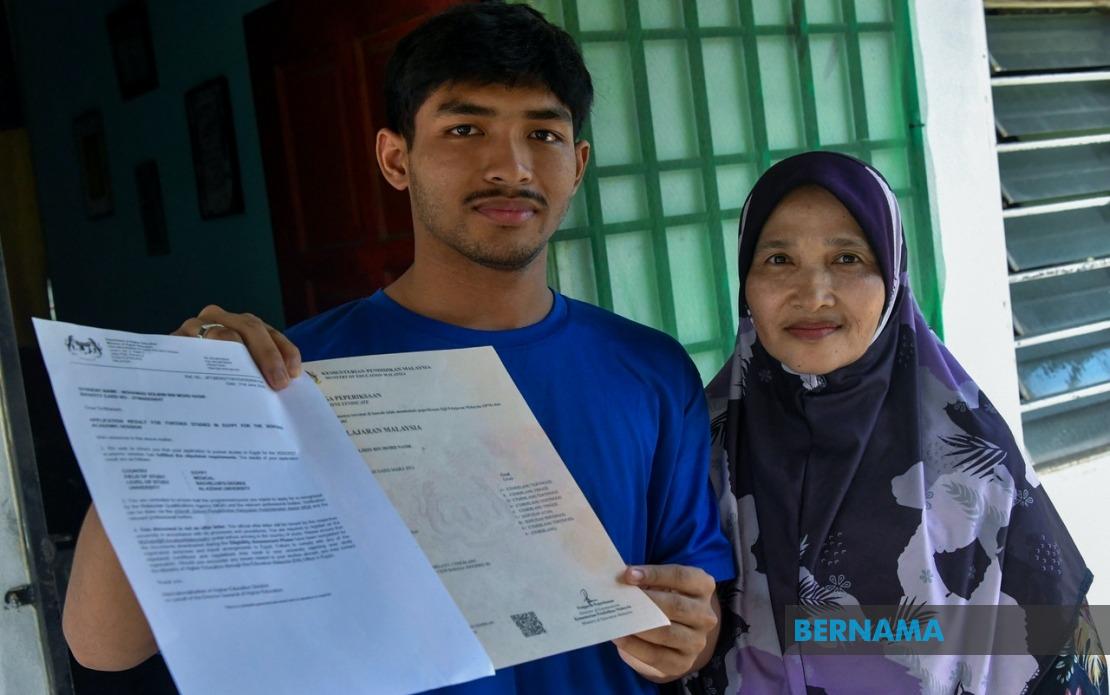
Mohamad Solihin Mohd Nasir, a 19-year-old from Kampung Kubang Keranji in Kota Bharu, came close to turning down his acceptance to Al-Azhar University's medical programme after realising his family lacked the financial resources to support his five-year education abroad. The estimated RM100,000 cost covering tuition and living expenses proved an insurmountable obstacle for a household already struggling with limited income. However, the Majlis Amanah Rakyat (MARA) has now intervened with concrete assistance, offering the exceptional student a genuine pathway toward fulfilling his long-cherished ambition to become a doctor.
During a video call conducted at the student's home, MARA chairman Datuk Dr Asyraf Wajdi Dusuki outlined two distinct sponsorship pathways designed to remove financial barriers. The first option would enable Mohamad Solihin to pursue his studies at Al-Azhar in Egypt with full MARA support, including funding for an intensive Arabic language preparatory course to satisfy entry requirements before commencing medical studies. The second alternative offers equally compelling prospects: pursuing a medical degree through USMKK, the health campus of Universiti Sains Malaysia, under MARA's direct sponsorship scheme. This dual approach acknowledges both the student's preference and the practical realities of international study, while ensuring that financial circumstances will not derail his educational journey.
Mohamad Solihin's circumstances exemplify precisely the category of student MARA prioritises within its mission framework. Asyraf Wajdi specifically emphasised that the agency focuses intensively on academically exceptional students from underprivileged backgrounds, particularly those who have experienced parental loss. The student's exceptional academic credentials strengthen his case considerably; he achieved a remarkable cumulative grade point average of 3.96 during his studies at Kelantan Matriculation College, demonstrating the intellectual capacity demanded by demanding professional programmes. His vulnerable family situation—having lost his father to a heart attack when he was in Standard One, and living with a mother managing thyroid disease while depending on support from siblings—clearly met MARA's established criteria for intervention.
The student's motivation for pursuing medicine carries profound personal resonance. Mohamad Solihin's aspiration extends beyond merely becoming a physician; he harbours specific ambitions to specialise in cardiothoracic surgery, a career choice directly inspired by his father's death from cardiac disease. This clarity of purpose, combined with his strong academic foundation and family circumstances, presented a compelling case for MARA's involvement. Without external intervention, a promising medical talent would have been lost to the system, a consequence that both the student and his family recognised as potentially tragic given his demonstrated abilities.
The financial pressure confronting this household becomes fully apparent when examining family circumstances. His mother, Faridah Mohamad, now aged 60, suffers from thyroid disease requiring ongoing medical management and cannot work to generate household income. The family depends on assistance from Mohamad Solihin's four older siblings, all working but managing their own financial obligations. When the Al-Azhar admission offer arrived on June 15, the family genuinely lacked capacity to meet the financial requirements, leaving the young student facing an agonising choice between accepting an outstanding educational opportunity and respecting practical financial reality. Teachers at his former institution, MARA Junior Science College Jeli, recognised the injustice of this situation and launched their own fundraising initiative while assisting with applications to various assistance schemes.
Beyond MARA, the student had submitted funding applications to the Kelantan Islamic Religious and Malay Customs Council, Kelantan Islamic Foundation, and Kelantan Darulnaim Foundation, reflecting the community's investment in his success. These coordinated efforts across multiple institutions demonstrate how educational aspirations transcending individual family capacity require systemic support networks. The fact that teachers actively campaigned on his behalf underscores the recognition of talent and potential that existed within his educational environment. This groundswell of institutional backing provided crucial momentum at the moment when MARA's leadership became directly engaged with his case.
Mohamad Solihin expressed cautious optimism following his conversation with the MARA chairman, though he has specifically articulated preference for pursuing his studies at Al-Azhar University rather than the domestic alternative. He remains willing to complete the prerequisite Arabic language programme, understanding that this intermediary step represents a necessary bridge to achieving his ultimate ambition. His scheduled departure window between August 21 and 29 depends on rapid finalisation of funding arrangements, creating temporal urgency around MARA's commitment. The fact that this timeline remains feasible suggests the agency intends substantive and expedited action rather than exploratory discussions.
His mother, Faridah Mohamad, articulated the family's emotional response with moving clarity. While overjoyed by her son's admission to a prestigious international medical institution, she had been devastated by the seeming impossibility of converting this achievement into lived reality. She expressed fervent hope that institutional assistance would materialise, affirming that supporting her youngest son's medical ambitions represented a lifelong family aspiration. Her dependence on MARA's intervention underscores how talent and determination alone cannot overcome structural poverty without deliberate policy action designed to bridge opportunity gaps.
The broader significance of MARA's intervention extends beyond this individual case. The agency's explicit prioritisation of high-achieving students from disadvantaged backgrounds—particularly those affected by parental loss—addresses a critical equity challenge within Malaysia's education system. Many talented young Malaysians never realise professional potential simply because their family circumstances coincide with genuine excellence, creating tragic waste of human capital. By establishing clear pathways for students like Mohamad Solihin, MARA potentially transforms institutional policy into tangible life outcomes. The agency's willingness to fund preparatory language courses demonstrates understanding that international educational access requires more than tuition support alone.
For Southeast Asian context, this case illuminates persistent challenges around educational equity despite regional economic development. Malaysia's high-performing education system produces numerous exceptional students annually, yet financial barriers continue preventing many from accessing appropriate higher learning institutions. The story also highlights how parental loss in developing economies creates cascading disadvantages; Mohamad Solihin's experience is replicated across the region among students whose family circumstances create barriers to professional development. MARA's model of targeted intervention combined with institutional support deserves examination by other regional governments and agencies confronting similar equity challenges.
Looking forward, Mohamad Solihin's situation will either become a success story validating institutional support for talented disadvantaged students, or a cautionary tale about unrealised potential. MARA's public commitment and the chairman's direct engagement suggest serious institutional backing, though implementation challenges remain. The student's combination of academic excellence, personal resilience, clear professional motivation, and vulnerable family circumstances positions him as an ideal beneficiary of such interventions. His ultimate success—whether at Al-Azhar or USMKK—will demonstrate whether Malaysian institutions effectively convert policy rhetoric about equity into meaningful opportunities for talented young people confronting genuine hardship.

