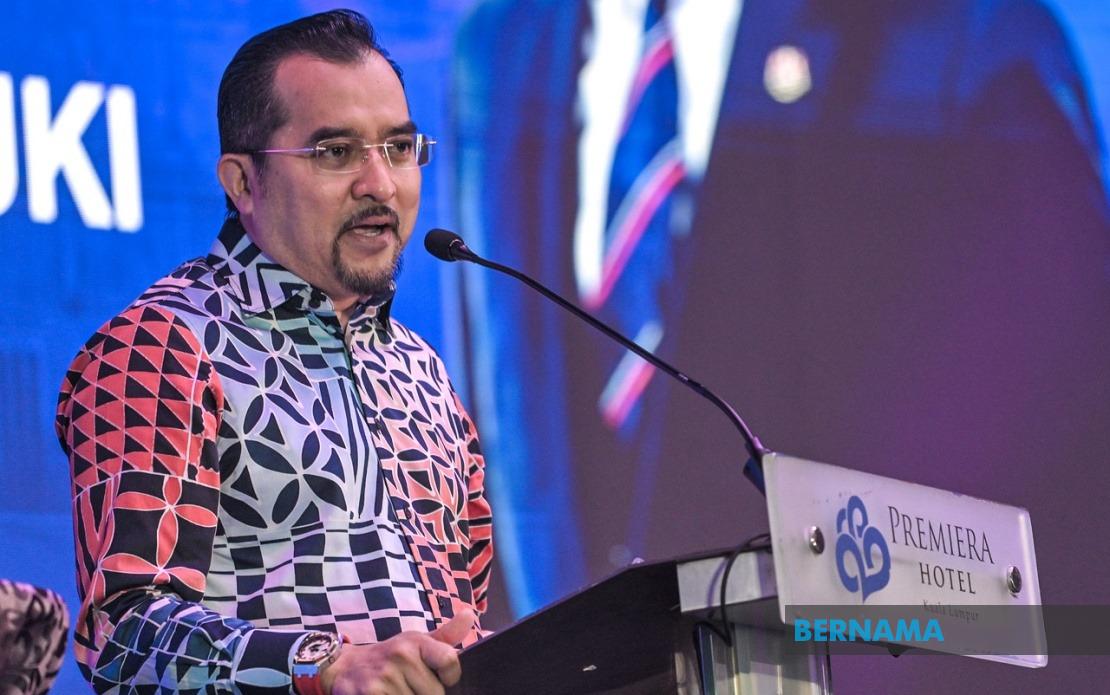
Majlis Amanah Rakyat (MARA) has announced an ambitious plan to station four full-time wardens with military backgrounds at each of its 58 MARA Junior Science Colleges (MRSM) nationwide, a move designed to reinforce discipline and character development among the institution's boarding students. The initiative, unveiled by MARA chairman Datuk Dr Asyraf Wajdi Dusuki, represents a significant shift in how the organisation approaches pastoral care and student management across its residential college network, with implementation beginning immediately at selected institutions and rolling out comprehensively within the next several months.
The deployment will occur in phases, commencing with ten MRSMs during the current year before extending to the entire network of 58 colleges from January next year. Each college will receive two male and two female wardens, ensuring round-the-clock oversight and mentoring tailored to both male and female student populations. This structure reflects a deliberate approach to addressing contemporary challenges in residential education, where traditional teacher-led pastoral systems have struggled to maintain consistent discipline and character formation in boarding environments.
The selection process for these wardens has been conducted with considerable rigour, involving collaboration between MARA, the Malaysian Armed Forces (ATM), and other government agencies. Male warden recruitment has already concluded, whilst finalisation of female warden appointments was expected to be completed within days of the announcement. By restricting recruitment to former military personnel, MARA seeks to tap into individuals trained in hierarchical structures, time management, and personal accountability—qualities deemed essential for managing residential communities of teenagers and young adults away from home.
Datuk Dr Asyraf Wajdi articulated the rationale behind selecting military veterans, noting that their professional backgrounds instill high levels of personal discipline and institutional awareness that can complement teaching staff responsibilities. Teachers in Malaysian residential colleges have traditionally shouldered dual roles as both educators and wardens, a burden that has stretched resources and potentially compromised the quality of both functions. By introducing dedicated wardens, MARA aims to liberate teachers to focus primarily on academic delivery whilst specialists manage boarding house routines, curfews, disciplinary matters, and character-building activities.
The emphasis on former military personnel also signals MARA's broader institutional philosophy regarding values-based education. The organisation has consistently positioned itself as committed to producing not merely academically accomplished graduates but individuals grounded in strong ethical principles and national consciousness. Military service, with its inherent emphasis on discipline, duty, and collective responsibility, aligns with this vision. The vetting process specifically targeted individuals with exemplary service records, ensuring wardens themselves embody the standards they will enforce.
Beyond pastoral management, MARA's leadership has highlighted the institution's academic and vocational achievements as the foundation upon which character development sits. The organisation reported that its Technical and Vocational Education and Training (TVET) programmes have achieved an outstanding graduate employability rate of 99.1 per cent, positioning MARA as a significant pipeline for skilled workers entering Malaysia's labour market. This statistic carries particular weight for Southeast Asia, where workforce development and transition from education to employment remain critical policy challenges.
The partnership with major multinational corporations underscores MARA's market relevance. The recent recruitment of 700 students by Samsung at a starting salary of RM3,500 exemplifies how industry recognises and values MARA graduates. This integration between vocational training and actual labour market demand distinguishes MARA from traditional academic institutions and justifies the organisation's dual focus on skills acquisition and character formation. Employers actively seeking MARA talent suggests that the warden initiative addresses real institutional needs rather than cosmetic reforms.
In parallel with the warden deployment, MARA has allocated RM145,000 to special excellence programmes benefiting five MRSM institutions that ranked among Malaysia's top performers in the preceding year's Sijil Pelajaran Malaysia examination. This financial commitment recognises that excellence requires targeted investment and institutional differentiation. By concentrating resources on proven high-achievers, MARA creates centres of excellence that can serve as models for improvement across the broader college network whilst maintaining competitive advantage in national educational rankings.
The timing of this announcement reflects broader conversations within Malaysian education regarding pastoral care, student wellbeing, and institutional discipline. Recent years have witnessed heightened public discourse about mental health challenges, behavioural issues, and character formation in secondary and pre-university settings. MARA's response—deploying additional human resources specifically trained in discipline and mentorship—represents a traditional institutional approach to these contemporary challenges. Whether this model proves effective will likely influence similar discussions at other residential institutions operating in Malaysia and Southeast Asia.
For Malaysian policymakers and education stakeholders, the MARA initiative offers a case study in resource allocation and institutional restructuring. By drawing on former military personnel, the organisation accesses a labour pool with existing training in hierarchical management and disciplinary frameworks without requiring additional government expenditure on training new wardens from civilian backgrounds. This efficiency consideration may prove attractive to other residential education providers facing budget constraints and rising expectations regarding student supervision standards.
The expansion timeline—completing implementation by January 2025—indicates institutional resolve to execute the programme without lengthy consultation or pilot extensions. This decisiveness contrasts with more cautious approaches sometimes seen in Malaysian bureaucracies and suggests MARA's leadership possesses confidence in both the concept and the implementation capacity. Early lessons from the initial ten colleges will inform adjustments across the remaining network, allowing for adaptive management whilst maintaining forward momentum.
Ultimately, MARA's warden deployment strategy reflects an organisation determined to maintain its competitive positioning within Malaysia's residential education landscape whilst strengthening institutional foundations. The combination of dedicated pastoral staff, industry-oriented vocational training, and targeted investment in high-performing institutions suggests a comprehensive approach to institutional excellence. As Malaysian universities and technical institutes increasingly compete for students and employer recognition, MARA's emphasis on both academic achievement and character development through dedicated human resources may prove influential in shaping how similar institutions nationwide approach residential education and student formation.

