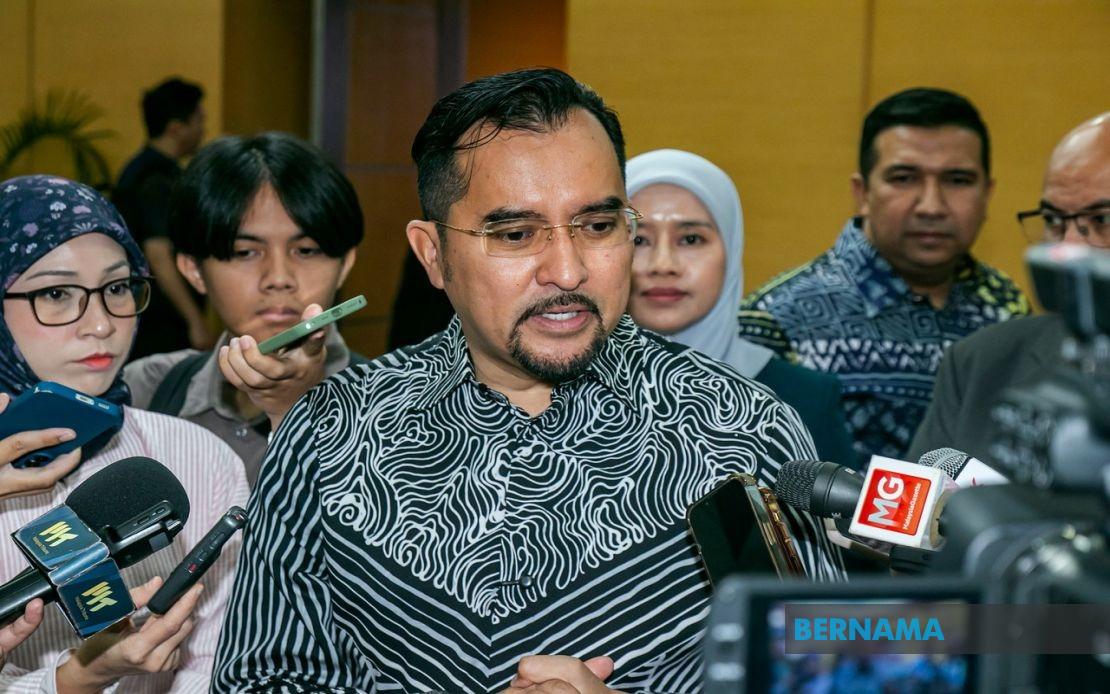
Malaysia's landmark effort to overhaul the governance structure of Majlis Amanah Rakyat (MARA) is advancing toward a critical parliamentary stage. The proposed MARA Bill 2026, which has reached its final drafting phase, is scheduled for tabling in the legislative chamber this November. The legislation represents a comprehensive response to longstanding concerns about institutional accountability and adherence to contemporary corporate standards within the body responsible for championing Bumiputera and Malay economic interests.
The sweeping nature of the proposed Bill reflects a deliberate shift in how Malaysia's government seeks to manage one of its most significant development agencies. According to MARA chairman Datuk Asyraf Wajdi Dusuki, approximately 80 per cent of the Bill's framework is dedicated to embedding robust governance mechanisms that conform to international best practices and sound corporate conduct principles. This emphasis signals a recognition that MARA's existing operational model, rooted in legislation from 1966, has become misaligned with present-day institutional and financial management expectations. The overhaul comes amid broader regional and global momentum toward institutional transparency and accountability, particularly within state-linked entities that manage substantial public resources.
Central to the reform agenda is a fundamental restructuring of executive authority within MARA. The Bill significantly curtails the powers traditionally vested in the chairman position, a move that reflects growing consensus around the principle of distributed decision-making and institutional checks. Under the revised framework, the chairman's role will be confined to presiding over the Board of Directors or Council and steering policy direction, marking a stark departure from the expansive mandate granted under the original 1966 legislation. Datuk Asyraf Wajdi emphasised that this recalibration is not a personal matter but rather an institutional imperative, stating his intention to establish a governance legacy that ensures MARA's longevity and resilience beyond his tenure.
The chairman's articulation of his transitional role underscores a pragmatic acknowledgment that leadership changes within institutions require robust structural safeguards. By deliberately constraining his own authority, Datuk Asyraf Wajdi has positioned the reforms as a systemic hardening against future vulnerabilities. He pointedly noted that the overhaul aims to create an institutional environment where there is minimal scope for corruption, malpractice, misappropriation, or operational irregularities. This framing suggests that MARA's leadership views the Bill not as a constraint on individual competence but as an essential evolution toward institutional maturity.
The genesis of the Bill lies in a series of documented governance failures and operational deficiencies that have periodically compromised MARA's reputation and effectiveness. Earlier statements from Datuk Asyraf Wajdi, made in mid-August, explicitly tied the legislative initiative to addressing historical patterns of abuse of power, governance weaknesses, misappropriation, irregularities, and resource leakage. These acknowledgments indicate that the reform process has been informed by institutional audits or reviews that identified systemic vulnerabilities requiring legislative remediation. By targeting these specific issues through statutory reform, MARA's leadership is attempting to create enforceable safeguards rather than relying solely on administrative directives or policy guidelines.
The timing of the Bill's advancement reflects the government's commitment to modernising major institutional frameworks. Having secured Cabinet policy approval, the legislation has cleared a critical hurdle and is now poised for detailed parliamentary scrutiny. The November tabling will allow members of parliament to deliberate on the proposed reforms, potentially raising questions about implementation mechanisms, transition arrangements, and the extent to which the new framework addresses underlying governance concerns. For Malaysian stakeholders with interests in Bumiputera development policy and institutional effectiveness, the parliamentary stage will offer an opportunity to assess whether the Bill sufficiently addresses accountability deficits.
Datuk Asyraf Wajdi's observation that institutional governance requirements are not static but instead evolve in response to changing economic and social contexts provides important context for understanding the reform's rationale. The statement that practices appropriate in the 1960s became outdated by the 1970s and require further evolution today reflects an acceptance that governance standards must continuously advance. This philosophy suggests that the Bill is intended not as a permanent solution but rather as a framework flexible enough to accommodate future refinements as MARA's operating environment transforms. Such forward-thinking architecture could serve as a template for modernising other statutory bodies operating under antiquated legislative foundations.
The reduction of chairmanship powers carries particular significance within Malaysia's institutional landscape, where concentrated executive authority in statutory bodies has occasionally correlated with accountability lapses. By redistributing decision-making responsibilities toward collective board governance, the Bill aligns MARA with international models that emphasise separation of powers and multi-stakeholder oversight. This structural shift may also enhance MARA's credibility with development partners, international donors, and private sector collaborators who increasingly expect governance compliance from public institutions seeking partnerships or investment engagement.
For the broader Bumiputera and Malay economic development agenda that MARA serves, the governance reforms carry both symbolic and practical implications. Symbolically, the emphasis on institutional integrity and accountability reinforces the principle that development initiatives must operate within rigorous ethical and operational frameworks. Practically, a stronger governance structure could enhance MARA's ability to deploy resources effectively, attract talent to its programmes, and demonstrate measurable developmental outcomes. The reforms may also facilitate more robust monitoring of programme implementation and beneficiary outcomes, addressing longstanding questions about whether MARA's interventions are achieving intended development objectives efficiently.
Parliamentary examination of the Bill will likely focus on enforcement mechanisms, the composition and independence of oversight bodies, conflict-of-interest protocols, and financial management provisions. Legislators may probe whether the proposed framework sufficiently empower the board to countervail executive actions and whether accountability mechanisms extend to all institutional levels. Questions about the transition process—particularly how existing arrangements will be superseded and what adjustments will be required from current personnel—will also merit parliamentary attention. The scope of the November debate will substantially influence the Bill's ultimate effectiveness in addressing governance deficiencies.
The MARA Bill 2026 represents a significant step in Malaysia's broader institutional modernisation trajectory. By confronting governance deficiencies head-on and proposing structural remedies aligned with contemporary standards, the legislation signals that state institutions are not immune to reform pressures. For regional observers, particularly those in other Southeast Asian nations managing similar development agencies, the MARA experience offers lessons about the political feasibility of curtailing executive power in statutory bodies and the potential benefits of modernising governance frameworks inherited from earlier historical periods. As the Bill moves toward parliamentary consideration, its reception and subsequent implementation will provide valuable insights into Malaysia's commitment to institutional accountability and good governance principles.

