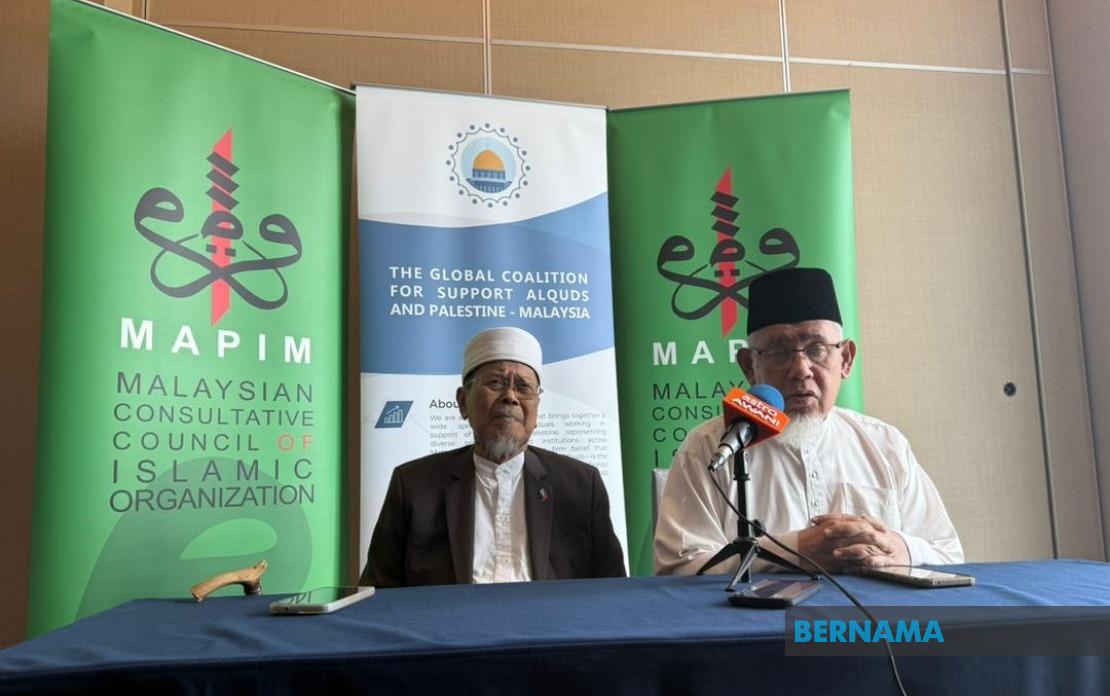
The Malaysian Consultative Council of Islamic Organisations (MAPIM) is preparing to launch a significant regional initiative this week in Ipoh, bringing together mosque leaders and Islamic representatives from across Southeast Asia and beyond. Organised in partnership with the Perak Islamic Religious Department (JAIPk), the two-day Regional Mosque Conference 2026 will convene approximately 400 mosque representatives from Malaysia, Indonesia, Singapore, Brunei, Timor-Leste, Myanmar, Cambodia, Thailand, and Vietnam, with additional participation expected from Turkiye, Iran, and Pakistan. The gathering represents an ambitious effort to foster institutional cooperation among religious organisations across a geographically and culturally diverse region.
The conference timing carries symbolic weight, aligning with World Mosque Day, which falls on August 21 each year to commemorate the 1969 arson attack on Al-Aqsa Mosque in Jerusalem. According to MAPIM president Mohd Azmi Abdul Hamid, the organisation views this commemoration not as a passive observance but as an opportunity to reinvigorate the mosque's fundamental role within Muslim societies. His remarks signal a deliberate shift toward treating such occasions as catalysts for substantive action rather than ceremonial remembrance, a perspective that may resonate with younger, more activist-minded members of Muslim communities seeking tangible outcomes from their institutions.
The conference blueprint encompasses seven core objectives designed to address contemporary challenges facing mosques and Islamic communities across the region. These include establishing formal networking structures for inter-mosque cooperation, mobilising youth engagement and economic participation through religious institutions, and deepening partnerships with Islamic non-governmental organisations. By framing mosques as nodes in a larger regional network, MAPIM is positioning these institutions as strategic actors capable of coordinating responses to shared challenges, from social welfare to advocacy campaigns. This approach acknowledges the limitations of isolated institutional efforts and recognises the value of collective action in an increasingly interconnected region.
One of the conference's intended outcomes is the formulation of a regional declaration and actionable implementation framework that participating organisations can adopt following the gathering. This commitment to producing concrete, portable outcomes reflects lessons learned from previous conferences that generated declarations but achieved limited follow-up implementation. By establishing mechanisms for sustained collaboration and assigning specific responsibilities, MAPIM aims to ensure the conference catalyses lasting institutional change rather than serving as a one-time convening.
The substantive agenda combines scholarly discourse with advocacy-focused programming. Academic presentations will examine the evolving role of mosques in contemporary society, while international dialogues will facilitate cross-cultural exchange among participants from vastly different political and social contexts. Notably, dedicated sessions addressing Palestine and Al-Aqsa Mosque will dominate the agenda, underscoring the centrality of this cause to regional Islamic mobilisation. For Malaysian participants and observers, such emphases reflect broader sentiment within the Muslim world regarding Middle Eastern conflicts, though the explicit integration of advocacy into a formal regional conference structure represents an escalation in institutional positioning.
Three significant initiatives will debut at the conference, each designed to translate discussion into tangible outcomes. A newly established regional mosque coalition specifically dedicated to Palestine advocacy will formalise coordination among participating organisations on this issue. Simultaneously, MAPIM will publish a comprehensive text examining mosques' historical and contemporary roles, providing intellectual scaffolding for the conference's broader agenda. Most innovatively, the organisation will introduce the MAPIM Gold Dinar, a financial instrument intended to facilitate public contributions to the Al-Aqsa Mosque Fund. This tri-pronged launch strategy demonstrates MAPIM's ambition to establish infrastructure supporting its advocacy priorities while creating multiple entry points for public participation.
The MAPIM Gold Dinar initiative merits particular attention for its economic dimensions. By creating a branded, accessible purchasing mechanism, MAPIM is attempting to democratise fundraising for its designated cause. Rather than requiring large lump-sum donations, a gold dinar programme permits incremental contributions while simultaneously building a constituency of stakeholders invested in the outcome. For Malaysian Muslims navigating questions about how to meaningfully support distant causes, such mechanisms offer psychologically tangible avenues for action, though the effectiveness of such approaches in generating sustainable funding remains uncertain.
Mohd Azmi articulated the conference's overarching ambition as catalysing regional Islamic consciousness and proactive engagement with global humanitarian concerns. His framing explicitly connects local mosque participation to international advocacy, suggesting that institutional strengthening and geopolitical engagement are complementary rather than competing objectives. This integration reflects evolving understandings of how religious institutions operate in an era of globalised communication and transnational mobilisation, particularly relevant across Southeast Asia where Muslim populations maintain diverse relationships with Middle Eastern politics.
For Malaysian policymakers and civil society observers, the conference illuminates how regional Islamic organisations are networking and coordinating at levels that transcend individual nation-states. MAPIM's success in convening such diverse participation, spanning eight countries plus three external participants, demonstrates the organisational capacity and institutional legitimacy that Malaysia's Islamic bodies have cultivated. Whether such networks translate into coordinated policy positions or remain primarily expressive remains an open question, but their mere existence reflects shifting dynamics in regional Islamic activism and organisation.
The conference also signals MAPIM's positioning as a convening authority capable of leading cross-border Islamic dialogue and coordination. In an era when religious nationalism and institutional fragmentation characterise many Muslim-majority societies, efforts to establish cooperative frameworks carry both promise and potential controversy. The inclusion of representatives from politically and theologically diverse nations suggests an attempt at inclusivity, though the explicit focus on Palestine and Al-Aqsa Mosque advocacy may prove contentious in contexts where such positioning intersects with domestic political sensitivities or diplomatic considerations.
Looking forward, the success of this conference will likely be measured not merely by attendance or declaration formality, but by the extent to which participating organisations maintain contact, coordinate initiatives, and translate conference resolutions into measurable action. The MAPIM Gold Dinar and regional coalition structures provide mechanisms for such sustainability, yet implementation will require sustained leadership commitment and adequate resource allocation across participating organisations operating within vastly different political and financial circumstances.
For the broader Southeast Asian context, the Regional Mosque Conference 2026 represents a moment when Islamic institutions are consciously attempting to strengthen cooperative capacity and forge regional identity around shared concerns. As these networks deepen and formalise, their influence on regional religious discourse, policy advocacy, and community mobilisation will warrant continued monitoring by policymakers, analysts, and civil society organisations seeking to understand how transnational Islamic organising shapes regional dynamics.

