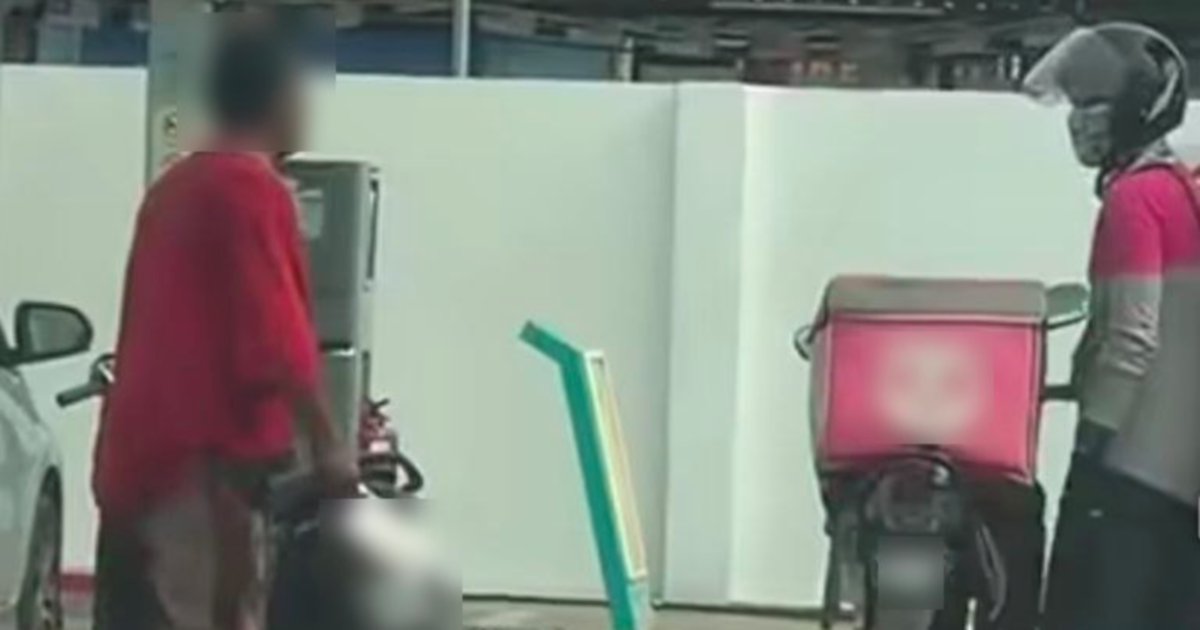
A man has been taken into custody by Kuala Terengganu police following an alarming incident yesterday afternoon in which he allegedly displayed a meat cleaver in a threatening manner toward a ride-hailing service worker at a petrol station located on Jalan Pasir Panjang. The arrest comes as authorities continue to address public safety concerns in the eastern state capital, where such aggressive confrontations at commercial establishments have drawn increasing attention from residents and business operators.
The incident unfolded at the petrol station during afternoon hours when tensions between the suspect and the ride-hailing worker escalated into a physical confrontation. According to eyewitness accounts and police statements, the man's behaviour became increasingly hostile before he produced the meat cleaver, an act that immediately triggered alarm among those present at the location. The brandishing of the weapon represented a dangerous escalation that prompted swift intervention from authorities and bystanders who sought to prevent further deterioration of the situation.
Ride-hailing workers in Malaysia have increasingly become the focus of safety discussions following numerous incidents of aggression and harassment occurring in various locations across the country. These workers, who depend on maintaining cordial interactions with members of the public as part of their employment, face heightened vulnerability due to the nature of their occupation. Petrol stations, despite being public spaces designed for routine transactions, have occasionally become flashpoints for such confrontations, particularly during afternoon and evening hours when foot traffic remains substantial.
The swift police response in Kuala Terengganu reflects renewed operational focus on public safety in commercial areas throughout the state. Jalan Pasir Panjang, a significant thoroughfare in the city centre, hosts numerous commercial establishments that service both local residents and transient populations. Petrol stations along major roads frequently experience diverse customer interactions, and ensuring that these spaces remain secure environments has become an operational priority for local law enforcement agencies.
The arrest addresses immediate concerns about weapon-related threats in public spaces, an issue that resonates across Southeast Asia where authorities increasingly monitor patterns of violence in commercial districts. The meat cleaver, a commonly available tool in domestic and commercial kitchens, can pose serious danger when deployed during confrontations. Police investigations into such incidents typically focus on understanding the circumstances leading to the escalation, the mental state of the suspect, and any potential triggers that contributed to the aggressive behaviour.
For ride-hailing companies operating across Malaysia, incidents such as this underline the critical importance of comprehensive safety protocols and support systems for their workforce. Many platforms have implemented driver and worker safety features, though the effectiveness of these measures remains subject to ongoing scrutiny. The ability of workers to report threats, access emergency assistance, and receive adequate follow-up support after traumatic incidents represents an area where industry standards continue to evolve across the region.
Petrol station operators and their staff also face considerations regarding their own safety when managing volatile customer interactions. Training in de-escalation techniques, clear protocols for handling aggressive patrons, and adequate security measures have become standard expectations at many establishments. The incident on Jalan Pasir Panjang may prompt further discussions between franchise operators and security service providers regarding resource allocation and preventative strategies.
The broader context of public safety in Kuala Terengganu includes persistent discussions about resource allocation within the police force, community policing initiatives, and coordination with private security operators. The state capital, as the commercial and administrative hub of Terengganu, experiences diverse criminal patterns requiring targeted enforcement approaches. Violent confrontations in public spaces, while relatively uncommon compared to property crimes, generate disproportionate public concern due to their unpredictability and potential for serious injury.
Investigations into such incidents typically examine multiple dimensions: any prior history of violence involving the suspect, substance use that may have impaired judgment, disputes arising from commercial transactions, or personal grievances that escalated unexpectedly. Police statements following arrests often provide limited initial information pending completion of preliminary enquiries and assessments required for potential court proceedings. The charge categories available to prosecutors in Malaysia for weapon-related threatening behaviour encompass several statutes, each carrying different sentencing implications depending on circumstances and aggravating factors.
For Malaysian society more broadly, such incidents reinforce ongoing discussions about conflict resolution, mental health support, and the cultural factors contributing to escalating tensions in everyday interactions. Educational campaigns promoting peaceful dispute resolution and community awareness about resources for individuals experiencing crisis situations have gained prominence in recent years. The role of social and mainstream media in either inflaming or diffusing tensions during such confrontations also remains an active area of public discourse.
As investigations continue into this Kuala Terengganu incident, the police authority will likely provide additional details regarding charges, the suspect's background, and any statements offered during preliminary interviews. The case exemplifies the types of public safety challenges that local law enforcement addresses regularly, balancing the need to maintain order while protecting the rights of all individuals involved.

