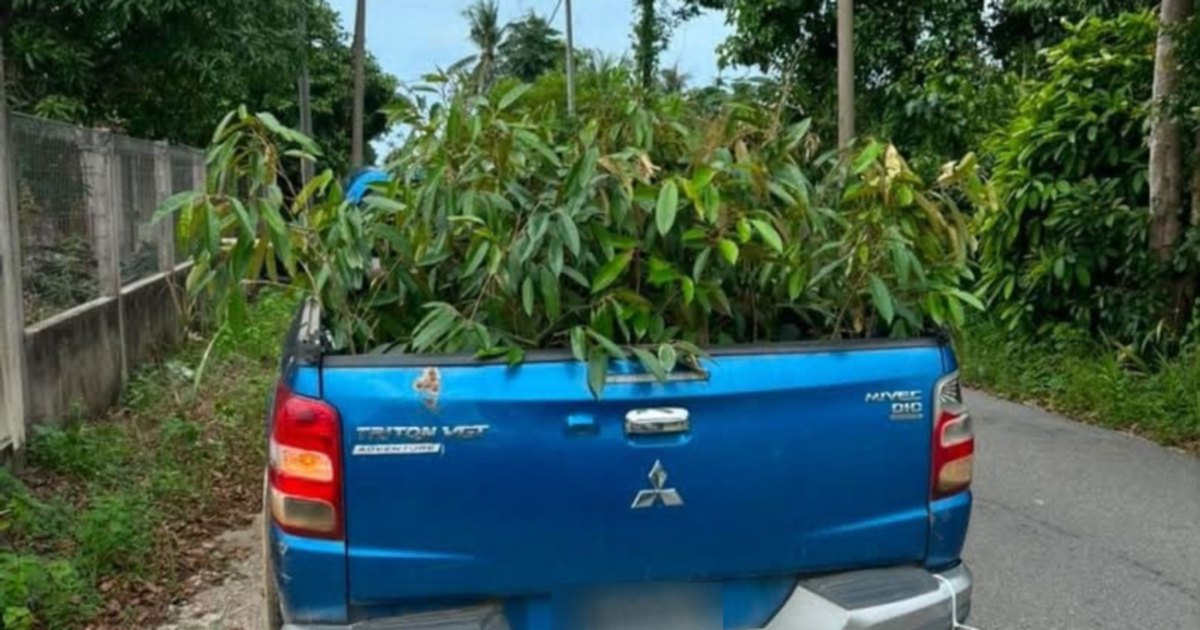
Border enforcement operations in Kelantan have yielded another significant agricultural smuggling bust, with authorities apprehending a 55-year-old suspect in Tumpat and confiscating 52 durian saplings that had allegedly been brought in illegally from Thailand. The General Operations Force conducted the operation yesterday, uncovering what represents a concerning pattern of illicit cross-border horticultural trafficking in the region's frontier zones.
The case underscores the persistent challenges faced by Malaysian law enforcement in combating smuggling activities along the northern border, particularly in remote and less-monitored areas where agricultural products frequently transit without official authorization. Durian, Malaysia's most celebrated fruit and a significant agricultural commodity, has become an increasingly targeted item for smugglers seeking to circumvent proper import procedures and agricultural quarantine requirements.
Durian saplings and propagation materials represent high-value targets for smugglers because they carry genetic potential worth thousands of ringgit if successfully cultivated and brought to commercial fruiting. The saplings seized in this operation would have required years to mature into productive trees, making their market value substantial enough to justify the smuggling risks. However, the illegal importation of such biological materials poses serious biosecurity threats to Malaysia's durian industry, potentially introducing diseases, pests, or inferior genetic lines that could compromise domestic cultivation standards.
The arrest in Tumpat, a municipality in Kelantan's eastern coastal region and historically a significant transit point for border traffic, suggests that smugglers continue leveraging established routes and networks to move contraband goods. The General Operations Force, tasked with maintaining security and order across Malaysia's borders, has intensified operations in such areas to intercept illegal goods before they penetrate deeper into the country's agricultural heartland.
Official import procedures for agricultural materials exist precisely to protect Malaysia's farming sectors from external threats. Proper quarantine protocols screen incoming plant materials for diseases, pests, and parasites that could devastate local crops. When saplings enter through unauthorized channels, they bypass these critical safeguards, creating potential ecological and economic consequences that extend far beyond the transaction itself. The regulatory framework governing such imports reflects Malaysia's commitment to maintaining the health and competitiveness of its agricultural base.
Kelantan's agricultural sector, heavily dependent on primary industries including horticulture, remains vulnerable to such smuggling activities. The state produces significant quantities of durian, and unauthorized imports of genetic material could alter local market dynamics or introduce unwanted varietal competition. Beyond economic considerations, the entry of unvetted plant material threatens the genetic purity and disease-free status that legitimate Malaysian durian growers work diligently to maintain for domestic and export markets.
The broader context of this bust reflects ongoing tensions between Malaysia and Thailand regarding cross-border commerce and smuggling networks. While official trade between the nations proceeds through established channels with appropriate documentation and inspections, underground networks continue attempting to circumvent these mechanisms. Law enforcement agencies on both sides must maintain vigilance, as such smuggling operations often involve organized networks with significant financial incentives and sophisticated logistics capabilities.
This enforcement success demonstrates the effectiveness of targeted border operations, yet it simultaneously reveals the scale of smuggling challenges authorities face. A single operation yielding 52 saplings likely represents only a fraction of attempted smuggling across the entire northern frontier. The individuals arrested and goods seized constitute tangible achievements, but they also hint at larger illicit operations continuing undetected elsewhere.
Future agricultural security in Malaysia will depend on continued investment in border monitoring technology, personnel training, and inter-agency coordination. The General Operations Force's work in this instance reflects broader national efforts to protect legitimate agricultural interests while preventing unauthorized imports that could compromise food security, environmental integrity, and economic welfare. As regional smuggling networks evolve and adapt their tactics, Malaysian enforcement agencies must similarly enhance their capabilities to detect and interdict contraband agricultural materials before they cause irreversible damage to local farming communities.

