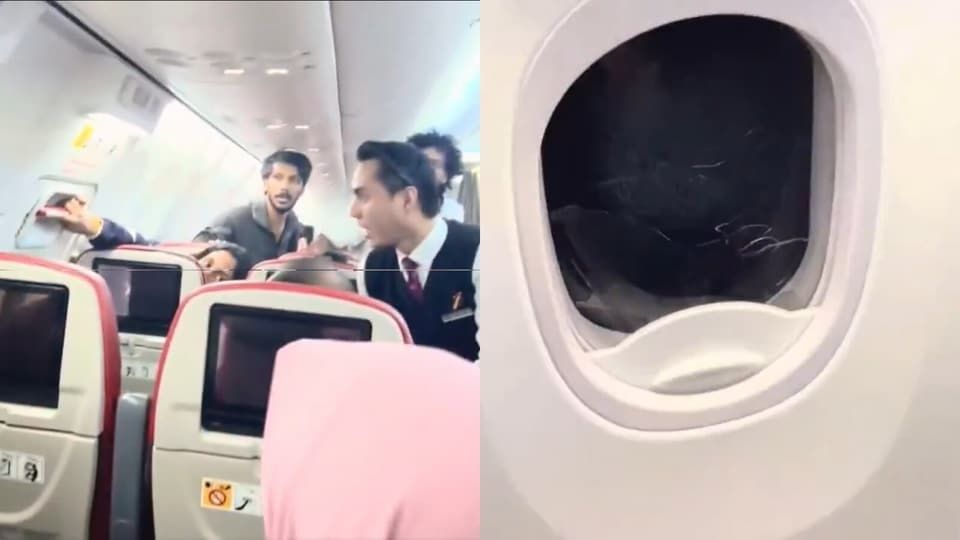
A disturbing mid-air incident on a regional airline has highlighted security vulnerabilities in commercial aviation, with authorities in Kerala arresting a passenger who allegedly tried to open the emergency exit of a Batik Air flight operating between Kuala Lumpur and Kochi. The arrest of Jamsheer Athanikkal, 36, from Palakkad who was residing in Sreemoolanagaram, came after the dramatic events that unfolded aboard Boeing 737 flight OD231 during the late evening hours of Wednesday.
According to a First Information Report filed by Batik Air's Security In-Charge at Kochi, the incident occurred between 9.30pm and 11.05pm while the aircraft was airborne. Athanikkal, who was seated in the emergency exit row, reportedly used his foot to damage the emergency exit's inner window panel and subsequently attempted to force the door open. Compounding the alarming nature of his actions, he allegedly threatened fellow passengers and members of the cabin crew, creating a situation that could have escalated dramatically had crew members not intervened swiftly.
The aircraft's safety systems and design ultimately prevented what could have been a catastrophic outcome. The emergency door remained sealed due to the structural integrity of modern aircraft design and the pressurised cabin environment, which creates a physical barrier that cannot be easily breached even with deliberate force. Passenger Matty Mathew, who documented the incident, reported that most travellers had been sleeping when they were suddenly awakened by the sound of air rushing through the cabin following the damage to the window panel. The quick thinking of cabin crew and fellow passengers proved instrumental in averting what might have become a life-threatening situation, as they managed to restrain Athanikkal before the incident could further deteriorate.
Matthew's subsequent social media account of the harrowing experience described it as "extremely frightening" while acknowledging that swift intervention ensured everyone's safety. His eyewitness testimony provided crucial corroboration of the events that unfolded at cruising altitude, offering reassurance to the aviation community about the effectiveness of both aircraft design and human response in emergencies. Upon landing in Kochi early Thursday morning, Athanikkal was handed over to Kerala Police and taken into custody for questioning and formal processing.
Legal charges have been levied against the accused under multiple provisions reflecting the severity of the incident. He has been booked under Section 351(3) of the Bharatiya Nyaya Sanhita for criminal intimidation, recognising the threatening behaviour directed at passengers and crew. Additionally, he faces charges under Section 11A of the Aircraft Act for violating safety and security directions, which addresses his alleged attempts to compromise the aircraft's integrity. Finally, police invoked Section 118(e) of the Kerala Police Act for acts endangering public safety, underscoring the broader threat posed by his actions to everyone aboard the flight.
The incident raises important questions about passenger screening procedures and in-flight security protocols, particularly for seats in proximity to emergency exits where individuals may have greater access to critical safety equipment. Airlines operating regional routes across South Asia must continually evaluate their security frameworks to identify potential vulnerabilities and implement preventive measures. The incident also demonstrates the importance of trained cabin crew who can recognise behavioural red flags and respond appropriately under extreme pressure.
This Kuala Lumpur-Kochi incident represents the second significant aviation scare affecting passengers in the region within a matter of days. Just two days prior, Air India flight AI2379 operating from Phuket, Thailand to Delhi experienced a sudden loss of altitude during cruise, creating panic and physical injury among those aboard. That flight, carrying 137 passengers and eight crew members, managed to land safely in Delhi, though the unexpected descent resulted in injuries requiring medical attention. A total of 13 passengers and four crew members were subsequently admitted to hospital for treatment following the distressing experience.
The Air India aircraft involved in that earlier incident was identified as a seven-year-old Airbus, according to flight-tracking data, suggesting that the loss of altitude was not necessarily attributable to aircraft age or mechanical degradation. Air India stated that it had promptly notified relevant aviation regulators and the aircraft manufacturer, while also maintaining close liaison with affected passengers and crew members in hospital. The airline reiterated that passenger and crew safety constituted its foremost priority and pledged to provide ongoing support throughout the investigation process.
These consecutive incidents underscore the pressures and challenges facing airlines operating in busy South Asian airspace, where passenger volumes continue to grow and route networks expand. For Malaysian readers and regional travellers, these events serve as reminders of both the inherent safety measures built into modern commercial aircraft and the potential consequences of unruly passenger behaviour. The rapid and effective response by crew members in both situations ultimately prevented tragedy, highlighting the value of rigorous training and preparedness protocols.
The investigation into the Batik Air incident remains ongoing, with police conducting detailed examination of all circumstances surrounding the attempt to open the emergency exit. Authorities are likely seeking to determine whether Athanikkal was acting under the influence of substances, experiencing a mental health crisis, or acting with deliberate intent to cause harm. Such investigations are crucial not only for prosecution purposes but also for helping airlines and regulators understand emerging security risks and adapt their procedures accordingly.
For travellers using routes connecting Malaysia to India and other South Asian destinations, these incidents may prompt increased scrutiny of ground security procedures and a recalibration of expectations regarding in-flight safety protocols. Airlines operating in the region will likely intensify staff training and potentially enhance monitoring of passengers seated near emergency exits. The broader implications for aviation security extend across the region, as airlines and regulators work collectively to maintain the exceptional safety record that commercial aviation has achieved despite the occasional disruption caused by individual incidents or unexpected technical events.

