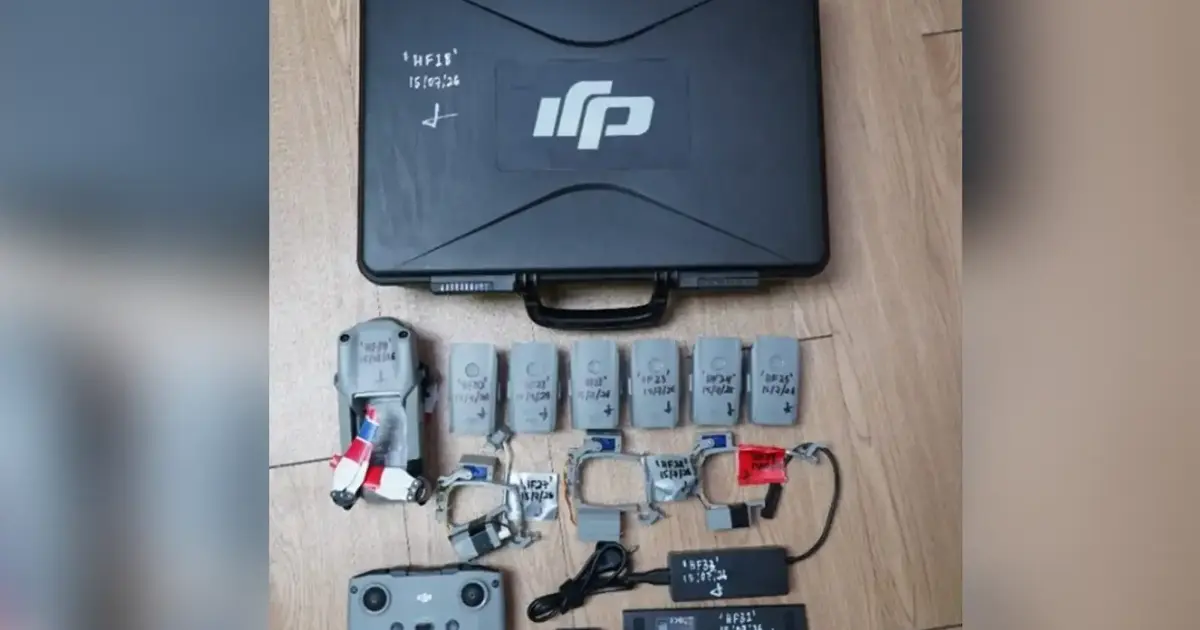
In a significant security breach at a state penitentiary, Melaka police have arrested a man and woman on suspicion of orchestrating a tobacco smuggling operation targeting Melaka prison using unmanned aerial technology. The pair's detention follows an investigation that revealed the attempted delivery was likely coordinated with an inmate currently held at the facility, according to the state police chief's statement on the operation.
The incident underscores growing security vulnerabilities at Malaysian correctional institutions, where the use of drones has emerged as an increasingly sophisticated method for delivering contraband. Unlike conventional smuggling approaches that rely on visitors, staff complicity, or parcels sent through the postal system, drone operations present authorities with a novel enforcement challenge. The anonymity and operational distance afforded by such technology make detection and interception considerably more difficult than traditional methods, allowing orchestrators to remain distant from prison grounds while still executing the delivery.
The involvement of prison staff or inmates in facilitating such schemes represents a critical concern for correctional system management. When internal actors collaborate with external operatives, the complexity of enforcement multiplies substantially. Prison authorities must now contend not only with external threats but also potential breaches within their own security perimeter. This particular case suggests a level of coordination and planning that indicates the smuggling operation was not spontaneous but rather deliberately arranged between parties with inside knowledge of prison routines and surveillance patterns.
Tobacco remains a highly sought commodity within Malaysian prisons despite institutional restrictions. The demand for such products stems from addiction among the inmate population and the significant premiums that controlled substances command within the prison economy. Smuggled tobacco often sells at markedly elevated prices within correctional facilities, creating substantial financial incentive for both external operatives and internal collaborators. This economic dimension transforms the smuggling operation from a simple rule violation into a criminal enterprise with genuine profitability for participants.
The security implications of drone usage in this context reveal gaps in existing prison security infrastructure. Malaysian correctional facilities, like many institutions globally, were not originally designed to counter aerial threats. Traditional perimeter security, including walls, fences, and ground-level monitoring, proves inadequate against airborne delivery systems. The incident suggests that Melaka prison, and potentially other facilities across the country, may lack adequate counter-drone detection and interception capabilities. This operational deficiency creates opportunities for repeated attempts unless security protocols are promptly upgraded.
The Melaka police chief's characterisation of the incident as involving collusion with an inmate reflects the multi-layered nature of modern prison security challenges. Correctional authorities must now implement enhanced vetting procedures, monitoring systems, and technological countermeasures to address this emerging threat vector. The coordination with an internal actor indicates that some form of signalling or communication system enabled the external parties to synchronise their delivery attempt with specific timing or location variables known to the inmate participant.
From a broader security perspective, this case represents one manifestation of how technological advancement can be repurposed for criminal activity. While drone technology offers legitimate applications across agriculture, surveying, and emergency response, its accessibility and operational simplicity make it particularly vulnerable to misuse. The relatively low cost of entry-level commercial drones compared to the potential profitability of successful prison smuggling operations creates an asymmetric risk-reward calculation that may attract additional perpetrators unless enforcement and deterrence mechanisms prove sufficiently robust.
The arrest of this couple may prompt a comprehensive review of security protocols across Malaysia's prison system. Correctional authorities will likely implement new procedures including enhanced airspace monitoring, drone detection systems, and potentially restricted flight zones around detention facilities. Such measures could include radar-based detection equipment, signal jamming technology, or even trained personnel assigned specifically to monitor prison skies during operational hours. The financial and operational burden of such upgrades falls on already-stretched correctional budgets.
The investigation's advancement to the point of arrests suggests that Malaysian law enforcement possesses adequate investigative capabilities to trace drone-based smuggling operations. Whether through surveillance footage, communication records, GPS data from recovered or intercepted equipment, or informant intelligence, authorities identified the perpetrators. However, the ease with which such operations appear to be executed indicates that detection and interception at the point of delivery remains challenging. Future cases may require preventative measures rather than purely reactive investigation and prosecution.
This incident also carries implications for how Malaysian prisons manage relationships between inmates and external networks. Visitors, phone calls, and mail represent known communication vectors, but the involvement of specific inmates in orchestrating external smuggling operations suggests either that existing communication restrictions are inadequately enforced or that inmates possess information about facility vulnerabilities that external collaborators can exploit. Intelligence gathering from this case may reveal systemic weaknesses beyond the specific incident itself.
Looking forward, the successful prosecution of this case will likely establish important legal precedent regarding drone-based smuggling offences. Malaysian courts will need to determine appropriate sentencing frameworks that reflect both the seriousness of the prison security breach and the sophisticated nature of the operation. Such legal clarity becomes increasingly important as similar incidents proliferate across correctional systems regionally and globally.

