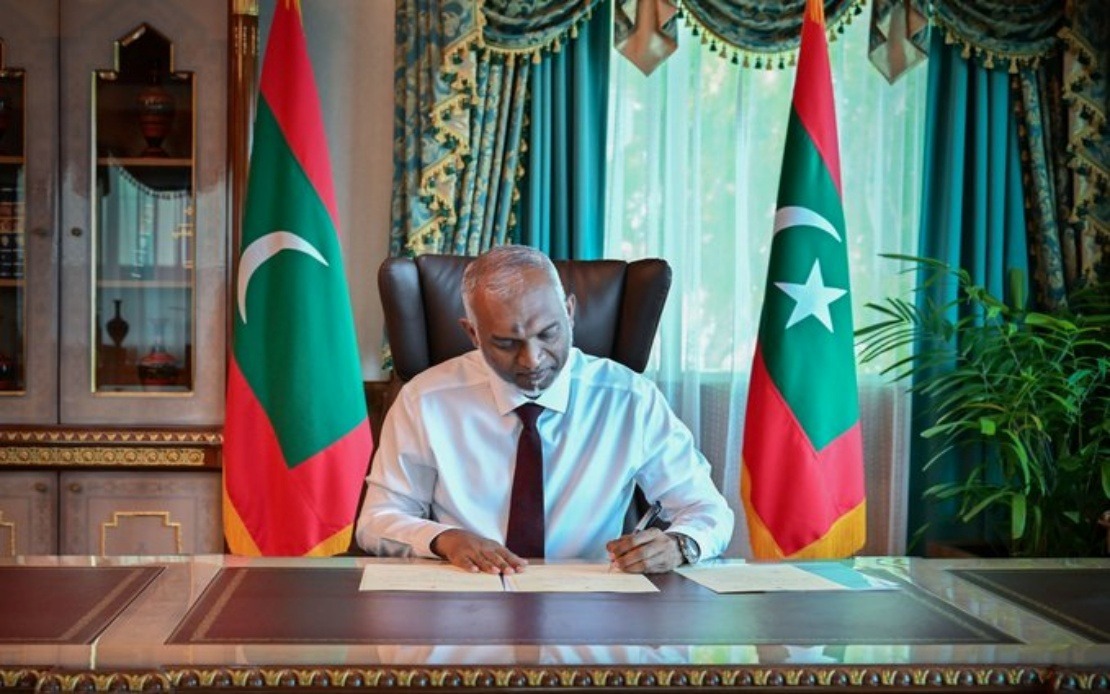
Maldives President Mohamed Muizzu has used Malaysia's National Day celebration as an opportunity to underscore the strategic importance of the bilateral relationship between the two nations, sending formal greetings to His Majesty Sultan Ibrahim, King of Malaysia, and Prime Minister Datuk Seri Anwar Ibrahim that emphasise shared values and mutual commitment to regional cooperation.
In his correspondence to the Sultan, Muizzu characterised the relationship as firmly rooted in five decades of sustained engagement, describing the foundation as built upon a deep reservoir of mutual respect, shared friendship, and collaborative endeavour. The Maldives President's tone reflected not merely ceremonial acknowledgment but rather a deliberate reaffirmation of his administration's intention to pursue closer partnership with Kuala Lumpur across multiple domains of engagement.
The messaging to Prime Minister Anwar Ibrahim elaborated on the mechanisms through which the two nations have maintained their connection, pointedly referencing regular high-level political meetings and robust exchange programmes between ordinary citizens. This emphasis on people-to-people interaction carries particular significance for regional diplomacy, suggesting that Muizzu views the relationship as extending far beyond governmental transactions to encompass cultural and social dimensions that foster resilience in ties between nations.
The Maldives President expressed confidence that the existing foundation of goodwill would not only endure but expand to create enhanced economic opportunities for both populations. This forward-looking perspective indicates recognition that in an increasingly competitive regional environment, economic complementarities and mutually beneficial trade arrangements serve as vital underpinning for sustained diplomatic relations. For Malaysia, such statements from regional leaders carry weight given the country's role as a significant economic actor within the Indian Ocean region and ASEAN.
Muizzu's overtures arrive amid a broader pattern of regional diplomatic activity, with other major powers also extending National Day greetings to Malaysia. Pakistan's Ministry of Foreign Affairs conveyed formal congratulations through social media channels, emphasising aspirations for Malaysia's continued stability and prosperity, language that reflects the traditional diplomatic courtesies expected between nations aligned through various multilateral frameworks including the Organisation of Islamic Cooperation.
India's response, conveyed through Minister of External Affairs Subrahmanyam Jaishankar, carried particular nuance by explicitly referencing the Comprehensive Strategic Partnership framework that governs New Delhi's engagement with Kuala Lumpur. Jaishankar's mention of advancing this established partnership structure alongside his personal greetings to Foreign Minister Datuk Seri Mohamad Hasan signalled India's continued investment in deepening ties with Malaysia across defence, economic, and diplomatic domains.
The convergence of these diplomatic messages during Malaysia's National Day celebration underscores the country's significance within regional power calculations. For Malaysia, such international recognition reflects its position as a non-aligned nation that maintains substantive relationships with multiple major powers and regional actors without appearing beholden to any single bloc. This balancing act remains central to Malaysian foreign policy strategy, particularly as great power competition intensifies across Asia-Pacific.
The emphasis on economic cooperation articulated by Muizzu holds particular relevance for Malaysian policymakers considering the strategic importance of the Indian Ocean region for trade routes and regional stability. The Maldives, positioned strategically along critical maritime corridors, represents both a potential economic partner and a nation whose security and stability matter for broader regional prosperity. Strengthening ties with Male therefore serves Malaysian interests in maintaining a stable neighbourhood conducive to economic activity.
These diplomatic exchanges also reflect the maturation of ASEAN relationships with regional powers. Malaysia's role within ASEAN as a moderate voice and bridge-builder means that its bilateral relationships carry implications extending beyond purely national interests. How Malaysia manages its ties with island nations like the Maldives influences the broader pattern of regional relations and the capacity of smaller states to maintain agency within larger geopolitical frameworks.
The greetings from multiple nations during Malaysia's National Day also highlight the utilisation of symbolic diplomatic moments to reinforce bilateral narratives. Rather than treating such occasions as perfunctory, leaders increasingly employ National Day messages to communicate substantive commitments and strategic priorities to domestic and international audiences simultaneously. For Muizzu and other regional leaders, the timing and content of such messages carry diplomatic weight beyond their surface celebration.

