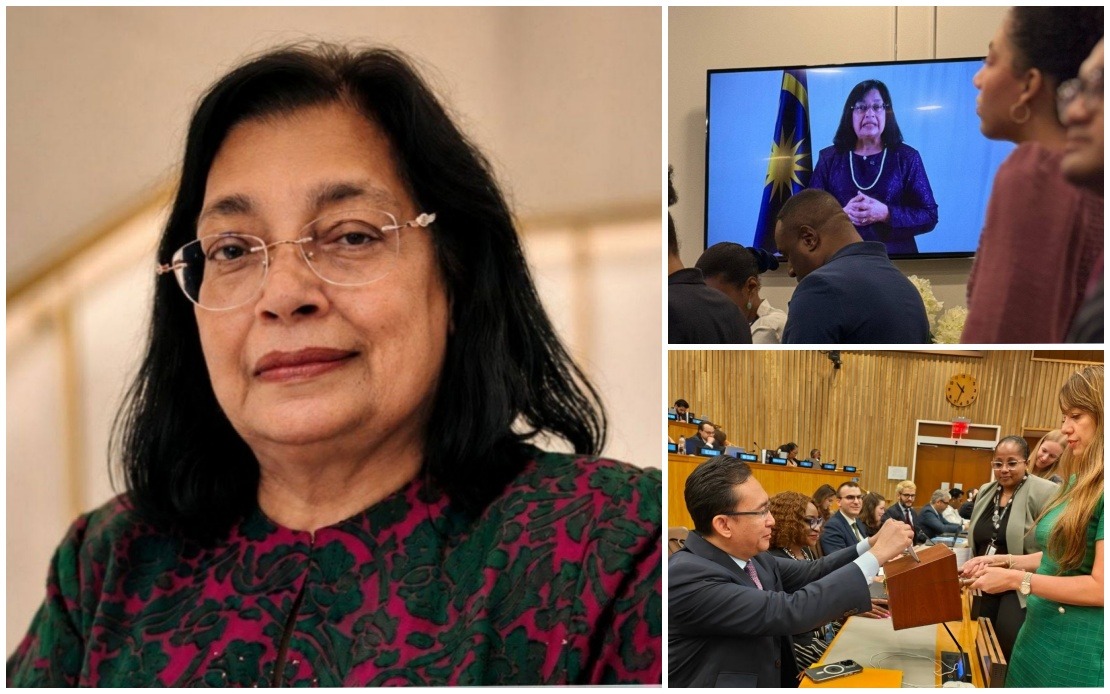
Datuk Yasmeen Muhamad Shariff has secured a second term on the United Nations Committee on the Rights of the Child following her election at the organisation's headquarters in New York on Tuesday. The Malaysian expert garnered 136 votes from 189 States Parties participating in the balloting during the 21st Meeting of States Parties to the Convention on the Rights of the Child, positioning her as the most supported candidate in the election. Her selection for the 2027–2031 term underscores the international community's confidence in her professional qualifications and commitment to advancing protections for vulnerable young people across borders.
This represents a remarkable return to the influential committee for Yasmeen, who previously served during the 2013–2017 term. Her reappointment after a decade-long interval speaks to the sustained recognition of her expertise within the global governance structures responsible for monitoring children's welfare. The Foreign Ministry, formally known as Wisma Putra, released a statement emphasising that the electoral outcome demonstrates the breadth of international backing for her candidacy and the value placed on her contributions to child protection advocacy on the world stage.
As a member of this prestigious committee, Yasmeen will function as an independent expert operating in her personal capacity rather than as a government representative. This distinction is important because it allows her to exercise professional judgment without direct political constraints, ensuring that her recommendations and assessments of state compliance with the Convention on the Rights of the Child remain grounded in objective expertise. The committee's responsibilities encompass monitoring how nations implement the convention's provisions, facilitating productive exchanges with signatory states, and promoting approaches that prioritise children's fundamental rights when tackling transnational challenges.
The committee's work has assumed greater urgency given contemporary pressures facing children worldwide. From climate displacement and pandemic-induced educational disruptions to migration crises, digital exploitation, and ongoing armed conflicts, the international framework for child protection must continuously adapt to emerging threats. Yasmeen's experience and previous service position her to help guide the committee through these complexities, ensuring that solutions address both traditional safeguarding concerns and novel risks posed by technological change and geopolitical instability.
Malaysia's successful nomination reflects broader recognition of the country's substantive engagement with child protection frameworks. The Foreign Ministry characterised the election outcome as validation of Malaysia's dedication to implementing comprehensive policies, legislative modernisation, and targeted programmes designed to enable all children to develop their capacities fully. This framing links Yasmeen's personal achievement to the nation's reputation as a responsible participant in international children's rights architecture, thereby elevating Malaysia's standing among states committed to safeguarding minors.
The principle of leaving no child behind, which the ministry explicitly referenced in its statement, has become a cornerstone of the United Nations' Sustainable Development Goals and broader human rights agenda. Yasmeen's appointment contributes to efforts ensuring that this aspirational commitment translates into concrete protections, particularly for marginalised and disadvantaged populations who lack robust domestic advocacy mechanisms. Her involvement in committee deliberations will likely influence how the UN approaches disparities in children's access to education, healthcare, justice, and freedom from violence.
Wisma Putra explicitly acknowledged the Ministry of Women, Family and Community Development as instrumental in facilitating Malaysia's nomination campaign and preparing Yasmeen for election. This interministerial coordination demonstrates how child protection represents a cross-cutting priority requiring integrated approaches across government portfolios. Such collaboration has become standard practice in states advancing comprehensive child welfare strategies, signalling that Malaysia recognises children's rights as foundational rather than peripheral to governance.
The international consensus supporting Yasmeen's candidacy carries implications for Malaysia's diplomatic positioning in Southeast Asia and globally. Securing 136 votes from nearly 190 eligible states indicates that the country has cultivated broad support among diverse nations irrespective of regional alignment or development status. This diplomatic achievement enhances Malaysia's soft power and credibility when advocating for regional initiatives addressing child trafficking, education access, or protection from exploitation—issues particularly acute across Southeast Asia.
Looking forward, the committee's mandate assumes heightened significance as crises proliferate. Armed conflicts displace unprecedented numbers of children, organised criminal networks traffic minors across borders at alarming rates, and climate catastrophes destabilise family structures and educational systems. Yasmeen's appointment positions Malaysia as a contributor to global efforts counteracting these threats through institutional engagement. Her committee work will intersect with diplomatic initiatives, multilateral development programmes, and knowledge-sharing platforms addressing child welfare across regions.
Malaysia's commitment to the Convention on the Rights of the Child and its subsidiary protocols reflects the nation's broader values regarding intergenerational responsibility and human dignity. By maintaining constructive relationships with stakeholders advancing child protection—whether international organisations, civil society groups, or other governments—Malaysia demonstrates consistency between rhetorical commitments and institutional participation. Yasmeen's presence on the committee for another four-year term embodifies this consistency and promises continued Malaysian contributions to evolving global standards protecting children from harm while promoting their development, participation, and voice in matters affecting their futures.