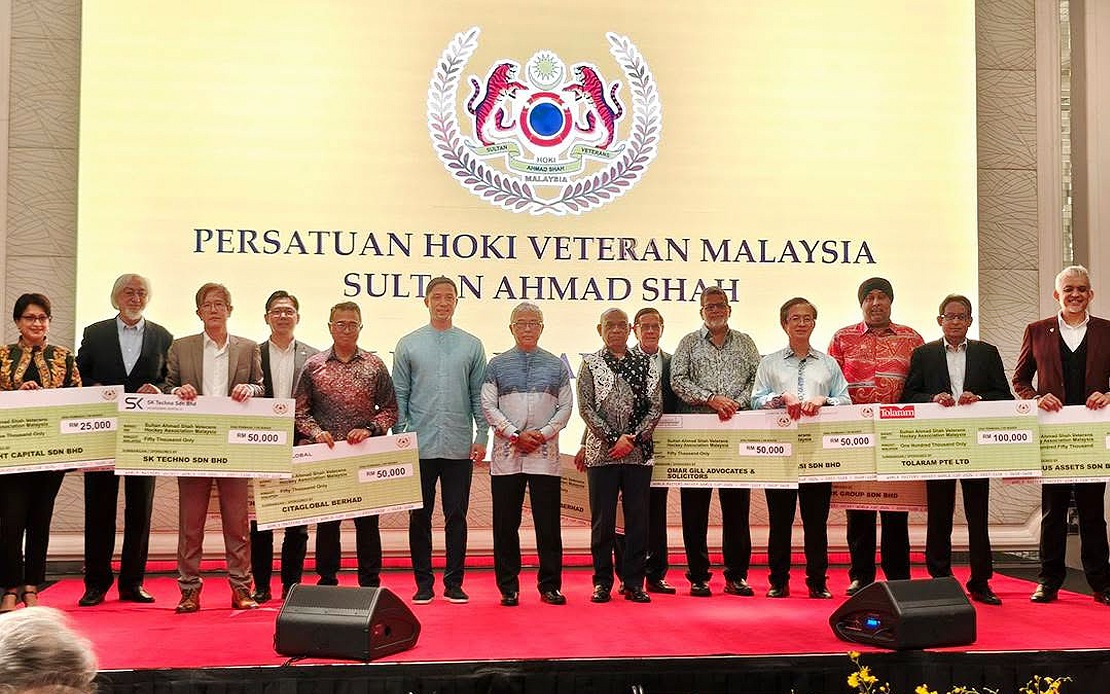
Malaysia's veteran hockey contingent has received a financial injection of RM1.36 million to prepare for participation in the 2026 Masters Hockey World Cup, a biennial global championship that showcases elite retired players competing in age-stratified divisions. The funding announcement, made at a Royal High Tea Ceremony in Kuala Lumpur, underscores the nation's commitment to maintaining a competitive presence in international veteran sports despite the niche nature of the discipline.
The championship will unfold across two neighbouring countries and span nearly four weeks, with matches scheduled at multiple venues in both the Netherlands and Belgium. The geographical spread reflects the tournament's ambitious scale, accommodating five distinct age categories that range from 40 years old to 65 years old, each competing in separate locations from July 22 through August 16. Malaysia will field teams across all five divisions, a significant undertaking that necessitates comprehensive logistical and financial planning.
Tengku Arif Temenggong Tengku Fahad Mu'adzam Shah, president of the Sultan Ahmad Shah Malaysian Veteran Hockey Association, articulated the multifaceted purpose of the financial support during an interview with media representatives. The contributions, gathered from diverse stakeholders, will be deployed strategically to address immediate operational requirements such as accommodation and international travel expenses. Beyond these foundational tournament costs, the association has identified a secondary objective: identifying retired national-level hockey players who face personal financial constraints and would otherwise be unable to attend the competition.
This targeted approach to fund distribution reflects a broader philosophy within the Malaysian veteran hockey community of revitalising participation among former elite athletes who may have drifted from competitive engagement due to economic circumstances. By explicitly allocating resources to support such players, the association signals recognition that career transitions for professional and semi-professional athletes often entail financial uncertainty. The scheme provides a pathway for Malaysia's most accomplished former players to represent the nation on a prestigious international stage without bearing personal financial burdens that might otherwise prove prohibitive.
The 2026 Masters Hockey World Cup holds particular significance as the eighth iteration of a championship structure that emerged from a substantial institutional development in 2012. That year witnessed the consolidation of two previously separate veteran hockey organisations—the International Masters Hockey Association and the World Grand Masters Association—into the unified World Masters Hockey framework. This merger transformed veteran hockey into a cohesive, internationally standardised competition format, establishing the Masters World Cup as the premier tournament for retired players across the globe.
The tournament's venue structure demonstrates how the competition accommodates varying competitive levels and athlete demographics across age groups. The youngest category, comprising 40-year-old players, will compete at HC Schiedam in the Dutch city of Schiedam, a location chosen presumably for its infrastructural capacity and strategic positioning. The 45-year-old and 50-year-old categories will utilise HC Rotterdam, also in the Netherlands, allowing these divisions to share facilities and logistical support from July 22 until August 1. The older cohorts, spanning 60 and 65 years of age, will compete further south in Belgium, with the 60-year-old category based at HC Olympia in Brasschaat, Antwerp, and the 65-year-old category positioned at BHV Push in Breda, Netherlands, contesting matches between August 6 and 16.
For Malaysian hockey and the broader Southeast Asian sporting landscape, the tournament represents an opportunity to showcase the region's continued engagement with established sporting disciplines and veteran participation frameworks. Veteran hockey, while relatively modest in profile compared to conventional professional hockey or mainstream team sports, maintains a dedicated global following and serves as a vehicle for international sporting diplomacy among middle-income nations. Malaysia's preparation and participation demonstrate that the country recognises the value of competitive sport across diverse age demographics and the prestige associated with world championship participation.
The patronage extended by Sultan of Pahang Al-Sultan Abdullah Ri'ayatuddin Al-Mustafa Billah Shah, who serves as the Patron of the Sultan Ahmad Shah Malaysian Veteran Hockey Association, underscores the royal support that legitimate sporting initiatives enjoy in Malaysia. This institutional backing, formalised through the association's naming convention, provides credibility and facilitates fundraising efforts from both public and private contributors. The Royal High Tea Ceremony served as a formal occasion to crystallise this support and publicly announce the funding commitment, lending gravitas to the endeavour and signalling that veteran hockey occupies a recognised niche within Malaysia's sporting ecosystem.
From a practical perspective, the RM1.36 million funding quantum must be distributed across multiple expenditure categories to optimise the contingent's preparedness and competitive performance. International airfares for players across five teams, accommodation for several weeks in Dutch and Belgian cities, ground transportation, and training facility access represent substantial fixed costs that would consume a significant portion of the allocation. The association's decision to retain flexibility within the budget to sponsor individuals facing financial difficulty indicates that administrative planning accounts for contingencies and recognises the heterogeneous circumstances of veteran players, some of whom may retain robust financial capacity while others may have experienced economic difficulties during retirement or career transitions.
The biennial nature of the Masters World Cup creates a rhythmic global schedule that allows nations to plan, fundraise, and prepare systematically. Malaysia's engagement with this cycle positions the country within a stable international framework governed by established protocols and competitive standards. For the veteran hockey community both domestically and regionally, such tournaments provide competitive outlets that maintain sporting engagement among a demographic that has already completed professional or serious amateur careers, potentially extending the health and social benefits associated with continued athletic participation.
Looking forward, Malaysia's participation in the 2026 championship and the institutional investment reflected in the funding announcement suggest that veteran hockey holds enduring appeal within the nation's sporting culture. While the sport occupies a modest space relative to football, badminton, or squash, its existence demonstrates the diversity of Malaysia's sporting interests and the willingness of national bodies and royal patrons to support niche athletic pursuits that foster international competition and represent the nation on global stages. The success or performance outcomes of the 2026 contingent may influence future funding considerations and the trajectory of veteran hockey development in Malaysia and potentially across Southeast Asia.

