Malaysian universities have begun implementing standardised approaches to artificial intelligence adoption following the Ministry of Higher Education's release of comprehensive generative AI guidelines in 2024, marking a significant step toward managing the technology's integration into academic environments. Deputy Minister Adam Adli Abdul Halim outlined how institutions across the country have translated the ministry's framework into institutional policies that address both the opportunities and risks presented by rapidly advancing AI systems in educational settings.
The framework establishes a structured pathway for universities to develop contextualised procedures reflecting their unique academic cultures whilst maintaining consistency with national standards. Rather than imposing rigid restrictions, the guidelines provide a flexible foundation allowing each institution to craft institutional guidelines and standard operating procedures tailored to their specific needs whilst ensuring adherence to fundamental principles of academic ethics and integrity.
Institutions have moved quickly to operationalise the framework through comprehensive protocols addressing multiple dimensions of AI use. Universities now maintain documented procedures for identifying, investigating, and responding to instances where students or staff misuse generative AI technologies in ways that violate academic standards. These structured response mechanisms enable proportionate interventions and disciplinary pathways when breaches occur, moving beyond ad hoc decision-making toward consistent institutional practice.
A cornerstone of the governance approach requires students to declare their use of generative AI in academic work, creating transparency and accountability throughout the submission process. This declaration requirement shifts from concealment to openness, allowing educators to assess not merely whether AI was used, but how it was integrated into the research and writing process. The approach recognises that appropriate AI usage differs fundamentally from plagiarism or academic dishonesty involving hidden reliance on AI-generated content.
The guidelines explicitly reinforce that students must maintain rigorous standards in research methodology and academic referencing regardless of AI involvement in their work. Rather than treating AI as a replacement for traditional scholarly practices, the framework positions it as one tool among many that should enhance rather than circumvent fundamental academic disciplines. Students remain accountable for the accuracy, originality, and appropriateness of content regardless of whether they generated it themselves or refined AI-assisted output.
Adam Adli communicated a firm position that violations carry serious consequences, emphasising that students who submit AI-generated assignments without proper attribution or who rely entirely on AI-generated content whilst ignoring academic ethics standards face disciplinary consequences extending to revocation of academic qualifications. This escalated enforcement approach signals institutional commitment to protecting the value and integrity of academic credentials in an environment where technology increasingly blurs authorship boundaries.
The deputy minister articulated a philosophical position grounding the entire framework: technology cannot substitute for the intellectual discipline and critical thinking that constitute the essence of higher education. Rather than viewing AI as liberating students from rigorous academic work, the guidelines position it instrumentally as a supporting tool that can enhance learning efficiency whilst remaining subordinate to fundamental academic values and methods.
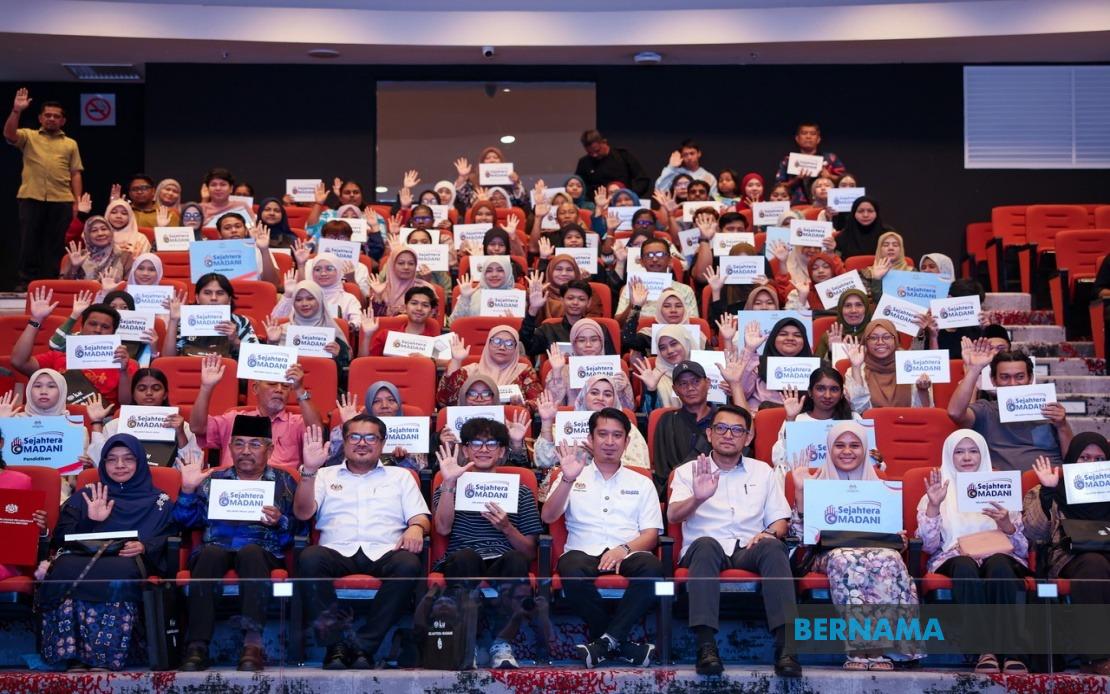
Beyond governance of AI itself, the government has expanded educational support through complementary initiatives. At an awards ceremony in Melaka, outstanding SPM examination performers received laptops whilst 100 university students from economically disadvantaged backgrounds received tablets under the Sejahtera MADANI initiative. These distribution programmes target students from eKasih registered households, representing a dual commitment to both quality standards and equitable access to educational technology.
The convergence of AI governance frameworks with expanded technology provision reflects a broader policy recognising that digital tools increasingly mediate educational access and outcomes across Malaysia. Establishing ethical guardrails for advanced technologies whilst simultaneously expanding device availability addresses both quality concerns and equity imperatives that characterise contemporary higher education policy challenges.
For Malaysian universities navigating rapid technological change, the 2024 guidelines represent a meaningful effort to establish shared expectations and procedures rather than leaving individual institutions to develop responses independently. This standardised approach carries particular relevance for regional institutions that increasingly compete internationally for students and faculty, as consistent governance standards support institutional credibility and qualification recognition across borders.
The implementation phase will prove crucial in determining whether guidelines translate into effective institutional practice. Success requires not only administrative structures but also sustained educator engagement in identifying grey areas where AI's role in academic work remains ambiguous, ongoing refinement of detection methods, and balanced enforcement that distinguishes between good-faith pedagogical innovation and deliberate academic misconduct.
As artificial intelligence capabilities accelerate, Malaysia's proactive approach to establishing governance frameworks positions the higher education system to adapt iteratively rather than reactively. The guidelines' emphasis on institutional flexibility combined with national consistency offers a model that other Southeast Asian nations grappling with similar challenges may find instructive, potentially establishing Malaysia as a thoughtful voice in regional conversations about maintaining academic integrity amid technological disruption.

