Malaysia's burgeoning scam problem has reached critical proportions, with reported incidents exceeding 66,000 cases in the previous year and financial losses totalling approximately RM2.97 billion. These figures underscore a fundamental shift in the nature of organised crime within the nation, where coordinated syndicates leverage advanced technological tools and psychological manipulation to defraud individuals, families and entire businesses. According to crime prevention specialists, the scale and sophistication of these criminal operations represent far more than isolated incidents; they constitute an existential challenge to Malaysia's digital economy and social cohesion.
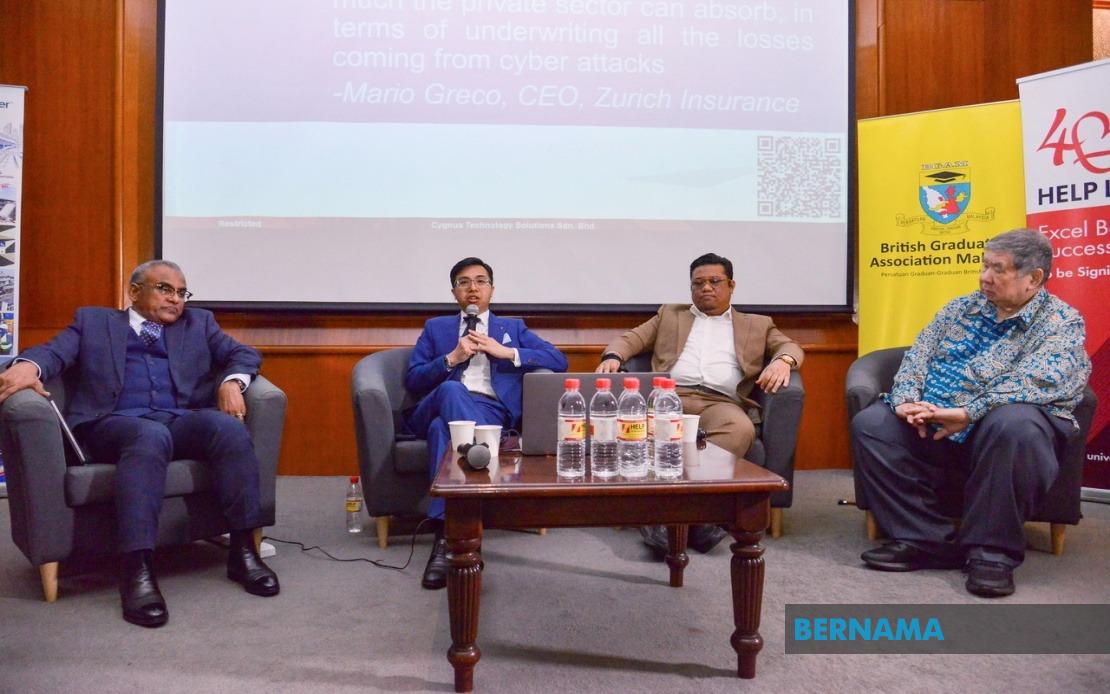
Speaking at a comprehensive scam awareness event organised by the British Graduates Association Malaysia at HELP University, Datuk Kamarudin Md Ali, an exco member of the Malaysia Crime Prevention Foundation, characterised the current environment as one requiring urgent and coordinated intervention at every societal level. He emphasised that confronting this crisis demands more than reactive government measures—it necessitates that ordinary citizens become active participants in fraud prevention. The framing of citizens as an additional defensive barrier reflects a growing recognition that traditional law enforcement capacity alone cannot adequately address the velocity and volume of scam operations unfolding across digital channels.
The sophistication underlying contemporary scam operations distinguishes them markedly from historical fraud cases. Modern criminal syndicates exploit artificial intelligence to generate convincing deepfakes, employ advanced social engineering techniques to manipulate victims psychologically, and utilise cryptocurrency systems to obscure financial trails. These technological capabilities, combined with detailed personal information harvested from data breaches, enable criminals to craft highly targeted schemes tailored to individual victims. The convergence of these elements creates a particularly challenging enforcement landscape, where traditional investigative methods often lag behind the adaptability of criminal operations.
Prof Datuk Seri Dr Akhbar Satar, director of HELP University's Institute of Criminology and Criminal Justice, articulated a crucial insight during the proceedings: scammers fundamentally operate through manipulation of human psychology rather than technical exploitation alone. His observation that scammers "hack human psychology" rather than computers represents a paradigm shift in understanding fraud prevention. This perspective suggests that technological defences, while necessary, prove insufficient without parallel investment in cultivating public awareness, critical thinking capacity and ethical decision-making across populations. Universities, he argued, bear particular responsibility for embedding digital literacy and integrity into educational curricula as a foundational crime prevention strategy.
Tan Sri Dr Syed Hamid Albar, who served as the first chairman of the Malaysia Crime Prevention Foundation and previously held the Home Ministry portfolio, contextualised scams within a broader governance framework. His remarks positioned fraud not merely as a financial crime but as a phenomenon threatening public trust in digital systems and institutional integrity. This elevated framing acknowledges that scam epidemics create cascading effects beyond immediate financial loss—they erode confidence in digital commerce, discourage online participation among vulnerable populations and undermine social cohesion. Addressing this requires what he termed a "whole-of-society approach," wherein education emerges as perhaps the most potent prevention mechanism because informed citizens demonstrate greater resilience against deception.
The regional context adds urgency to Malaysia's response efforts. Datuk Seri Ramli Mohamed Yoosuf, former director of Bukit Aman's Commercial Crime Investigation Department, revealed that Southeast Asia has emerged as the global epicentre for commercial crime operations. He estimated regional scam losses in 2025 at between USD88 billion and USD114 billion, with organised scam compounds operating across Myanmar, Cambodia, Laos and the Philippines generating approximately USD40 billion annually. These operations increasingly incorporate AI-generated deepfakes, cryptocurrency laundering infrastructure and exploited labour drawn from more than 80 countries. The transnational architecture of these criminal networks complicates enforcement, as perpetrators operate across jurisdictional boundaries and utilise international financial systems to obscure transaction origins.
Malaysia has implemented legislative and institutional responses to this escalating threat. The Cybersecurity Act 2024 represents a significant legislative modernisation, establishing contemporary frameworks for addressing cyber-enabled offences. Enhanced compliance with Financial Action Task Force standards strengthens Malaysia's position within international anti-money laundering architecture. The establishment of the National Scam Response Centre institutionalises inter-agency coordination, creating dedicated capacity for investigating and responding to fraud cases. However, officials acknowledge that despite these initiatives, criminal syndicates continue adapting and evolving their methodologies faster than regulatory frameworks can address them.
Emergent scam trends demand particular attention because they reveal criminals' capacity for continuous innovation. The integration of artificial intelligence into criminal operations enables mass customisation of phishing attempts, voice cloning for fraudulent phone calls, and creation of convincing fake video evidence. Cryptocurrency's pseudonymity facilitates rapid movement of illicit funds across borders. The targeting of specific professional and demographic groups through carefully researched social engineering campaigns indicates increasingly sophisticated market segmentation within the criminal ecosystem. These developments suggest that Malaysia faces not a static threat but a continuously evolving challenge requiring sustained investment in detection, investigation and prevention infrastructure.
Addressing scams through enforcement mechanisms alone inevitably proves reactive rather than preventive. Datuk Ramli Mohamed Yoosuf's remarks emphasise that sustained progress requires stronger collaboration extending across government agencies, law enforcement, financial institutions, technology providers, educational institutions and community organisations. This multisectoral approach acknowledges that different stakeholders possess unique vulnerabilities and capacity contributions. Financial institutions can implement transaction monitoring and customer education. Technology providers can develop more robust identity verification and fraud detection systems. Educational institutions can embed cybersecurity and critical thinking into curricula. Media organisations can amplify scam awareness campaigns. Communities can establish peer support networks for victims and potential targets.
Media literacy emerges as a critical but underutilised component of comprehensive scam prevention strategy. The proliferation of convincing deepfakes and manipulated media content exploits cognitive vulnerabilities across populations. Developing capacity to assess information credibility, recognise emotional manipulation techniques, and verify claims through independent channels provides foundational protection against sophisticated social engineering. The inclusion of media literacy within national awareness campaigns, school curricula and public health communications would address the psychological dimension of scam victimisation that purely technical solutions cannot reach.
The psychological profile of scam victims reveals that no demographic group achieves immunity through education or socioeconomic status alone. Highly educated professionals, experienced business owners and government officials have fallen prey to sophisticated schemes because scammers exploit universal human vulnerabilities: trust, reciprocity, authority and urgency. This reality underscores that scam prevention requires continuous reinforcement rather than one-time awareness efforts. Workplace training, family conversations, peer education networks and regular media campaigns collectively create an environment where healthy scepticism becomes normalised rather than exceptional.
Malaysia's vulnerability to scam operations reflects both its advanced digital ecosystem and its position within regional and global supply chains. As the economy becomes increasingly digital and international, criminal networks position themselves to exploit these interconnections. Conversely, Malaysia's relatively mature institutional capacity, educated population, and commitment to regulatory modernisation create assets that other Southeast Asian nations might leverage through coordinated regional initiatives. Building greater capability for information sharing, joint investigations and unified standards across ASEAN would enhance collective resilience against transnational organised crime networks.
The path forward demands recognition that scam prevention constitutes a permanent governance challenge rather than a problem amenable to technological or enforcement solutions alone. Sustained progress requires continuous investment in public education, institutional coordination, technological innovation and ethical norm-building within society. Treating scams as merely financial crimes rather than symptoms of broader social vulnerabilities risks perpetual reactive responses. Instead, embracing a preventive orientation that prioritises integrity, critical thinking and collective responsibility across institutions and communities offers greater promise for building the scam-resilient Malaysia that government and civil society leaders increasingly recognise as essential for the nation's digital future.

