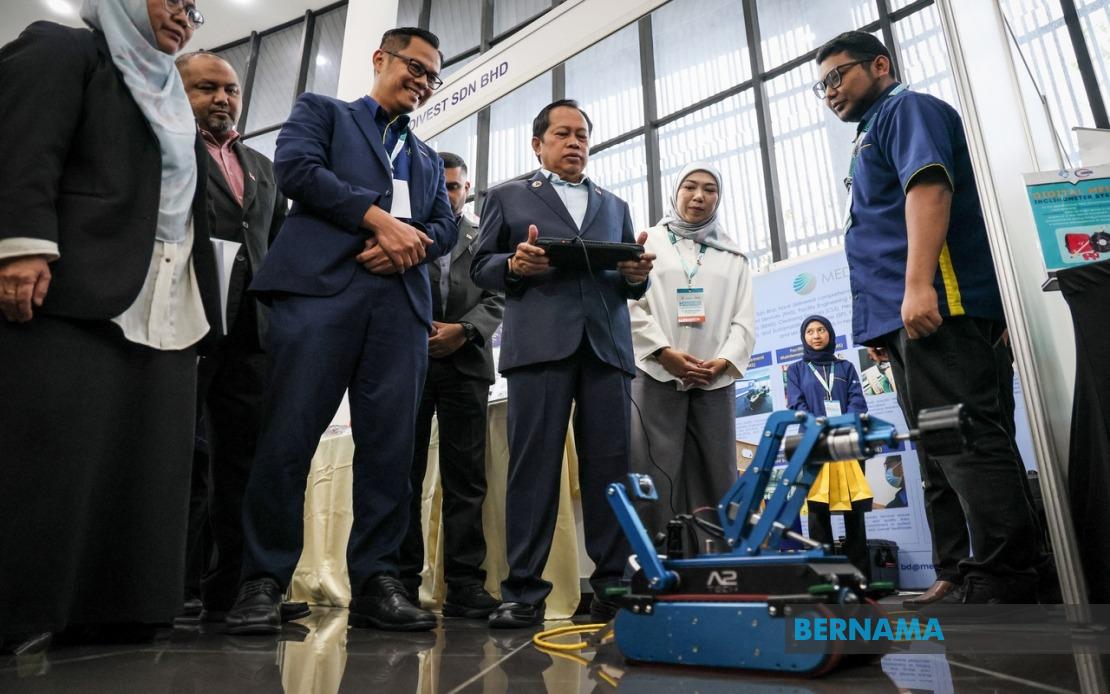
The Malaysian construction industry is sitting on a largely untapped goldmine in facility management, according to the Works Ministry (KKR), which has launched a concerted campaign to attract more contractors into the sector. Speaking at the Contractors Convention 2026: NexGen Builders in Butterworth, Deputy Works Minister Datuk Seri Dr Ahmad Maslan highlighted that the FM and maintenance market has generated RM39.59 billion in declared projects between 2023 and 2025 alone, yet the subsector remains chronically undersupplied with qualified service providers.
The numbers paint a striking portrait of disparity. Construction Industry Development Board (CIDB) records show that 1,541 FM and maintenance projects were announced during the three-year window, yet only 468 contractors currently hold F01 and F02 specialisation registrations—the qualifications required to operate as FM specialists. This substantial gap between project volume and contractor capacity suggests that many facility management contracts are either being handled by generalist construction firms lacking specific expertise, awarded to foreign service providers, or remaining partially unfulfilled. The shortfall represents a missed economic opportunity for local firms seeking to diversify revenue streams beyond traditional construction work.
Ahmad's intervention reflects a strategic shift in how Malaysia's policymakers view the construction value chain. Historically, the industry's attention has concentrated narrowly on the construction phase—designing and building new structures. Once handover occurs, maintenance and facility management have traditionally been treated as afterthought functions, often underfunded and assigned to in-house teams lacking professional standards or systematic approaches. This mindset has persisted despite the obvious reality that buildings, roads, bridges and infrastructure assets require continuous upkeep to preserve their functionality and extend their operational lifespan. By reframing FM as a legitimate, profit-generating business subsector rather than a mere support function, the ministry is attempting to reshape contractor thinking and unlock significant economic value.
The timing of this push coincides with Malaysia's growing infrastructure stock and ageing public assets. As the country's development accelerates and existing facilities mature, the demand for professional facility management services will inevitably rise. Current trends in Southeast Asia show that FM is rapidly professionalising across more developed economies, with specialised firms commanding premium rates for comprehensive asset management, predictive maintenance, and systems optimisation. Malaysian contractors who establish FM credentials now position themselves to capture this expanding market before international competitors establish stronger footholds in the region.
Central to the ministry's strategy is the newly launched CIS 33:2026 Facility Management Good Practice Guide, developed by CIDB as a standardised framework for the construction industry. This guide serves multiple purposes: it establishes common protocols that asset owners, facilities managers, contractors and other stakeholders can reference when engaging in FM work; it elevates professional standards across the subsector; and it provides a roadmap for contractors considering entry into FM specialisation. By creating a systematic, sustainable and standardised approach, the guide removes ambiguity around FM service delivery and helps contractors understand what competencies and systems they must develop to operate successfully in this space.
For Malaysian contractors, the practical implications are substantial. Firms currently focused exclusively on design-build-handover models could integrate FM divisions, creating integrated solutions where they maintain long-term relationships with clients and derive ongoing revenue from asset upkeep contracts. This shift from project-based to service-based business models offers greater revenue stability and customer retention compared to traditional construction, which inherently involves project completion and client transition. For smaller contractors, FM specialisation offers a lower-capital pathway to growth compared to large construction projects, as FM work typically involves service delivery, systems management and maintenance scheduling rather than heavy equipment investment.
Regional context amplifies the opportunity. Across Southeast Asia, facility management is increasingly recognised as a specialised discipline requiring certification and professional expertise. Singapore and Thailand have mature FM markets with established professional bodies and standardised practices. Malaysia, with its substantial infrastructure base and growing emphasis on sustainable asset management, is naturally following this evolution. Contractors who obtain F01 and F02 registrations and familiarise themselves with CIS 33:2026 standards will possess credentials recognised across the region, opening doors to cross-border FM contracts and regional partnerships.
The government's emphasis on FM also reflects broader policy priorities around efficiency and value-for-money in public spending. Systematic facility management extends asset lifespan, reduces emergency repairs, improves safety, and enhances user experience—all outcomes that benefit both government budgets and public welfare. By professionalising the FM subsector through standardised practices and qualified contractors, the ministry is attempting to improve outcomes across Malaysia's entire public asset portfolio, from government buildings to transport infrastructure to municipal facilities.
Yet barriers to entry remain. Many established construction contractors may lack expertise in FM-specific skills such as preventative maintenance planning, building systems management, lifecycle costing, and asset performance monitoring. The F01 and F02 registration process requires demonstrating specific competencies and experience, which existing contractors must develop or acquire through training and organisational restructuring. Additionally, some contractors may perceive FM work as lower-status or less profitable than construction projects, requiring a mindset shift to recognise long-term service contracts as viable business models.
The ministry's outreach efforts, including the Contractors Convention and publication of CIS 33:2026, represent attempts to overcome these perception and knowledge barriers. By celebrating FM as a legitimate business opportunity and providing standardised guidance, policymakers aim to reduce perceived risk and uncertainty that might otherwise deter contractor entry. The substantial RM39.59 billion market value provides concrete evidence that FM demand exists at scale; the challenge is converting awareness into registration and capability development among Malaysia's fragmented contractor base.
Looking ahead, success will depend on whether the construction industry responds to this opportunity. Contractors who act quickly to pursue F01 and F02 registrations, invest in FM capabilities, and adopt CIS 33:2026 standards position themselves to capture growing market share in a subsector that has been starved of specialist attention. For Malaysia's broader economy, a thriving FM subsector offers the prospect of more efficiently managed public assets, reduced maintenance crises, and a more resilient infrastructure base. The ministry has clearly articulated the opportunity; execution now rests with Malaysia's construction firms.

