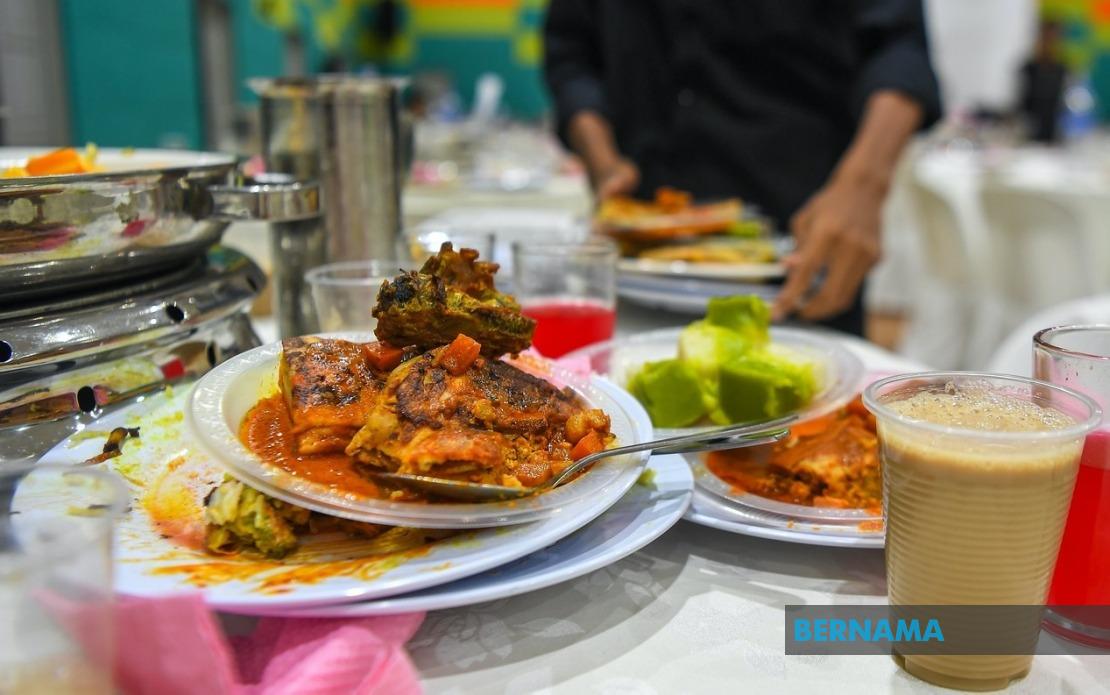
As Malaysia continues its economic development trajectory, an unexpected consequence has emerged: households are throwing away more food than ever before. Datuk Seri Dr Mohd Uzir Mahidin, the country's Chief Statistician, has linked this growing waste problem directly to rising disposable incomes and the lifestyle shifts accompanying prosperity. Speaking ahead of his retirement after nine years leading the Department of Statistics Malaysia, Mohd Uzir painted a picture of a nation where abundance has bred complacency towards one of life's most essential commodities.
The statistics paint a sobering picture of Malaysian household consumption patterns. The National Household Indicators Survey 2025 estimates that Malaysians discard between 31.9 kilogrammes and 97.3 kilogrammes of food per person annually, a remarkable range that reflects vast differences across the country's diverse populations. These figures suggest that millions of tonnes of edible food vanish into landfills each year, raising urgent questions about sustainability, resource efficiency, and social responsibility in an increasingly prosperous society.
Mohd Uzir's analysis reveals a fundamental economic paradox at work in Malaysian households. As people move beyond subsistence living and their basic needs become easily satisfied, consumption patterns fundamentally shift. Households increasingly purchase items that exceed their actual requirements, often driven by promotional campaigns and the psychological appeal of perceived bargains. Parents stock refrigerators during sales promotions without coordinating with other household members, leading to duplicate purchases and inevitable spoilage. This behaviour reflects not necessity but choice, a luxury that poorer nations simply cannot afford.
The geographic dimension of food waste in Malaysia reveals stark inequalities in consumption behaviour. Urban centres consistently record higher wastage rates compared with rural areas, though the problem is increasingly spreading to countryside communities as modernisation accelerates. Selangor and other high-income states demonstrate particularly pronounced waste patterns, driven by the concentration of social activities and functions. During weekends in affluent urban areas, multiple simultaneous events featuring similar menus mean guests inevitably leave substantial amounts of uneaten food, a phenomenon virtually unknown in communities where social gatherings are less frequent and resources more carefully managed.
The modernisation of rural social practices has inadvertently contributed to this waste problem. The increasing reliance on catering services for kenduri and other traditional gatherings, rather than home-prepared meals, has introduced a commercial efficiency model that generates unavoidable leftovers. Urban professional lifestyles, where residents juggle multiple social invitations on any given weekend, have normalised the casual abandonment of food. Guests attend functions primarily to celebrate rather than to sustain themselves, creating a cultural dynamic where leftover food becomes an inevitable byproduct rather than a cause for concern.
Mohd Uzir identifies a critical psychological mechanism underlying this waste: the erosion of food appreciation when goods become abundant or artificially cheap. Economic theory suggests that price signals scarcity and value, but aggressive discounting and promotional pricing distort this relationship. When consumers perceive food as cheap or infinitely available, the psychological cost of waste approaches zero. This principle extends beyond food to other consumption categories, notably online shopping, where dramatically reduced prices encourage excessive purchasing of clothing and goods that ultimately remain unworn and discarded. The abundance that Malaysia's economic progress has created has paradoxically diminished the cultural value placed on food itself.
The survey data illuminates specific consumption patterns worth examining more closely. Processed and cooked foods account for substantially higher waste rates than raw ingredients, with 94.1 percent of households reporting disposal of prepared foods compared to 88.7 percent for raw items. This suggests that the problem lies not merely in purchasing decisions but in preparation and consumption habits. Among raw foods, vegetables represent the largest waste category at 29.1 percent, followed by fruits at 22.4 percent and seafood at 15 percent. For cooked foods, rice leads wastage at 16.7 percent, with vegetables again prominent at 15.8 percent, indicating consistent patterns across preparation methods.
Purchased takeaway foods constitute 13.8 percent of cooked food waste, revealing how external food service consumption intertwines with household waste patterns. This category particularly reflects the lifestyle dimension that Mohd Uzir emphasised: busy urban professionals purchasing meals they subsequently cannot consume before spoilage, or ordering quantities exceeding actual appetite requirements. The prominence of rice and vegetable waste suggests that staple foods—items traditionally respected and carefully rationed in Malaysian culture—now feature prominently in disposal patterns, signalling a fundamental shift in cultural attitudes.
Perhaps most revealing is the household approach to waste management itself. The survey found that 79.3 percent of households simply discard food waste together with general household rubbish, while only 20.7 percent engage in food waste separation. This demonstrates that food waste reduction has not yet achieved institutional status in Malaysian domestic practice. Without deliberate separation systems or dedicated handling protocols, households provide no opportunity for composting, animal feed, or other beneficial recycling pathways. The absence of separated food waste management reflects broader patterns of consumption culture where convenience and speed supersede environmental consciousness.
Mohd Uzir's retirement after 36 years of public service and nearly nine years transforming the Department of Statistics Malaysia into a strategic data institution leaves behind important institutional knowledge about consumer behaviour patterns. His observations during the survey process—witnessing people leaving substantial food on plates, discovering refrigerators full of expired products, observing the dynamics of multiple simultaneous social functions—provide qualitative texture to quantitative findings. These direct observations from one of the nation's most senior data officials carry particular weight, representing not academic abstractions but lived observations of affluent Malaysian society.
For policymakers and environmental advocates, the findings present both challenge and opportunity. Malaysia's food waste problem fundamentally stems from prosperity and choice, not from poverty or scarcity as in many developing nations. This distinctive characteristic suggests that solutions must address cultural attitudes and consumption psychology rather than merely improving supply chains or distribution systems. The nation's capacity to reduce food waste depends ultimately on whether Malaysian society can cultivate renewed appreciation for food resources, even amid abundance. Mohd Uzir's parting observations suggest that such cultural shift remains possible but requires deliberate effort to counter the normalisation of waste that prosperity has enabled.

