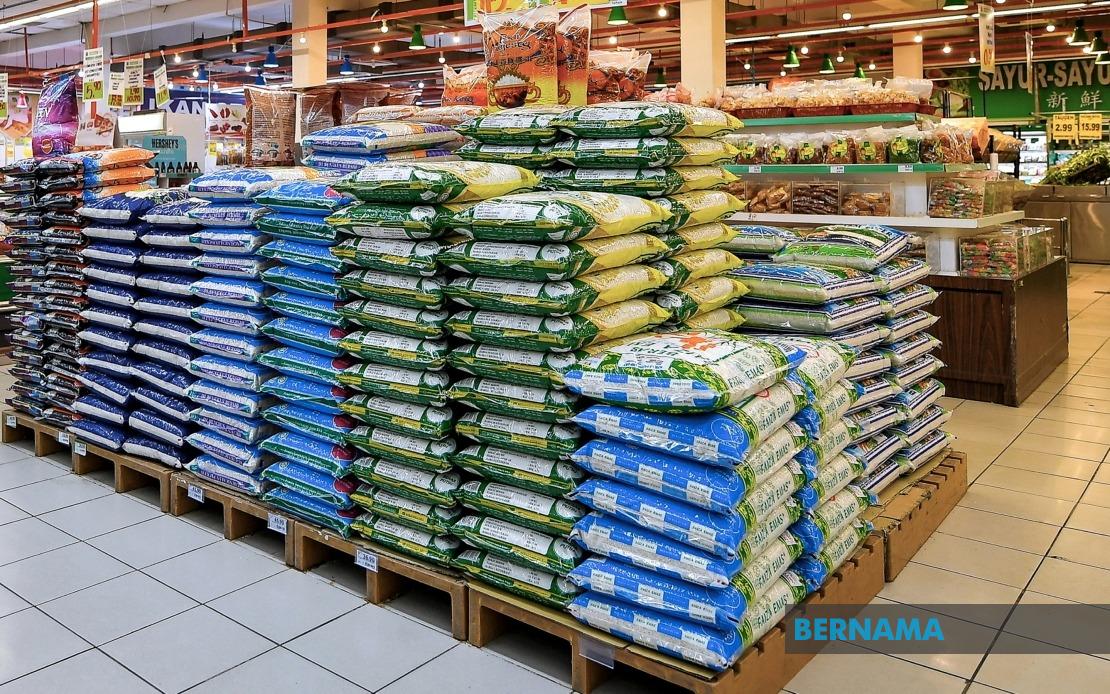
Malaysia's staple food supply chain remains resilient and adequately stocked, according to assurances from the government following a high-level economic briefing in Kuala Lumpur. Economy Minister Akmal Nasrullah Mohd Nasir confirmed that the nation's rice buffer reserves are sufficient to meet domestic consumption needs throughout the next six months, providing households and businesses with security against potential international disruptions. This declaration comes at a time when many countries are grappling with volatile commodity markets and unpredictable agricultural output across major growing regions.
In a commitment aimed at protecting household budgets during uncertain times, the minister assured Malaysians that Local White Rice (BPT) will not experience price increases in the near term. This pledge reflects the government's recognition that staple food affordability remains fundamental to public confidence and social stability, particularly for lower-income households that spend a significant proportion of their income on rice and other basic foodstuffs. The minister emphasised that maintaining price discipline on essential items is a cornerstone of the administration's approach to managing economic pressures stemming from the global supply crisis.
The undertaking to hold rice prices steady represents one of several policy decisions deliberated during a meeting of the National Economic Action Council (MTEN), which took place at the Parliament building under the chairmanship of Prime Minister Datuk Seri Anwar Ibrahim. This platform brings together senior economic policymakers to coordinate responses to emerging risks and opportunities in the national economy. The fact that staple food security featured prominently in MTEN discussions underscores the administration's awareness that supply chain stability and price predictability are prerequisites for broader economic confidence.
Beyond inventory management and price controls, the government has moved to ease the financial pressures confronting Malaysia's farming community. Minister Akmal Nasrullah announced that RM45.98 million has been distributed to 118,908 paddy farmers throughout Peninsular Malaysia via the Paddy Farmers Plowing Incentive programme. This financial support acknowledges the mounting challenges that agricultural producers face as climate variability becomes more pronounced and input costs—including fertilisers, fuel, and labour—continue to climb. Such assistance is instrumental in preserving the viability of domestic rice production and reducing Malaysia's dependence on imports.
The climate pressures referenced by the minister reflect a broader pattern affecting Southeast Asia's agricultural sector. Erratic rainfall, extended dry spells, and flooding have made rice cultivation increasingly unpredictable in recent years, with farmers facing both yield fluctuations and higher insurance and adaptation costs. By channelling direct financial support to producers, the government attempts to sustain agricultural participation and prevent abandonment of farmland, which could hollow out domestic production capacity over time. This approach recognises that food security is not merely a short-term logistics challenge but a long-term structural issue requiring ongoing investment in the farming sector.
Malaysia's strategy of maintaining a six-month buffer stock serves multiple objectives simultaneously. First, it acts as a shock absorber against sudden disruptions—whether from adverse weather in major exporting countries, geopolitical tensions affecting shipping lanes, or logistical bottlenecks. Second, the existence of adequate reserves provides the government with flexibility in negotiating import contracts and managing currency exposure, since it is not forced to make emergency purchases at unfavourable rates. Third, the buffer bolsters consumer confidence by demonstrating that authorities have taken tangible measures to prevent shortages and price spikes.
The timing of these announcements is significant given the interconnectedness of global food markets. Several major rice exporters, particularly in South and Southeast Asia, have at various times imposed export restrictions or levies to protect domestic supplies, creating uncertainty for importing nations. Thailand, Vietnam, and India account for the bulk of international rice trade, and policy shifts in these countries can rapidly transmit price signals across importing regions. Malaysia's emphasis on building and maintaining buffer stocks reflects lessons learned from previous episodes of international food inflation and reflects a pragmatic shift toward self-sufficiency in this critical commodity.
For Malaysian households, the pledge regarding Local White Rice pricing carries both immediate and longer-term implications. In the immediate term, families budgeting for groceries can expect a degree of price predictability for one of their largest staple expenditures. Over a longer horizon, price stability on essential items can contribute to lower headline inflation readings, which in turn may influence monetary policy settings and borrowing costs. For small retailers and food processors, knowing that a major input cost will remain anchored provides basis for menu-setting and margin planning. These dynamics ripple through supply chains and affect business investment decisions.
The intersection of domestic agricultural support and strategic food reserves also illustrates an important policy tension in developing economies. While subsidising farmers through direct payments and input support can improve their financial resilience, such measures also require government expenditure and can, if excessive, distort market signals and encourage inefficient production patterns. Malaysia's approach of combining modest production incentives with maintaining adequate strategic reserves suggests an attempt to balance these competing objectives—providing relief to producers without attempting to fully isolate the domestic market from international price movements. This hybrid approach is consistent with international best practices for food-importing nations seeking both stability and efficiency.
Looking forward, several factors will determine whether Malaysia's current food security posture remains adequate. Climate change projections suggest that Southeast Asia will experience greater weather volatility, potentially affecting both domestic and regional production. Global population growth and rising incomes in developing countries will likely maintain upward pressure on food demand and prices over the decade ahead. Meanwhile, geopolitical tensions and trade fragmentation could further disrupt the international supply networks on which many nations, including Malaysia, depend. Against this backdrop, the government's commitment to maintaining adequate reserves and supporting local production capacity appears well-calibrated to the emerging risk environment, though continued vigilance and investment in agricultural innovation will be necessary to sustain food security in the longer term.

