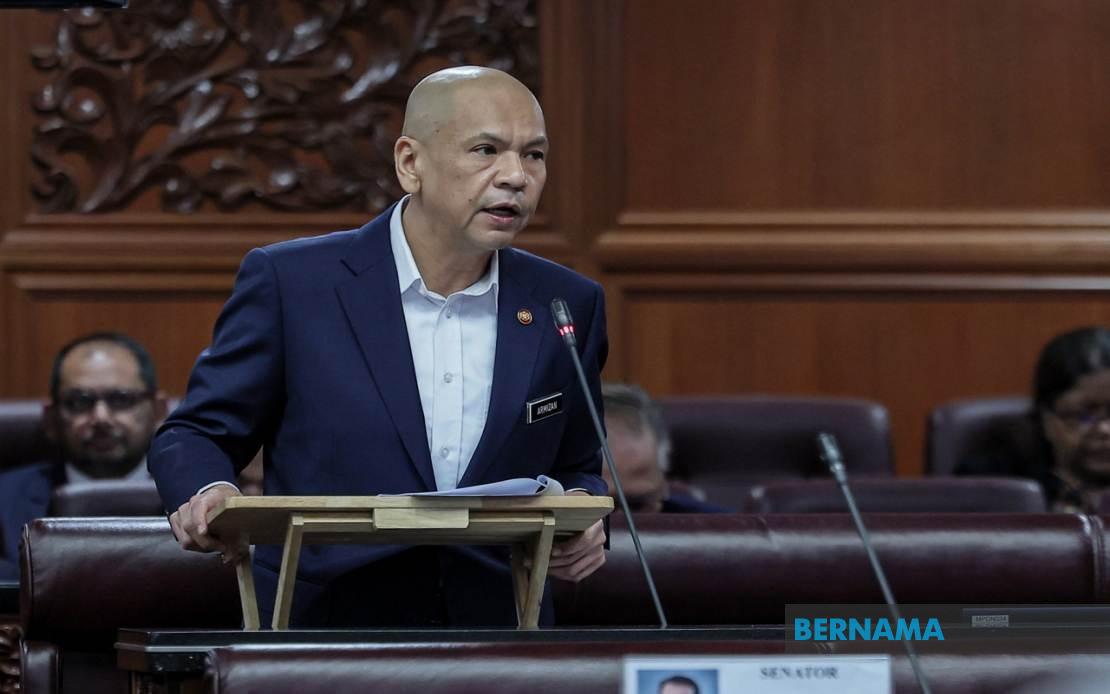
The Malaysian government's signature cost-of-living intervention programme has demonstrated substantial momentum in its first half-year execution, with the Ministry of Domestic Trade and Cost of Living reporting 15,881 Rahmah MADANI Sales Programme (PJRM) events held between January and June 2024. During parliamentary proceedings this week, Minister Datuk Armizan Mohd Ali highlighted the nationwide reach of these discount-focused retail initiatives, confirming that the programme has successfully penetrated all 600 state constituencies whilst establishing a presence in all 40 Federal Territory zones across Putrajaya, Kuala Lumpur, and Labuan.
The scale of expansion reflects a significant tactical shift in how the government approaches periodic retail pricing interventions. Unlike historically ad hoc discount campaigns, the PJRM now operates as a structured, budgeted component of national economic policy. The numbers underscore rapid growth momentum: the programme expanded from just 6,870 sessions in 2023 to 12,419 events in 2024, then jumped to 25,708 in 2025, demonstrating compounding effectiveness as implementation machinery matures. These figures emerged during a parliamentary question from Datuk Iskandar Dzulkarnain Abdul Khalid, representing Kuala Kangsar, who sought constituency-level data and clarity on whether ministerial capacity could sustain even higher event frequencies.
The government's original target of 23,040 annual sessions proved overly conservative given political imperatives and public response. Prime Minister Datuk Seri Anwar Ibrahim announced in May that the target would be recalibrated upward to 30,000 events yearly—a 30 per cent increase that positions the PJRM as a more aggressive counter-measure against inflationary pressures arising from the West Asia conflict's energy and supply chain disruptions. This escalation signals confidence that the retail sector can accommodate dramatically increased event frequency without logistical collapse, and that consumer demand justifies the administrative burden.
Understanding the programme's architecture reveals why such scaling is feasible. Armizan detailed five strategic pillars underpinning the PJRM's institutional foundation. First, the sales initiative transitioned from temporary measure to permanent fixture within the annual national budget cycle beginning in 2024, complete with dedicated activity codes and ring-fenced funding allocations. This institutionalisation removes the budgetary uncertainty that previously constrained irregular bargain sales, allowing ministry planners to commit resources with confidence across multiple fiscal quarters.
Second, the government established binding annual targets and scheduling frequencies tailored to every constituency and zone nationwide. This systematic approach contrasts sharply with the predecessor model, where discount campaigns emerged reactively and irregularly. Predictable scheduling empowers local retailers to synchronise supplier orders and staffing, whilst enabling households to anticipate shopping opportunities aligned with their payday calendars or festive spending periods. The psychological effect of predictability—knowing discount events occur reliably on specific dates—potentially elevates programme effectiveness beyond what sporadic sales could achieve.
Third, the programme has aggressively cultivated private-sector participation through formal partnerships. As of late June, the ministry had secured 2,695 strategic retail partners spanning major chains, independent businesses, and cooperative societies. This partnership expansion diversifies venue options and distributes logistical burden across commercial entities who maintain inherent incentive to drive foot traffic. Rather than government alone bearing operational costs, the partnership model leverages retailer networks and existing infrastructure, multiplying force multiplication.
Fourth, distribution methodology has diversified to penetrate fragmented settlement patterns across Malaysia's urbanisation spectrum. Events now occur through in-store discounts at traditional retail locations, open-air markets accessible to hawker-dependent communities, and mobile sales vehicles that traverse rural and remote areas where fixed retail infrastructure remains sparse. Festive theming—synchronising promotions with Chinese New Year, Hari Raya, school holidays, or payroll cycles—exploits temporal purchasing behaviours, making discount events feel integrated into community rhythms rather than external impositions.
Fifth, and perhaps most operationally significant, the ministry introduced a nationwide PJRM calendar commencing in 2025 that publicises dates, times, and locations for every state constituency and zone in advance. This transparency fundamentally reshapes consumer behaviour dynamics. Rather than word-of-mouth or sporadic media coverage determining event attendance, households can consult published schedules and plan shopping weeks ahead. For lower-income families living paycheck-to-paycheck, advance notification of discount events in their locality becomes a budgeting tool, enabling strategic purchasing aligned with cash flow timing.
The programme's expansion must be contextualised within Malaysia's macroeconomic environment. Global commodity price volatility, particularly energy markets disrupted by Middle Eastern tensions, has pressured domestic inflation. Consumer purchasing power has eroded, particularly for lower and middle-income households dependent on stable prices for essential goods. Government discount initiatives serve dual purposes: immediate relief through lower transaction prices, and political messaging demonstrating responsiveness to constituents' material concerns. The PJRM's visible proliferation—15,881 events across nine months—creates tangible evidence of intervention that parliamentary questions and parliamentary answers can quantify.
For Southeast Asian observers, the PJRM model illustrates how middle-income governments navigate inflation without resorting to economically disruptive price controls. Rather than mandating retail price ceilings—which historically provoke hoarding, black markets, and supply disruption—Malaysia choreographs regular discount events that maintain market mechanisms whilst politically demonstrating anti-inflation commitment. Retailers voluntarily participate, motivated by revenue volume and brand positioning, rather than coerced compliance. Consumers benefit from periodic price relief without developing dependency on unsustainable subsidies.
The programme's expansion trajectory suggests ministerial confidence that 30,000 annual events remain administratively achievable. Scaling from 12,419 to 30,000 events represents a 140 per cent increase, yet the partnership model and diverse distribution channels suggest bottlenecks are manageable. Retailer participation appears willing, venue availability adequate, and public engagement enthusiastic based on Armizan's parliamentary testimony regarding positive feedback.
Nevertheless, sustainability questions linger. As frequency increases, marginal discount depth may compress if retailers negotiate harder on margin concessions, potentially reducing consumer benefit per event. Saturation effects could emerge if households delay purchasing between events, creating cyclical demand troughs that undermine retail stability. Monitoring programme efficacy beyond simple event-counting metrics—measuring actual price reductions achieved, household purchasing volume changes, and inflation trajectory correlation—will determine whether the PJRM delivers substantive cost-of-living relief or primarily psychological reassurance.

