Sudden cardiac arrest remains a silent killer in Malaysia, striking without warning and leaving victims with only minutes to survive. The stakes are grim: national survival rates languish between just 0.5 and 8.5 per cent, a figure that starkly underscores a healthcare readiness problem that extends far beyond hospital walls. Recognising this crisis, Sunway Medical Centre Velocity has launched an ambitious initiative to deploy Automated External Defibrillators (AEDs) at strategic public locations throughout Kuala Lumpur while simultaneously ramping up emergency response training to give cardiac arrest victims a fighting chance.
The mathematics of cardiac survival are brutal. Every minute without intervention degrades the likelihood of recovery, with critical deterioration typically occurring within eight to ten minutes of onset. This harsh timeline means that waiting for ambulances—no matter how responsive—often comes too late. Malaysia's abysmally low survival statistics reflect a systemic gap: most public spaces lack immediate access to defibrillators, and the general population remains largely untrained in cardiopulmonary resuscitation or AED operation. These two deficiencies combine to create a fatal barrier between emergency onset and life-saving intervention.
The Sunway Medical Centre initiative addresses both dimensions of this problem. Under its corporate social responsibility framework, the hospital is positioning AED units at carefully selected high-traffic locations where cardiac emergencies are statistically more likely to occur and where public access can be maximised. The first wave of installations targets major transportation and commercial hubs: Tun Razak Exchange, Bukit Bintang, Ampang Park, and Muzium Negara MRT stations represent critical nodes in the city's transport network where crowds gather and cardiac events can easily overwhelm bystanders. Aquaria KLCC, Menara Public Bank, and Menara Public Bank 2 add commercial and leisure destinations to the deployment map, extending coverage into spaces where ordinary Malaysians congregate.
Beyond these initial sites, the programme extends to the National Heritage Building at Stadium Merdeka within the Merdeka 118 Precinct, as well as to corporate training facilities and banking offices. This geographic diversity reflects sophisticated thinking about where sudden cardiac arrest is most likely to claim lives. By positioning units in transport interchanges, entertainment venues, and workplace buildings, Sunway Medical Centre is acknowledging that medical emergencies do not respect institutional boundaries—they happen in the places where Malaysians actually spend their time.
Physical placement, however, is only half the solution. Each AED unit comes equipped with clear, visible standees designed to eliminate the confusion that can paralyse bystanders in moments of crisis. QR codes affixed to these standees link directly to Sunway Medical Centre's "Save A Number, Save A Life" campaign webpage, providing instant access to guidance and educational materials. These same QR codes will appear in general practitioner clinics across the city, creating a distributed network of information touchpoints that reinforce awareness and preparation.
Dr Wee Tong Ming, the hospital's Medical Director and a consultant emergency physician, articulates the core insight driving this effort: "Oftentimes, when an emergency occurs, lives are not lost due to lack of help, but because of delays in response and the lack of access to life-saving tools." This distinction is crucial. Malaysia does not lack medical professionals or emergency services; what it lacks is the pre-hospital infrastructure and public capability to bridge the gap between collapse and professional intervention. Every second of delay compounds the challenge, transforming a potentially survivable event into a tragedy.
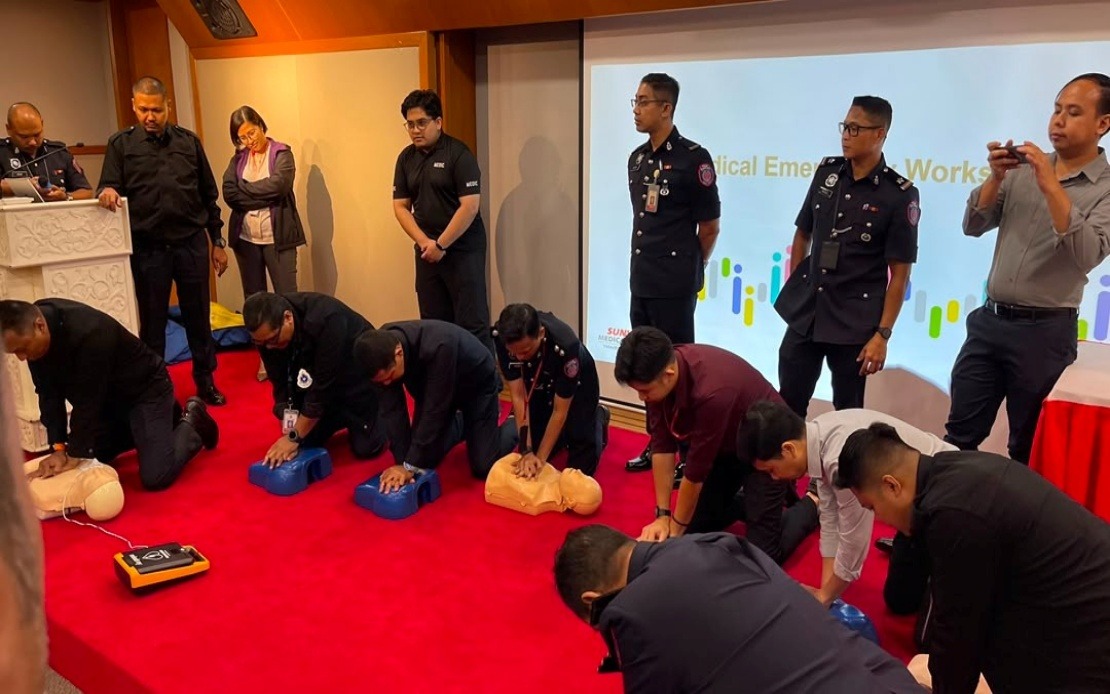
The initiative's second pillar addresses public competence directly. Sunway Medical Centre has committed to conducting on-site training sessions and Accident and Emergency awareness talks at multiple locations, equipping ordinary Malaysians with basic life support skills. These sessions cover symptom recognition, proper CPR technique, and safe AED operation. The hospital's leadership recognises that installing equipment without ensuring the public knows how to use it merely creates the appearance of readiness while leaving the critical human element vulnerable. As Dr Wee emphasises, knowing the correct technique and having the confidence to act are as vital as device availability.
Susan Cheow, the hospital's Chief Executive Officer, frames the initiative within a broader vision of public empowerment. "We believe that in a medical emergency, no one should feel helpless, whether it's because they don't know what to do or don't have access to the right equipment." This statement encapsulates a fundamental shift in thinking: emergency preparedness should not be the exclusive domain of healthcare professionals and emergency responders. Rather, it should be woven into the everyday fabric of public consciousness and infrastructure planning.
For Malaysia specifically, this initiative carries implications beyond Kuala Lumpur's boundaries. The country's rapid urbanisation and expanding middle class mean that cardiac risk factors—obesity, sedentary lifestyles, dietary patterns—are rising. In urban centres like the capital, where traffic congestion and stress are endemic, sudden cardiac events will only become more frequent. A survival rate of 0.5 to 8.5 per cent is not merely a healthcare statistic; it represents tens of thousands of preventable deaths over a decade. Sunway Medical Centre's model, if replicated in other Malaysian cities and integrated into national emergency preparedness frameworks, could measurably alter these outcomes.
The strategic choice to position AEDs in commercial and transport hubs also reflects an understanding of where high-volume foot traffic intersects with economic concentration. Kuala Lumpur's MRT system, shopping districts, and corporate precincts serve hundreds of thousands of users daily. A cardiac arrest in these environments typically involves multiple potential witnesses, a critical advantage when rapid response depends on nearby bystanders. The programme's focus on awareness and training means that these populations are increasingly likely to include individuals with at least basic emergency knowledge.
Cheow further notes that this initiative aspires to establish "a stronger safety mindset by encouraging emergency preparedness as part of everyday planning rather than an afterthought." This represents a philosophical reorientation. Traditionally, emergency preparedness has been treated as reactive—something to address after tragedy strikes. The Sunway Medical Centre approach instead normalises preparedness as a baseline expectation of modern urban infrastructure and civic responsibility. Every new MRT station, shopping mall, or office building should be evaluated not merely for commercial viability or architectural merit, but for its contribution to collective resilience.
The success of this initiative will depend on sustained commitment across multiple dimensions. Equipment must be regularly maintained and replaced; training must remain current and accessible; public awareness campaigns must reach beyond early adopters to embedding the knowledge throughout the broader population. The hospital's partnership with corporate entities, building owners, and transport operators creates a distributed delivery model that can scale beyond what any single institution could achieve independently. As cardiac arrest does not discriminate by location or time, the network of AEDs and trained responders must become equally ubiquitous.
Looking forward, Sunway Medical Centre's programme offers a template for addressing a critical gap in Malaysia's emergency healthcare infrastructure. By combining physical resource deployment with public education and community engagement, it acknowledges that survival from sudden cardiac arrest is not determined solely in hospital emergency departments. Rather, the critical window occurs in those first minutes after collapse, in public spaces where untrained bystanders must make life-and-death decisions. Through persistent effort to improve both access and capability, Malaysia's survival rates need not remain stuck in single digits.

