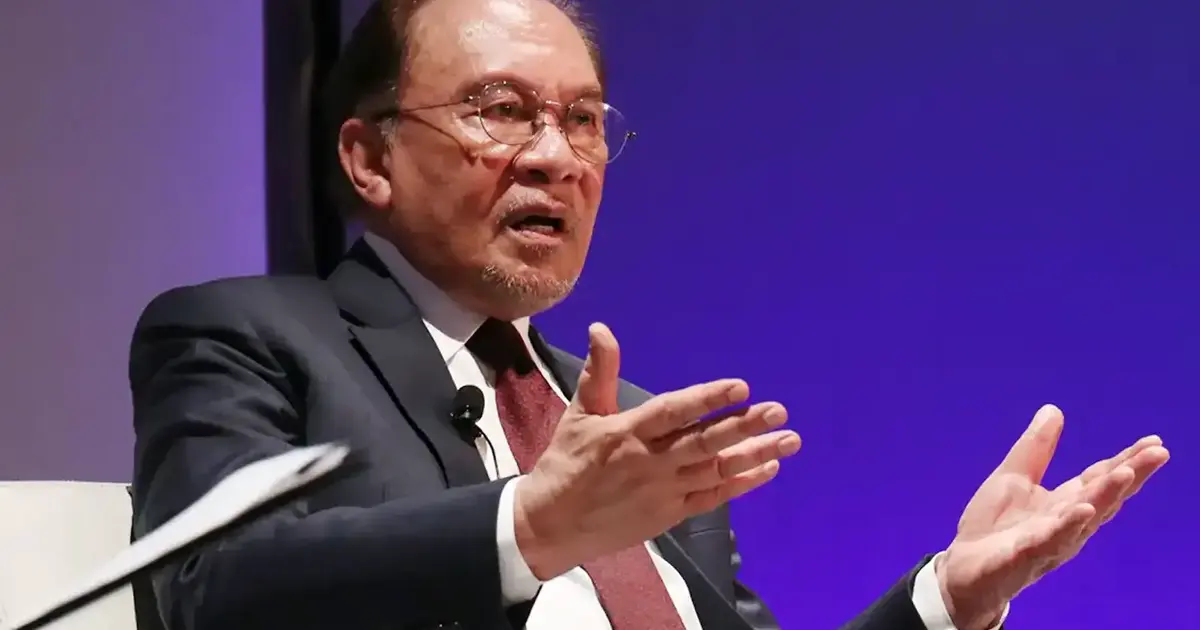
Prime Minister Anwar Ibrahim has seized on Malaysia's second quarter economic performance as vindication of the government's three-year reform agenda, arguing that the expansion reflects fundamental improvements in the country's economic health rather than temporary gains. Speaking on the latest GDP data, Anwar emphasised that Putrajaya's sustained commitment to policy restructuring has positioned Southeast Asia's third-largest economy to weather global uncertainties that continue to buffet regional peers.
The Prime Minister's remarks underscore the administration's broader narrative about its tenure since taking office: that difficult structural changes, while demanding in the short term, are generating tangible rewards. Government officials have consistently portrayed the past three years as a period of necessary recalibration, moving away from practices that previously constrained growth potential and diverted resources from productive investment. Anwar's framing suggests the government views recent GDP performance not as a cyclical uptick but as evidence that reform-driven policies are fundamentally reshaping the economy's trajectory.
Malaysia's growth outlook carries significant weight across Southeast Asia, where the country serves as a bellwether for regional economic health. As a major trading hub with substantial manufacturing and financial services sectors, Malaysian economic performance influences investor sentiment throughout the region. The Q2 results arrive at a moment when the broader Southeast Asian recovery remains uneven, with some nations grappling with inflation, currency volatility, and slowing external demand. Malaysia's relative stability therefore carries implications for both regional and global confidence in emerging market growth.
The government's emphasis on economic fundamentals reflects a strategic pivot in how Putrajaya communicates its economic stewardship. Rather than celebrating headline growth figures alone, officials are increasingly highlighting structural improvements: enhanced fiscal discipline, strengthened institutional frameworks, and reforms aimed at improving productive capacity. This approach suggests awareness among policymakers that sustainable growth requires more than cyclical upswings; it demands measurable improvements in the economy's underlying capacity to generate wealth and create opportunities.
Anwar's framing also carries implicit acknowledgment of the challenges Malaysia faced in previous years. The administration inherited an economy burdened by fiscal pressures, questions about institutional credibility, and structural inefficiencies that required comprehensive reform. By attributing current performance to deliberate policy intervention rather than external factors, the Prime Minister is constructing a narrative of deliberate economic management that distinguishes his government's approach from previous administrations.
The three-year timeframe Anwar references coincides with the current government's tenure, positioning economic performance as directly attributable to its policy decisions. This assertion warrants scrutiny, however, as GDP growth typically reflects a complex interplay of domestic policy, global economic conditions, commodity prices, and investment flows. Nevertheless, the government's emphasis on fundamental improvements suggests confidence that current policies are creating durable conditions for sustained expansion rather than relying on temporary windfalls.
For Malaysian business and investor communities, Anwar's statements carry implications about the government's commitment to continuing current policy directions. Stability in economic governance, from the perspective of corporate planners and foreign investors, depends partly on government consistency in pursuing chosen strategies. The Prime Minister's public confidence in the trajectory suggests Putrajaya intends to maintain course despite periodic pressures to alter course for short-term political advantage.
The regional context adds another dimension to Malaysia's economic narrative. Neighbouring economies face varied challenges: some struggle with debt burdens, others with demographic headwinds. Malaysia's ability to achieve growth while simultaneously addressing structural imbalances positions it distinctly within Southeast Asia, potentially attracting investment flows from those seeking stable exposure to the region. Anwar's messaging appears calibrated to reinforce this positioning, casting Malaysia as a reliable jurisdiction where policy continuity supports long-term value creation.
Looking forward, the sustainability of Malaysia's growth trajectory depends on whether the government can maintain the reform momentum that Anwar claims has driven recent performance. External headwinds, including potential slowdowns in major trading partners and uncertainties surrounding global trade relationships, could test the resilience of the structural improvements officials highlight. The Prime Minister's confidence appears grounded in belief that fundamental reforms have created sufficient economic flexibility to absorb external shocks, though this proposition will face real-world examination as the outlook evolves.
For Malaysian policymakers, the present moment offers an opportunity to entrench reforms and build institutional frameworks that survive potential future political transitions. The government's articulation of economic fundamentals as the true driver of growth implicitly argues for continued focus on structural improvements over populist measures that might generate short-term appeal. Whether this message resonates with voters and sustains political support for continued reform will significantly influence the economy's medium-term trajectory and Malaysia's competitive positioning within Southeast Asia.

