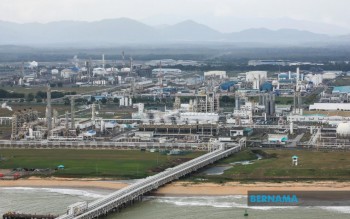
The Malaysian government's deliberation on creating a national petroleum reserve reflects mounting concerns about energy security in an increasingly volatile global landscape. Prime Minister Datuk Seri Anwar Ibrahim recently announced that officials would examine the necessity and implementation of such a reserve to safeguard the country against geopolitical shocks and international supply disruptions. This move comes as recurring tensions across critical maritime chokepoints have transformed what were once considered isolated incidents into a chronic structural risk that could fundamentally reshape energy markets in Southeast Asia.
The Strait of Hormuz represents the most critical flashpoint in this unfolding energy security challenge. Approximately 20 per cent of the world's daily petroleum supply—some 20 million barrels—transits through this narrow waterway between Iran and Oman. Yet what distinguishes the current environment from previous crises is the persistent, rather than occasional, nature of disruptions. Stephen Innes, managing partner at SPI Asset Management, contends that policymakers should cease treating Hormuz as a one-time vulnerability and instead recognise it as a continuing source of market instability. The recurring threats, shipping congestion, elevated insurance premiums, and constrained tanker availability have created a permanent risk factor embedded in global energy pricing. Until alternative pipeline networks, diversified export channels, and circumventing corridors are developed—a process measured in years rather than months—the Strait of Hormuz will remain a structural vulnerability rather than a cyclical one.
Recent military escalations have compounded these anxieties. Iranian-aligned Houthi forces operating from Yemen have reportedly finalised preparations to target vessels entering the Red Sea's southern passage and have claimed responsibility for strikes on Saudi crude carriers following fresh American military operations against Iranian installations. These developments illustrate how shipping route vulnerabilities now span multiple critical regions simultaneously. For Southeast Asian economies heavily dependent on imported energy, the prospect of simultaneous disruptions across both the Persian Gulf and Red Sea corridors presents a genuinely alarming scenario that could trigger acute shortages, elevated freight charges, and significant supply delays that cascade through manufacturing and transportation sectors.
The immediate challenge for Malaysia and other regional economies involves reassessing their defensive posture against these interconnected risks. Commercial inventory systems, while adequate for normal operational requirements, were not designed to absorb sustained external supply shocks lasting weeks or months. Innes distinguishes between energy security—merely obtaining energy access—and energy resilience, which demands that energy infrastructure continues functioning when ordinary supply chains collapse. This resilience framework necessitates strategic stockpiles, supplier diversification, substitute transportation corridors, robust power distribution networks, and pre-crisis preparation for shifting between different fuel types.
Malaysia's specific vulnerabilities underscore why the reserve concept has gained traction among policymakers and analysts. Although the country produces approximately 570,000 barrels daily, it remains a net fuel importer and sourced nearly 70 per cent of its crude imports from suppliers connected to Hormuz in 2025. This dependency pattern leaves Malaysia exposed to precisely the disruptions now plaguing international shipping lanes. Tariro Chiweza, an oil and gas specialist at BMI, argues that the commercial inventory systems currently relied upon simply cannot withstand the kind of extended external disruptions increasingly possible in today's geopolitical environment. Her analysis suggests that a strategically managed petroleum reserve represents a logical and necessary component of comprehensive energy resilience planning.
However, analysts caution that a petroleum reserve alone cannot serve as a complete solution. Rather, it functions as what Innes describes as emergency insurance—purchasing valuable decision-making time during acute crises but not addressing underlying structural vulnerabilities. Effective reserve operations require careful governance frameworks specifying the precise circumstances warranting release, replenishment protocols, and storage infrastructure investments. The reserve must integrate within a substantially broader strategic architecture encompassing supplier diversification, enhanced storage capacity, and alternative shipping pathways to genuinely mitigate systemic risk.
Southeast Asia requires coordinated regional responses alongside individual national measures. Innes recommends that ASEAN governments establish collaborative mechanisms for sharing information about stock levels, coordinating emergency supply protocols, and managing shipping disruptions collectively. Such coordination could enable more efficient resource allocation and prevent destabilising competition for scarce supplies during crises. The recommended immediate actions include systematic reviews of strategic fuel inventories, broadening the geographic and supplier base for crude oil and refined products, expanding liquefied natural gas sourcing alternatives, and formalising emergency supply arrangements across the region.
Government fuel subsidies warrant reconsideration within this framework. Rather than maintaining universal price controls, Innes advocates targeted relief concentrated on lower-income households and strategically important industries, which would prove more economically sustainable if crude prices remain persistently elevated. This approach reduces fiscal pressures while ensuring vulnerable populations and critical sectors maintain reasonable energy access. The strategy reflects recognition that unlimited subsidies become financially unsustainable and create market distortions that undermine long-term energy planning.
Malaysia possesses several complementary capabilities that could strengthen overall energy resilience alongside a petroleum reserve. The country's domestic gas sector, which BMI forecasts will produce 82.3 billion cubic metres annually by 2026, represents a substantial indigenous energy foundation reducing crude oil reliance. Renewable energy initiatives including Solar@PETRA and the Corporate Renewable Energy Supply Scheme for commercial users, combined with biodiesel programmes and electric public transport expansion, distribute energy across multiple sources and technologies. These initiatives align with broader energy transition objectives while simultaneously enhancing resilience against petroleum supply shocks.
The convergence of technological opportunity and geopolitical necessity creates a compelling window for comprehensive energy policy reform. Malaysia could simultaneously advance energy security through petroleum reserves, accelerate renewable capacity through battery storage and grid improvements, diversify fuel sourcing across suppliers and fuel types, and strengthen regional interconnection capacity. Such multifaceted approaches prove far more robust than isolated measures, enabling economies to withstand diverse disruption scenarios rather than remaining vulnerable to concentrated risks along key maritime corridors.
Brent crude recently climbed 2.97 per cent to US$96.86 per barrel while West Texas Intermediate advanced 1.93 per cent to US$88.76, reflecting markets' persistent anxiety about supply security. These price movements illustrate how geopolitical tensions perpetually circulate risk premiums through international energy markets, effectively taxing all consuming economies. Malaysia's deliberation on a national petroleum reserve represents rational crisis preparation—establishing buffers before emergencies strike rather than responding frantically once disruptions materialise. The timing appears particularly appropriate given that analysts increasingly view current vulnerabilities as enduring structural features rather than temporary aberrations, necessitating permanent adaptations to how governments and markets approach energy security across Southeast Asia.

