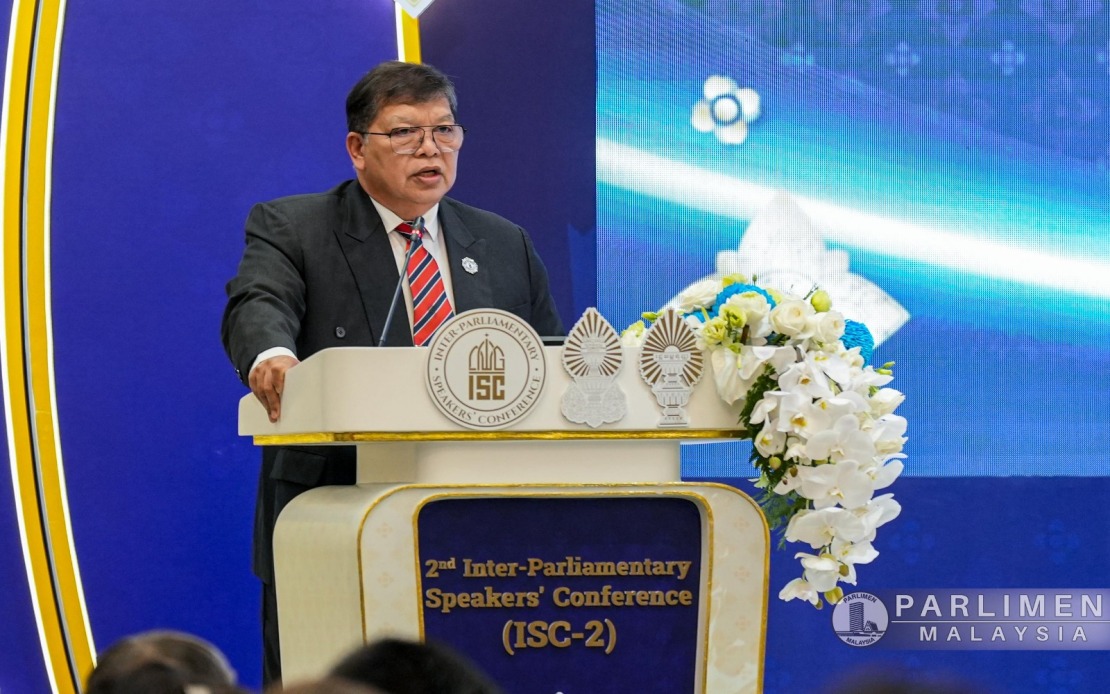
Tan Sri Dr Johari Abdul, Speaker of the Dewan Rakyat, has delivered a stark warning about the accelerating climate crisis during the Second Inter-Parliamentary Speakers' Conference in Phnom Penh, emphasising that inaction is exacting a mounting toll on vulnerable populations and environmental systems. Addressing journalists on the sidelines of the three-day gathering that concluded Friday, Johari articulated a widening perspective among regional legislators that climate change transcends environmental boundaries, increasingly destabilising economic systems and compromising national security across multiple dimensions including food production and energy availability.
Critical to Johari's intervention is his frustration with the policy vacuum surrounding climate action in legislative chambers. He pointed out that many government representatives lack foundational knowledge about climate mechanisms and renewable alternatives, questioning why deforestation continues unchecked and why diversification into solar, wind, and wave energy sources remains marginalised in energy planning. This educational deficit, he suggested, directly undermines the capacity of parliaments to craft effective mitigation strategies. Instead of transitioning energy infrastructure, governments persistently resort to coal-fired generation, perpetuating carbon-intensive cycles that accelerate warming. Johari's prescription demands systemic change: climate science curricula integrated throughout school systems, substantially expanded research and development budgets, and technology investments that enable practical alternatives to fossil fuels.
The timing of Johari's remarks carries particular resonance given recent catastrophic events unfolding across South Asia. Nepal has been devastated by unprecedented flooding triggered by glacial collapse in the Himalayas, with preliminary reports indicating 469 confirmed deaths and over 2,300 people missing, including 644 foreign nationals. Several Malaysian nationals remain among the missing. The disaster, which appears linked to climate-induced glacial instability, has razed homes and eliminated livelihoods across affected regions, illustrating the concrete human costs of climate deterioration. The incident exemplifies the existential vulnerability confronting communities throughout South and Southeast Asia.
Regional exposure to climate hazards extends far beyond isolated incidents. From the mountainous terrain of Nepal to the landlocked plateaus of Laos, populations inhabit territories perpetually threatened by escalating weather extremes. Rural communities particularly bear disproportionate burdens as flash floods, severe storms, landslides, and tropical cyclones repeatedly destroy agricultural systems and critical infrastructure. The Philippines alone experiences approximately twenty typhoons annually, rendering climate resilience a permanent policy imperative rather than episodic concern. This recurring pattern of destruction underscores why parliamentary attention to climate governance has become functionally inseparable from broader development agendas across the region.
Johari emphasised that effective climate response requires transcending rhetorical commitments to embrace substantive political will and visionary leadership. He acknowledged the structural inequities complicating international climate negotiations, noting that the widening disparity between affluent nations and developing economies creates profound asymmetries in adaptive capacity and technological access. This recognition aligns with longstanding critiques from Southeast Asian governments regarding climate justice and differentiated responsibilities, particularly given that industrialised nations bear historical responsibility for cumulative emissions while developing economies face disproportionate impacts.
Among existing examples of climate leadership, Johari highlighted China's strategic pivot toward green technology development, ranging from expanding renewable energy deployment to manufacturing electric vehicles and restoring green spaces. This approach demonstrates that large-scale economic systems can fundamentally reorient toward sustainability when political commitment materialises. Such examples offer templates for Southeast Asian policymakers considering their own technological transitions, particularly as electric vehicle adoption accelerates regionally and clean energy technologies become increasingly cost-competitive.
Scientific consensus continues reinforcing the urgency Johari articulated. Climate researchers warn that anthropogenic warming is driving measurable sea level rise, altering precipitation regimes, and intensifying extreme weather phenomena with implications for agricultural productivity, water availability, and human settlement patterns throughout the region. These mechanisms create cascading vulnerabilities extending across economic sectors and demographic groups.
Cambodian Prime Minister Hun Manet, speaking days before the parliamentary conference, sounded parallel alarms regarding the Mekong River's rising water levels, urging riverine communities to maintain heightened preparedness. While acknowledging that complete prevention of natural disasters remains impossible, Hun Manet emphasised that institutional capacity for risk response and community resilience constitutes an achievable and essential objective. This framing—accepting climate impacts as inevitable while committing to systematic adaptation—reflects pragmatic governance approaches gaining traction across Southeast Asia.
The intersection of these statements from both parliamentary and executive leadership suggests emerging consensus within regional governance structures regarding climate action's centrality to national interests. However, consensus alone proves insufficient without corresponding resource allocation and institutional reform. Johari's specific recommendations regarding educational transformation and technological investment represent concrete mechanisms through which parliamentary bodies might translate awareness into governance outcomes, potentially influencing how Malaysia and neighbouring nations approach climate policy within their own legislative frameworks and development strategies.

