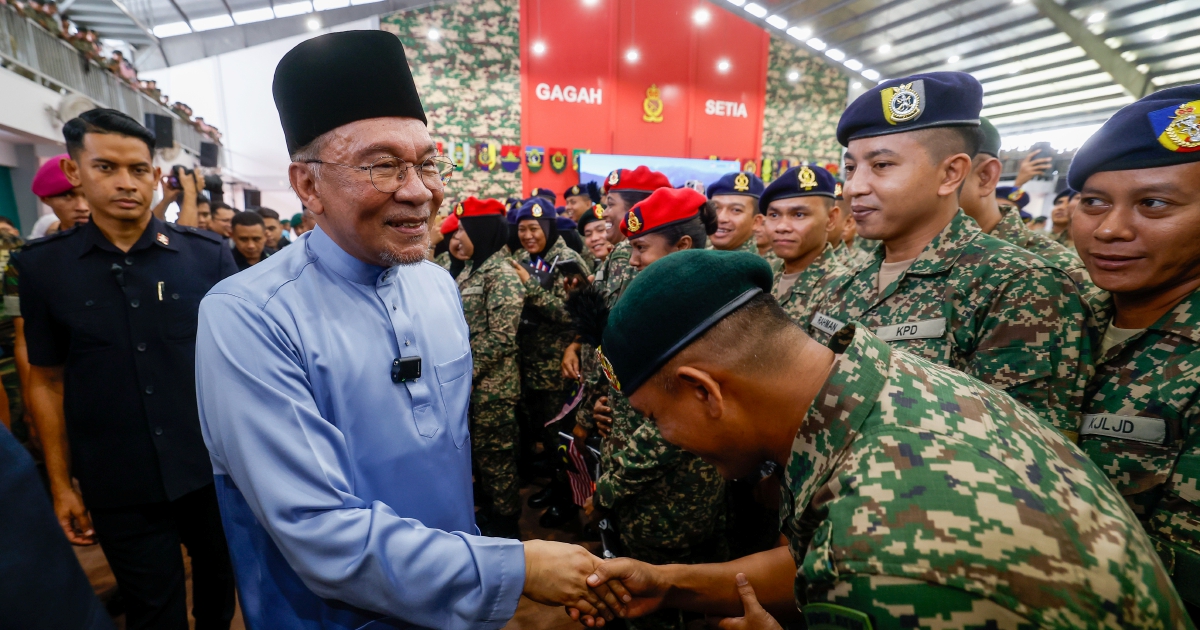
Prime Minister Datuk Seri Anwar Ibrahim has sought to clarify Malaysia's longstanding position on Israel, emphasising that the nation's opposition targets specific governmental actions and policies rather than reflecting any animosity towards Jewish communities globally. Speaking in Port Dickson, Anwar underscored this distinction at a time when Malaysia's pro-Palestinian advocacy remains a defining feature of its foreign policy, yet international scrutiny has occasionally questioned whether such positions carry undertones of religious discrimination.
The Prime Minister's reiteration comes amid broader regional and global conversations about how Muslim-majority nations can articulate legitimate political disagreements with specific governments without inadvertently promoting religious intolerance. Malaysia, as Southeast Asia's largest Muslim-majority nation with a constitutionally enshrined Islamic identity, has historically maintained robust criticism of Israeli policies, particularly regarding Palestinian territories. However, Anwar's latest comments suggest a deliberate effort to frame this opposition within a framework of international law and humanitarian concerns rather than religious or ethnic grounds.
The distinction Anwar draws reflects an important nuance in contemporary geopolitics: that opposition to a state's military or political actions need not imply prejudice against its population's religious or ethnic background. This clarification addresses a recurring tension in global discourse, where critics of Israeli government policies occasionally face accusations of antisemitism, even when their objections focus narrowly on military operations, settlement expansion, or treatment of Palestinian civilians. By explicitly separating Malaysia's institutional stance from any suggestion of religious bias, Anwar attempts to position his government as motivated by principles of international justice rather than religious ideology.
Malaysia's diplomatic approach reflects the complexity of navigating multiple constituencies and international relationships. The country maintains significant economic and strategic ties with various nations while also serving as a voice for Muslim-majority countries within multilateral organisations. This balancing act requires Malaysia to express solidarity with Palestinian causes and Islamic nations' concerns while simultaneously demonstrating that such positions do not translate into discrimination or intolerance within Malaysian society or in Malaysia's approach to international relations.
The Malaysian government has consistently supported Palestinian statehood and criticised Israeli military campaigns in Gaza, the West Bank, and previous conflicts in Lebanon and elsewhere. These positions resonate strongly with Malaysia's Muslim population and reflect historical solidarity dating back to the Palestinian national movement's emergence in the 20th century. However, as Malaysia seeks greater influence on the global stage and enhanced diplomatic engagement with diverse nations, clarifying that such support for Palestinian rights does not equate to religious prejudice has become strategically important.
Anwar's explicit statement regarding Jewish people distinguishes between legitimate political opposition and xenophobia or religious discrimination. In Malaysia's context, where diverse communities including Chinese and Indian minorities coexist with the Muslim majority, maintaining clear boundaries between state policy positions and social tolerance remains essential for domestic harmony and international credibility. The Prime Minister's remarks implicitly acknowledge that some voices, whether domestically or internationally, may conflate Malaysia's Israel policies with intolerance, and he has moved to correct this perception.
This clarification also carries implications for Malaysia's broader diplomatic agenda. As the nation seeks to strengthen ties with various countries, including those with significant Jewish populations and pro-Israel constituencies, Anwar's differentiation between governmental criticism and religious or ethnic prejudice provides diplomatic cover for engagement with diverse international partners. Many Western nations, while sympathetic to Palestinian concerns, remain sensitive to suggestions of antisemitism, and Anwar's positioning attempts to navigate this sensitivity without abandoning Malaysia's stated principles.
The regional context further illuminates the significance of Anwar's statement. Within Southeast Asia, only Malaysia has consistently maintained such prominent pro-Palestinian positions combined with explicit criticism of Israeli government actions. Other Muslim-majority nations in the region, including Indonesia and Brunei, maintain more measured diplomatic stances. Anwar's emphasis on distinguishing between anti-Israeli sentiment and anti-Jewish sentiment positions Malaysia's approach as principled and morally coherent rather than driven by religious tribalism.
For Malaysian citizens, particularly members of minority communities and the growing number of those engaged with international affairs, such clarifications reinforce the notion that being critical of particular governments' policies does not require, and should not entail, prejudice against the populations they govern. This messaging has particular resonance in multicultural Malaysia, where inter-community relations depend on citizens' ability to engage in political debate without descending into identity-based discrimination.
Looking forward, Anwar's stance suggests Malaysia will continue articulating pro-Palestinian positions while attempting to frame these within universalist language of international law, human rights, and humanitarian concerns rather than religious identity. This approach may help the nation maintain its advocacy on Palestinian issues while preserving its ability to engage constructively with the broader international community, including nations with significant Jewish populations and pro-Israel policies. The emphasis on this distinction ultimately serves Malaysia's strategic interests in appearing principled yet non-discriminatory on the world stage.

