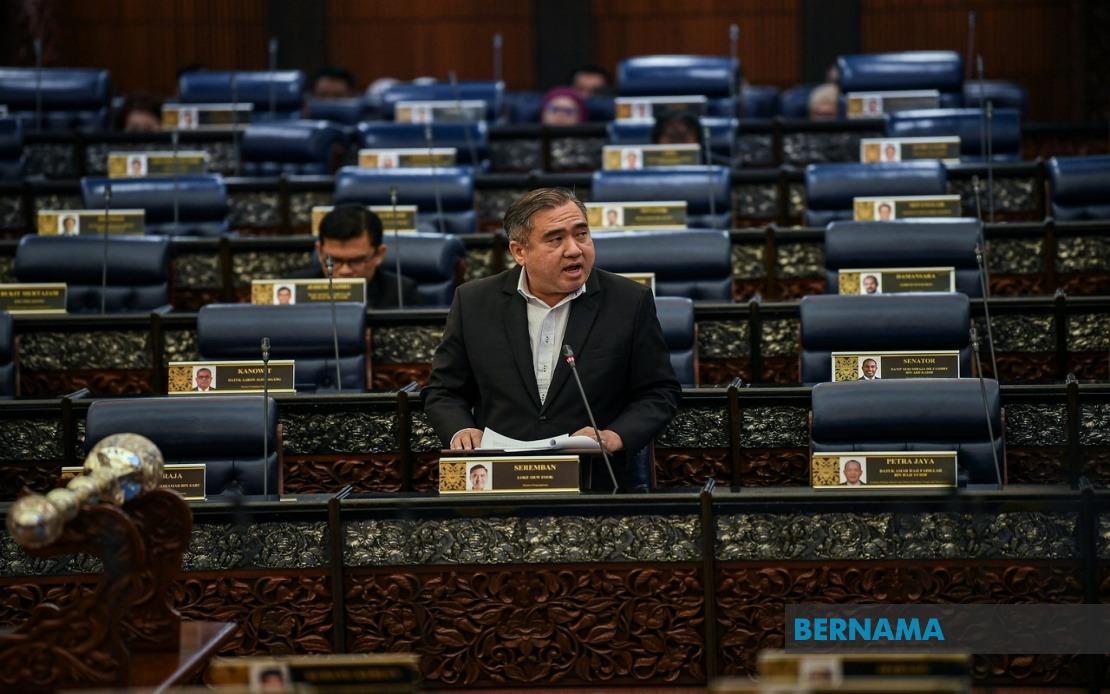
The government has moved to crack down on the persistent menace of illegal street racing with the tabling of the Road Transport (Amendment) Bill 2025, which creates a dedicated criminal offence for racing and speed trials conducted on public roads. Transport Minister Anthony Loke unveiled the legislation during its second reading in Parliament on 23 June, signalling a significant shift in how Malaysia will prosecute what has become an increasingly visible problem in urban and suburban areas across the country. The new provision, termed Section 42A under the Road Transport Act 1987, represents the government's recognition that existing laws have proven inadequate in deterring and punishing dangerous driving behaviour that threatens public safety.
Under the proposed framework, first-time offenders caught racing or conducting speed trials on public roads will face financial penalties ranging from RM2,000 to RM10,000, possible imprisonment of up to two years, or a combination of both. For those who repeat the offence, the consequences escalate considerably, with fines increasing to between RM5,000 and RM20,000 alongside potential imprisonment stretching up to five years or both penalties imposed concurrently. This tiered approach reflects the government's intent to impose proportionally heavier consequences on habitual violators, acknowledging that education and moderate penalties have failed to deter recidivist offenders who view public roads as racetracks.
The creation of this standalone offence addresses a longstanding enforcement gap that has frustrated road safety advocates and traffic police for years. Previously, authorities were forced to pursue illegal racing cases under broader dangerous driving provisions within existing legislation, a approach that lacked the specificity necessary to effectively prevent the conduct. Loke highlighted that the absence of a dedicated criminal category meant enforcement agencies could not intervene until an accident occurred, injuries were sustained, or loss of life resulted from the dangerous activity. This reactive rather than proactive enforcement posture allowed illegal racing to persist with relative impunity, particularly among young motorists in metropolitan areas who organised races or engaged in spontaneous speed competitions with minimal fear of serious legal consequences.
The new legislative framework empowers authorities to take enforcement action the moment racing or speed testing begins, regardless of whether any collision, injury, or fatality materialises. Loke provided a concrete example illustrating this shift: under the amended law, if two or more motorcyclists engage in racing or competitive speed testing on a public road, officers can immediately prosecute even if the activity concludes without incident. Similarly, motorists who illegally utilise public thoroughfares to test vehicle speeds face prosecution even if their conduct produces no observable harm. This preventative approach aligns with contemporary road safety philosophy that prioritises early intervention and disruption of hazardous behaviour before catastrophic outcomes occur.
Beyond the racing provision itself, the Bill introduces Section 110B, which creates offences related to obstruction and interference with enforcement operations. This companion measure recognises that illegal racing communities often operate with coordination and mutual protection, alerting participants to police presence and facilitating evasion of enforcement efforts. The new provision targets individuals who obstruct, interfere with, assault, or threaten officers conducting road transport enforcement, as well as those who actively follow enforcement vehicles or disseminate information about enforcement operations that enables offenders to evade legal action. Such coordinated interference has reportedly increased in severity and sophistication, with organised racing networks using social media and messaging platforms to warn members of enforcement activity in real time.
Violations of Section 110B carry substantial consequences designed to deter complicity in evading law enforcement. Individuals convicted under this section face fines ranging from RM10,000 to RM50,000, imprisonment between one and five years, or concurrent application of both penalties. Critically, the Bill designates these offences as arrestable, meaning officers need not obtain warrants before apprehending suspects, significantly streamlining the enforcement process. This categorisation signals the government's assessment that obstruction of enforcement activities constitutes a sufficiently serious breach to warrant summary arrest powers, reflecting the challenges authorities face when attempting to combat organised racing networks that actively resist law enforcement intervention.
The legislation also pursues broader amendments to the Road Transport Act designed to enhance enforcement capacity across multiple dimensions of commercial and vehicle regulation. The Bill seeks to revise compound limits and penalties for a range of selected offences, with minimum fines being adjusted upward from RM300 to RM500. However, Loke emphasised that this adjustment does not represent an automatic increase to all issued compounds, as the actual amount imposed will continue to reflect the specific circumstances of each violation, including the nature and severity of the breach, the timeframe for settlement, and established procedural guidelines. This nuanced approach balances the government's desire to increase deterrent effect whilst maintaining flexibility in enforcement decision-making.
The revised compound structure particularly targets commercial vehicle operators and addresses persistent enforcement challenges related to vehicle overloading and non-compliant commercial fleet standards. By increasing the maximum compound offer limits, the government aims to make financial settlement sufficiently burdensome to incentivise compliance with technical and operational requirements. The new maximum compound rates are scheduled to take effect on 1 January 2029, providing operators an extended transition period to adjust their operations and compliance practices. This staggered implementation timeline has drawn both support from industry stakeholders who appreciate the preparation window and criticism from road safety advocates who view the delay as unnecessarily prolonged.
For Malaysian motorists and broader society, these amendments carry significant implications beyond the immediate enforcement context. The explosion of illegal street racing has claimed numerous lives, inflicted serious injuries on innocent bystanders, and created terror amongst residents of neighbourhoods where racing has become endemic. The problem has proven particularly acute in the Klang Valley, Penang, Johor Bahru, and other major urban corridors where young motorists possess sufficient disposable income to modify vehicles and sufficient anonymity to evade identification. The new criminal framework sends an unambiguous message that society will no longer tolerate this conduct through graduated and appropriately severe penalties.
The Bill's creation of a standalone racing offence also carries symbolic and practical importance for regional road safety efforts. Neighbouring countries including Thailand and Singapore have confronted similar street racing phenomena and implemented correspondingly stringent legal frameworks. Malaysia's approach now aligns more closely with international best practice whilst reflecting domestic context and capacity. The amendments acknowledge that effective road safety governance requires not merely reactive accident investigation but proactive prohibition of conduct identified as hazardous through evidence and experience.
Implementation of these provisions will place substantial demands on enforcement capacity and coordination. Traffic police units must develop protocols for identifying and responding to racing incidents in real time, highway patrol operations require enhanced intelligence gathering regarding organised racing networks and their communication channels, and prosecution services must build capacity to handle what will likely represent a significant volume of new cases. The success or failure of these amendments will ultimately depend on whether the government provides corresponding resources and training to enforcement agencies and whether judicial decisions appropriately apply the new offences in ways that deter future conduct.
For Southeast Asian observers, Malaysia's legislative approach demonstrates a regional trend toward toughening road safety penalties and extending enforcement powers to address contemporary threats. The amendments represent a comprehensive rather than piecemeal response to multiple enforcement challenges, addressing not only racing itself but also the coordinated interference that protects racing networks from accountability. Whether these legislative changes translate into meaningful behavioural change and reduced illegal racing incidents will become apparent in coming years as enforcement data accumulates and court precedents establish sentencing patterns and conviction rates.