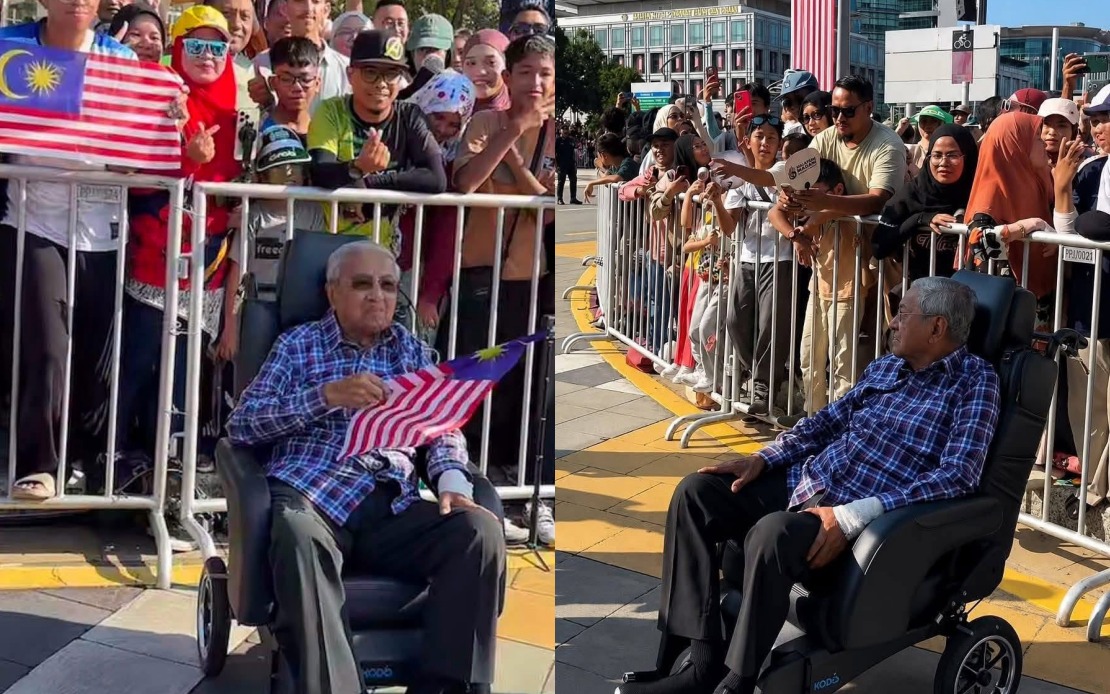
The Malaysian government has clarified its approach to extending invitations to former prime ministers for the nation's most significant annual celebration, moving away from an automatic inclusion model that existed prior to 2018. The National Day Celebration 2026 Secretariat issued the statement after questions arose concerning former Prime Minister Tun Dr Mahathir Mohamad's presence at this morning's festivities held at Dataran Putrajaya, establishing transparency around a practice that has governed official protocol for the past six years.
The distinction between automatic invitation and discretionary application represents a meaningful shift in how Malaysia's government manages ceremonial access and state functions. Datuk Abdul Halim Hamzah, who serves as both chairman of the 2026 National Day and Malaysia Day Celebration Working Committee and secretary-general of the Communications Ministry, explained that the Protocol and International Conference Secretariat Division (BIUPA), housed within the Prime Minister's Department, now oversees all invitation procedures for major federal government events. This centralised approach allows for consistent application of criteria across different occasions and participants.
The framework established since 2018 does not prohibit former leaders from participating in these celebrations, but rather requires them to initiate formal requests through established channels. This represents a transition from previous practice where ceremonial status may have granted attendance privileges without explicit approval. The new system balances respect for former office-holders with administrative oversight and deliberate resource allocation for large-scale state functions. By requiring applications rather than automatic invitations, the government maintains flexibility in managing attendance numbers and security considerations at major public events.
Tun Dr Mahathir's attendance at this year's National Day celebration exemplifies how the application process functions in practice. Rather than being automatically included on an invitation list by virtue of his previous tenure as Prime Minister, his participation was authorised through a formal request mechanism. This case demonstrates that the policy does not serve as a barrier to former premiers engaging in national commemorations, but instead formalises the decision-making process through which such participation is approved.
Interestingly, Mahathir's application to attend this year's celebration was intertwined with a separate approval granted by Prime Minister Datuk Seri Anwar Ibrahim regarding the Overseas Rest Facility. According to government records, Mahathir had submitted documentation indicating his scheduled absence from Malaysia between August 28 and 31, 2026. The Prime Minister's Office granted approval for this overseas engagement, operating under the provisions governing remuneration and entitlements for former prime ministers as established in the Members of Parliament (Remuneration) Act 1980. This coordination between different administrative requests illustrates the interconnected nature of government protocols affecting former office-holders.
The introduction of discretionary invitation procedures reflects broader international practice among democracies managing ceremonial state functions and former leadership engagement. Many nations distinguish between automatic privileges of office and discretionary invitations based on contemporary circumstances and administrative capacity. Malaysia's 2018 benchmark represents a deliberate policy adjustment that prioritises case-by-case evaluation while maintaining recognition of former leaders' historical contributions. This approach acknowledges that different administrations may have varying perspectives on how extensively to formalise former leadership participation in state ceremonies.
For Malaysian citizens and political observers, this clarification carries implications regarding institutional memory and state protocol consistency. The establishment of clear procedures through BIUPA ensures that all applications for major federal event attendance follow uniform standards, regardless of an applicant's previous government position. This transparency helps eliminate potential accusations of preferential treatment or exclusion based on political affiliation, as the decision-making framework operates according to published guidelines rather than ad-hoc determinations by individual administrators.
The significance of this policy extends beyond ceremonial considerations to broader questions about Malaysia's approach to institutional continuity and democratic transitions. By requiring formal application rather than automatic inclusion, the government demonstrates that transitions of power entail genuine shifts in privileges and access, even for those who previously held the nation's highest office. Simultaneously, by explicitly permitting applications and approvals, the system avoids the appearance of vindictiveness or institutional memory loss that might result from complete exclusion of former leaders from state functions.
For Southeast Asia's regional context, Malaysia's clarification on National Day invitation procedures offers a model for other nations grappling with similar questions about how to honour former leaders whilst maintaining clear administrative boundaries. The region has experienced numerous democratic transitions, coalition changes, and shifts in political fortunes among former office-holders. Establishing transparent, written procedures for their participation in state ceremonies provides a neutral framework that transcends individual political preferences or interpersonal relationships between current and former administrations.
The practical implementation of these procedures also raises questions about how government departments coordinate across different policy domains. Mahathir's case demonstrates that invitations to major celebrations do not operate in isolation from other government functions, such as overseas rest facility approvals. The integration of these different administrative streams suggests that Malaysia's Protocol and International Conference Secretariat Division maintains comprehensive knowledge of former prime ministers' circumstances, activities, and entitlements, enabling holistic decision-making across related policy areas.
Looking forward, the 2018-established practice provides Malaysia's government with a mechanism to maintain formal recognition of former leaders whilst preserving administrative control over state function attendance. As the nation approaches the 2026 National Day celebration and beyond, this framework offers consistency for both government officials managing invitations and former office-holders seeking to participate in major ceremonies. The explicit clarification issued by the National Day Celebration Secretariat reflects a commitment to institutional transparency and rule-based governance in managing the interface between former and current political leadership within Malaysia's constitutional democracy.

