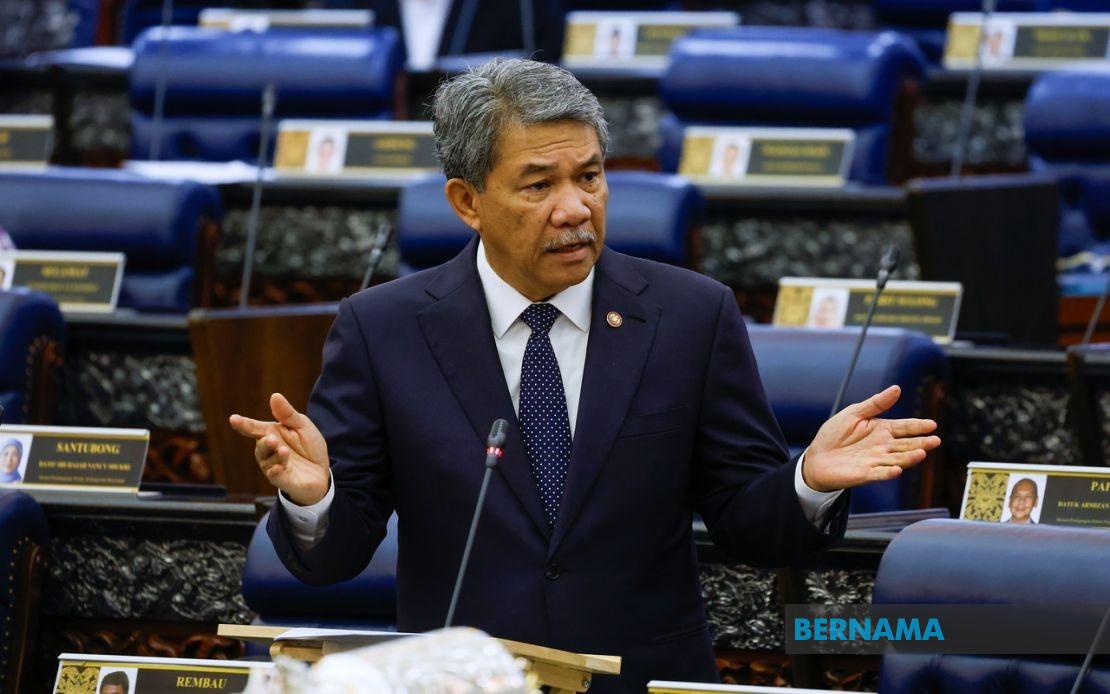
Foreign Minister Datuk Seri Mohamad Hasan has moved to dispel any misconception that Malaysia's diplomatic engagement with Myanmar signals a shift in the nation's principled opposition to the junta, emphasising that the May visit was strictly an effort to preserve communication channels rather than bestow legitimacy upon the military authorities. Speaking in the Dewan Rakyat, the FM stressed that Malaysia remains unequivocally aligned with ASEAN's collective stance, which continues to withhold recognition of the Myanmar government formed after last year's military coup and any subsequent elections held under junta oversight.
The Malaysian delegation's visit was authorised under a decision made at the 48th ASEAN Summit, which tasked the bloc's foreign ministers with maintaining informal engagement with Myanmar despite the broader diplomatic freeze. This instruction reflects ASEAN's delicate balancing act—neither abandoning Myanmar nor appearing to normalise military rule. Mohamad pointed out that his meeting with Myanmar Foreign Minister Tin Maung Swe deliberately took place at a hotel rather than at official government premises, a symbolic choice underscoring the informal and exploratory nature of the encounter. During their discussion, he conveyed Malaysia's and ASEAN's expectations for substantive progress, particularly regarding the implementation of the Five-Point Consensus, the bloc's roadmap for resolving Myanmar's multifaceted crisis.
The Five-Point Consensus, adopted following the coup, calls for an immediate cessation of violence, dialogue among Myanmar's stakeholders, humanitarian assistance, and support for ASEAN mediation efforts. For Malaysia and other member states, advancing this agenda while maintaining communication is a challenging diplomatic exercise. Mohamad articulated this nuance by reminding Myanmar's authorities that membership in ASEAN carries both privileges and obligations. His statement that Myanmar must consider its responsibilities as a regional bloc member implicitly references the nation's current trajectory of deepening conflict, internal displacement, and humanitarian deterioration—circumstances that violate the spirit of ASEAN solidarity and collective prosperity.
The broader context of Malaysia's approach reflects a sophisticated understanding of Myanmar's geopolitical significance and ASEAN's structural vulnerabilities. Complete isolation of Myanmar risks pushing the country further into the orbit of extra-regional powers, particularly China, which maintains extensive economic and military interests there. If ASEAN collectively severed all ties, the junta would have fewer incentives to consider regional opinion and could accelerate strategic partnerships that fundamentally reshape Southeast Asian geopolitics. Mohamad's observation that a vacuum left by ASEAN could be exploited by external actors with competing interests speaks directly to Malaysian and Southeast Asian concerns about maintaining strategic autonomy in the face of great power competition.
Malaysia's stance on Myanmar also reflects the inherent tensions within ASEAN's founding principle of non-interference. The bloc values sovereignty and domestic autonomy, yet Myanmar's internal instability, with ongoing civil conflict between military forces and anti-coup resistance movements, generates humanitarian crises that inevitably spill across borders. Displaced persons, irregular migration, and drug trafficking from Myanmar affect Malaysia directly. Maintaining dialogue pathways creates opportunities, however limited, to influence outcomes in ways that closed-door sanctions cannot achieve. By remaining engaged, Malaysia and ASEAN preserve their voice in any eventual political transition.
Planned follow-up meetings between Malaysian officials and Myanmar stakeholders, anticipated for early or mid-July, indicate this engagement strategy will deepen rather than wane. These sessions will likely involve not only government representatives but also opposition figures and civil society actors, allowing Malaysia to simultaneously acknowledge Myanmar's legitimate political forces while engaging with de facto authorities. This multi-track approach recognises that Myanmar's future resolution will ultimately require negotiation among numerous actors, not the military alone.
From a regional perspective, Malaysia's careful calibration carries implications for how ASEAN navigates other internal crises and manages its collective credibility. Other member states facing governance challenges or international pressure observe how ASEAN treats Myanmar. An overly punitive stance that completely isolates Myanmar could set precedents for future interventionism; conversely, engagement without clear benchmarks risks appearing to condone undemocratic practices. Malaysia's emphasis on reminding Myanmar of its obligations while keeping channels open suggests a middle path focused on conditional engagement tied to measurable progress toward the Five-Point Consensus.
The FM's statements also signal Malaysia's rejection of the binary framing sometimes presented in international discourse: either recognition or complete rejection of Myanmar's government. Diplomatic reality is more textured. Engagement with authorities does not require legitimacy, just as maintaining communication does not imply approval. This distinction, though sophisticated, remains difficult for external observers and some domestic constituencies to grasp, particularly in democracies where engagement with authoritarian regimes generates domestic political friction.
Looking forward, Malaysia will continue urging all Myanmar parties to cease violence and implement ceasefires, consistent with ASEAN positions. However, the effectiveness of such appeals depends on whether Myanmar's military calculates that maintaining ASEAN ties serves its interests, or whether it increasingly looks beyond the region. The FM's insistence that Malaysia and ASEAN will persist in these efforts, despite uncertain outcomes, reflects a commitment to exhausting diplomatic possibilities before any broader regional strategy recalibration becomes necessary. For Malaysian observers, this approach balances principles against pragmatism in ways that acknowledge both the moral imperative to support Myanmar's eventual democratic restoration and the practical reality that ASEAN's influence, however limited, may be among the few remaining levers available.

