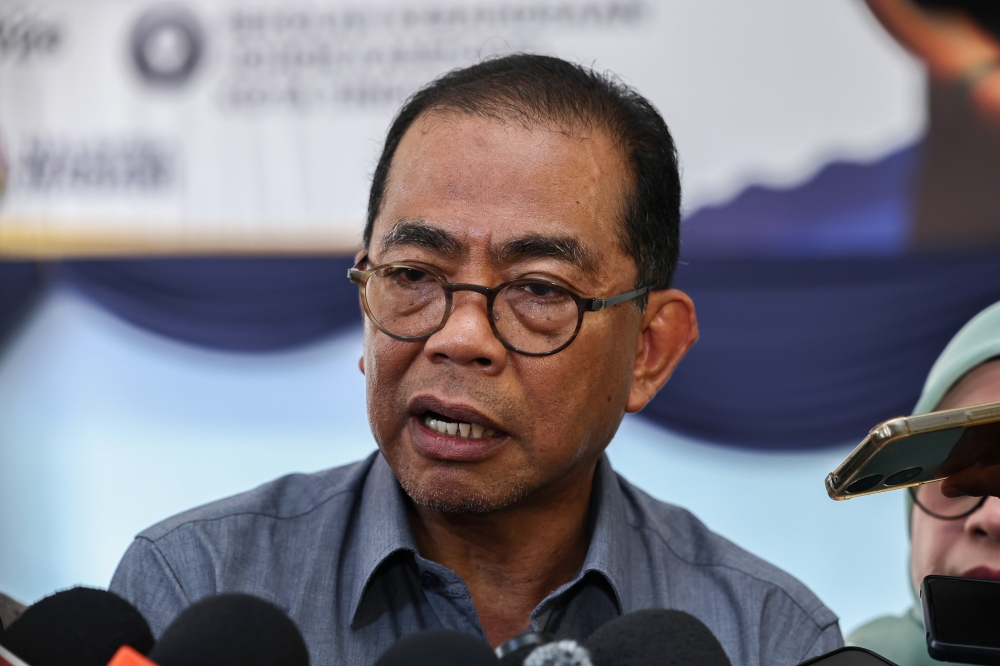
Defence Minister Datuk Seri Khaled Nordin has clarified that the Malaysian Armed Forces retain constitutional authority to conduct military exercises across the country's states without needing to seek prior approval from state rulers. His statement, delivered in Parliament on July 16, addresses questions about the division of powers between federal military command structures and the constitutional positions of state sovereigns, a distinction that remains important for understanding Malaysia's unique governance framework.
The clarification tackles a fundamental question about federalism and the extent of executive authority within Malaysia's constitutional monarchy system. Under the Federal Constitution, the Yang di-Pertuan Agong serves as Supreme Commander of the armed forces, delegating operational authority to the Ministry of Defence and military leadership. This establishes a clear chain of command rooted in federal constitutional arrangements rather than state-level approval mechanisms. The Defence Minister's statement underscores that military readiness and exercise scheduling fall squarely within federal defence policy domains, not subject to sultanate veto or consent requirements.
The timing of this parliamentary pronouncement suggests it may have been prompted by specific incidents or queries regarding military operations within particular states. In Malaysia's federal system, state rulers retain important ceremonial roles and constitutional safeguards within their respective territories, yet defence and security remain exclusively federal responsibilities. This distinction, while theoretically straightforward, occasionally generates friction when military movements intersect with state sensitivities or when questions arise about proper consultation protocols between federal and state authorities.
For military planners, the Defence Minister's statement provides operational clarity essential for maintaining readiness across the peninsula and East Malaysia. Armed forces exercises—whether involving army units, naval operations, air force manoeuvres, or joint deployment scenarios—require flexible scheduling and the ability to utilize various geographical locations for realistic training conditions. Introducing a requirement for state-by-state royal consent would create administrative bottlenecks incompatible with operational efficiency and could inadvertently compromise security preparedness by injecting unpredictable delays into exercise calendars.
Yet the statement also reflects Malaysia's delicate constitutional balance between federal supremacy in defence matters and the special positions occupied by state rulers within Malaysia's system. The nine constitutional monarchies that form part of Malaysia's federation each possess ceremonial significance and constitutional protections, even as they lack direct authority over defence operations. Khaled Nordin's intervention suggests awareness that clarification of federal prerogatives must be articulated respectfully, acknowledging state rulers' roles while firmly establishing military independence from sultanate oversight in operational matters.
The distinction between notification and consent carries practical weight. While the Defence Ministry may not require formal royal approval for exercise deployment, maintaining constructive relationships with state administrations generally encourages professional courtesy and advance communication. Notification protocols—ensuring state governments and rulers remain informed about military activities within their territories—represent sound administrative practice distinct from requiring approval. This approach preserves federal military authority while respecting intergovernmental communication standards that characterize a functioning federal system.
The parliamentary clarification also responds to evolving complexities within Malaysian federalism. As regional security challenges intensify and military modernization accelerates, the frequency and scale of joint exercises have increased substantially. These operations increasingly involve multiple states, cross-state mobility, and coordinated use of training facilities distributed across different sultanates. Establishing clear doctrinal understanding that such activities proceed under federal constitutional authority prevents recurrent disputes that could fragment defence readiness.
For Southeast Asian observers, Malaysia's approach reflects a broader regional pattern where national militaries maintain operational independence from state-level or provincial authorities, even within federal structures. Thailand, Indonesia, and the Philippines all emphasize centralized military command, though each federation addresses state-federal defence relationships distinctly according to their particular constitutional frameworks. Malaysia's statement positions the country within this international norm while accounting for its unique system incorporating constitutional monarchies.
The Defence Minister's position also carries implications for bilateral and multilateral military cooperation. International exercises conducted on Malaysian soil, whether involving allied forces from Singapore, the United States, Australia, or regional partners, rely on clear federal authority to commit national territory and armed forces to agreed operations. Without undisputed federal control over such matters, Malaysia's diplomatic standing in regional security architectures could become complicated if external partners questioned the Defence Ministry's ability to guarantee exercise execution.
Moving forward, the clarification should settle theoretical questions about constitutional distribution of defence powers. However, practical implementation will depend on how the Defence Ministry and state administrations translate this principle into working relationships. Establishing regular consultation channels between federal defence planners and state administrative structures—even absent formal consent requirements—likely represents the sustainable path forward. Such arrangements preserve federal military autonomy while acknowledging state authorities' legitimate interest in activities occurring within their jurisdictions.
The broader context reveals how Malaysia continuously negotiates its unique constitutional inheritance combining Westminster parliamentary democracy, federal distribution of powers, and institutionalized monarchy across multiple states. Defence matters occupy a particularly sensitive space within this framework because security ultimately derives from federal military authority, yet practical implementation inevitably touches state territories and interests. Datuk Seri Khaled Nordin's parliamentary statement serves to reinforce federal responsibility for national defence while inviting ongoing constructive dialogue with state partners about how these federal prerogatives function in practice.

