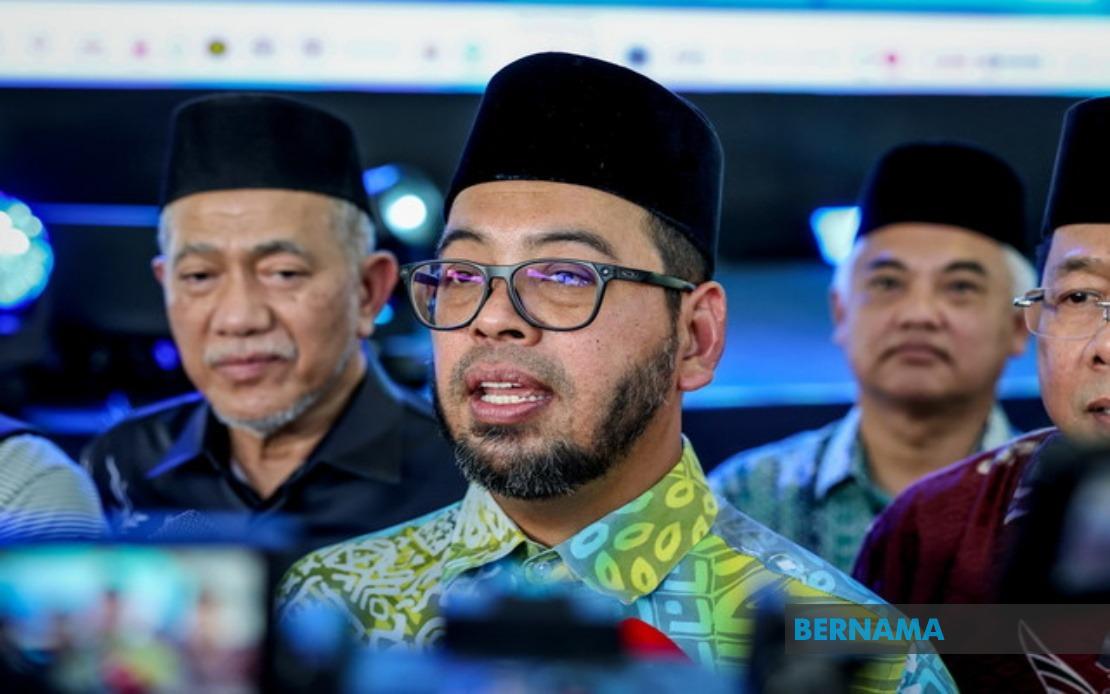
Malaysia has solidified its position as one of the world's foremost nations in administering Islamic affairs, according to Religious Affairs Minister Dr Zulkifli Hasan, who underscored this standing with empirical evidence and endorsements from international academics and observers. Speaking at the Northern Zone MADANI Ulama and Umara Multaqa gathering in Permatang Pauh, Bukit Mertajam, the minister characterised the country's approach to religious governance as a model admired and studied by other nations seeking to develop their own institutional frameworks.
The minister's remarks represent a counternarrative to persistent assertions that Islam faces marginalisation or decline in Malaysia. Instead, Hasan framed the international perspective as one where Malaysia functions as a significant actor in advancing Islamic thought and religious administration on the global stage. This positioning carries particular significance for a nation where Islam occupies a constitutionally enshrined place and where navigating plural religious and secular governance structures remains an ongoing challenge.
The halal certification apparatus administered by the Department of Islamic Development Malaysia, known as JAKIM, stands as perhaps Malaysia's most visible export in Islamic governance. The system has achieved widespread recognition as among the world's most rigorous and trustworthy, providing a competitive advantage for Malaysian producers and exporters in global markets where Muslim consumer preferences increasingly shape purchasing decisions. The JAKIM brand has transcended its domestic regulatory function to become a trusted international standard.
Malaysia's Islamic finance sector represents another dimension of this claimed leadership. The country has maintained its position as the world's foremost Islamic finance hub for eleven consecutive years, a ranking that reflects both the sophistication of financial institutions operating within the nation and the depth of regulatory infrastructure governing Islamic banking and capital markets. This dominance generates substantial economic returns while simultaneously positioning Malaysia as an intellectual centre for financial innovation rooted in Shariah principles.
The hajj pilgrimage management system, overseen by Lembaga Tabung Haji, has earned repeated international commendation for its organisational efficiency and pastoral care extended to Malaysian pilgrims undertaking the journey to Mecca. This function carries particular emotional and spiritual resonance within Malaysian Islamic practice and represents a tangible expression of state commitment to facilitating Muslim religious obligations.
In the realm of Islamic education, the government has substantially expanded its footprint through multiple initiatives. The KAFA 2.0 curriculum reform programme, which governs Quranic and foundational Islamic learning, emphasises practical application alongside theoretical knowledge, seeking to produce graduates with both religious literacy and contemporary relevance. This curricular approach reflects an underlying philosophy that Islamic education must equip younger generations with tools applicable to modern professional and civic contexts rather than remaining sequestered within purely devotional frameworks.
The tahfiz, or Quranic memorisation, ecosystem represents an elaborate institutional architecture comprising the National Tahfiz Council, a overarching national policy framework, standardised certification processes, and the Malaysia Tahfiz Certificate. These structures enable graduates who complete memorisation programmes to access pathways into professional, technical, and university-level education, effectively mainstreaming tahfiz achievement within broader national education structures rather than confining it to traditional religious study tracks. This integration signals an attempt to harmonise Islamic scholarly traditions with contemporary credentialling and career advancement systems.
The minister's emphasis on producing professional huffaz—individuals who have memorised the entire Quran—reflects governmental aspiration to cultivate religious expertise that contributes directly to national development objectives. This framing positions Islamic scholarship not as a retreat from secular governance but as a complementary domain contributing to nation-building.
During the same gathering, Yayasan Takwa, an Islamic foundation, distributed RM280,000 across 28 mosques in Penang, allocating RM10,000 to each institution. Selected religious schools also received equivalent funding, demonstrating how private Islamic foundations collaborate with government initiatives in strengthening Islamic institutional infrastructure. These financial injections support maintenance and programmatic expansion of spaces dedicated to worship and religious education.
For Malaysia, these claims regarding international leadership in Islamic affairs management carry implications extending beyond religious governance narrowly defined. They function as assertions of national identity within a region undergoing complex demographic and ideological transitions. Malaysia's model of state-regulated Islam coexisting with constitutional secularism and plural religious communities presents an alternative to both theocratic governance structures and systems that marginalise religious considerations from public policy. Whether this characterisation as a global leader reflects genuine international consensus or represents aspirational messaging remains subject to interpretation, yet the emphasis on empirical validation and external observation suggests a government eager to situate Malaysian Islamic governance within respectable international company.

