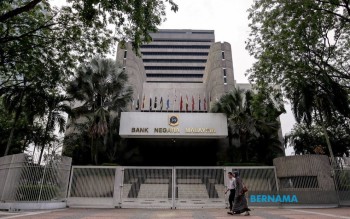
Consensus among Malaysia's major financial research houses has solidified around the expectation that Bank Negara Malaysia will keep its overnight policy rate unchanged at 2.75 per cent through the end of 2026, reflecting growing confidence in the nation's economic trajectory even as global supply chain challenges ease. The monetary policy committee's latest assessment represents a meaningful shift in tone compared to statements issued just two months earlier, signalling that policymakers have grown more assured about domestic growth momentum and the sustainability of price stability, despite occasional spikes in global cost pressures that could otherwise warrant tighter monetary conditions.
The foundation for this steady-rate outlook rests on three converging economic developments that have brightened the medium-term growth picture. First, Malaysia's export sector has performed significantly better than anticipated, with the electrical and electronics industry demonstrating particular strength in recent months. Second, the global supply chain disruptions that had plagued manufacturers and driven up costs are gradually resolving, removing a significant headwind that had clouded the outlook earlier in the year. Third, non-traditional export categories including petrochemicals and oil and gas production are staging a recovery as maintenance shutdowns at key facilities conclude and production capacity returns online. Together, these factors have persuaded analysts that the domestic economy is well-positioned to achieve growth within Bank Negara Malaysia's official forecast band of four to five per cent throughout 2026.
CGS International's assessment highlights how the monetary authority's language has become materially more optimistic compared to its May statement, even though the overall policy stance remains neutral—neither biased toward further loosening nor toward eventual tightening. The research house emphasizes that with growth expectations firmly anchored within the central bank's comfortable range and inflationary pressures contained by the standards of the current global environment, there is simply no compelling case for monetary authorities to adjust course in either direction. This framing suggests that Bank Negara Malaysia's leadership views the current rate level as appropriately calibrated to support continued expansion without generating financial instability or fuelling demand-driven price pressures.
Domestic demand strength provides an important underpinning for this benign outlook. Malaysia's labour market has remained surprisingly resilient, with employment levels holding firm and wage growth continuing at a steady pace despite broader economic uncertainties. Government policy support measures, implemented to cushion household incomes and encourage consumption, continue to provide a tailwind for spending by Malaysian families and businesses. Public Investment Bank notes that this combination of labour market resilience and policy support has proven more durable than external observers might have expected, suggesting that domestic demand will not simply evaporate if regional growth slows or global trade tensions spike.
The critical distinction between the monetary stance in 2026 versus earlier periods lies in how Bank Negara Malaysia now characterizes the inflation outlook. While acknowledging that some cost pressures emanating from global commodity prices and international freight rates may gradually feed through to Malaysian consumer prices, the central bank has concluded that these impacts should remain manageable. The inflation impulse is judged to be fundamentally external in nature—driven by factors beyond Malaysia's borders—rather than evidence of overheating domestic demand. Moreover, analysts note that headline inflation and core inflation measures, which strip out volatile food and energy components, are both expected to stay within comfortable ranges that do not necessitate defensive monetary tightening.
Apex Securities underscores that while Bank Negara Malaysia appears comfortable maintaining the status quo, the central bank's vigilance on inflation cannot be dismissed. The statement contains implicit conditionality: should evidence emerge of inflation becoming broader-based and more persistent, or should cost pressures begin spreading into core inflation measures, the monetary authority stands ready to pivot toward a more hawkish stance. This suggests that a rate increase in the final quarter of 2026 remains possible, though analysts currently view this scenario as a low-probability tail risk that would require multiple adverse developments to crystallize.
For Malaysian households and businesses, the expectation of unchanged interest rates through 2026 carries important implications for financial planning and investment decisions. Mortgage rates, business loan costs, and returns on savings deposits will likely remain in their current ranges, allowing individuals and firms to forecast borrowing expenses and capital returns with greater confidence. The stability also suggests that Bank Negara Malaysia does not foresee the need for sharp adjustments that would disrupt asset valuations or trigger sudden shifts in investment strategies. Property investors, stock market participants, and corporate finance teams can therefore plan medium-term initiatives on the assumption of steady monetary conditions.
The regional context adds another layer of significance to Malaysia's expected policy hold. Throughout Southeast Asia, central banks have grappled with the tension between supporting growth and managing inflation, with some regional peers having already begun tightening cycles while others remain accommodative. Malaysia's forecast trajectory—steady rates amid improving growth—positions the country as a stability anchor within a region experiencing divergent monetary policy moves. This consistency may help attract foreign investors seeking predictable policy environments, and it reduces the likelihood of sudden capital outflows triggered by surprise rate decisions.
One noteworthy element of the analysts' consensus is the absence of deep disagreement about the end-2026 rate forecast. CGS International, Public Investment Bank, and Apex Securities all independently conclude that 2.75 per cent is the appropriate endpoint, despite different emphases in their reasoning and slightly different assessments of tail risks. This convergence suggests that the case for unchanged policy is genuinely robust rather than dependent on a narrow set of optimistic assumptions. Even analysts who harbour marginally more inflation concerns still conclude that the evidence does not yet justify tightening, indicating that rate-hiking proponents recognize the strength of the growth and employment arguments.
The broader question animating these assessments is whether Malaysia's economy can sustain momentum without monetary policy support. The analysts' consensus implies confidence that it can, at least through 2026. Domestic demand is self-reinforcing via the labour market channel; exports are recovering without needing accommodative financial conditions to fuel them; and inflation remains subdued despite global headwinds. If these conditions persist, Malaysia will have achieved a rare sweet spot where central banks need not choose between growth and stability because both can coexist. The stakes for validating this optimistic scenario are substantial, because if growth falters or inflation proves stickier than expected, Bank Negara Malaysia may face difficult choices about whether to cut rates to stimulate activity or hold firm to protect the currency and prices.

