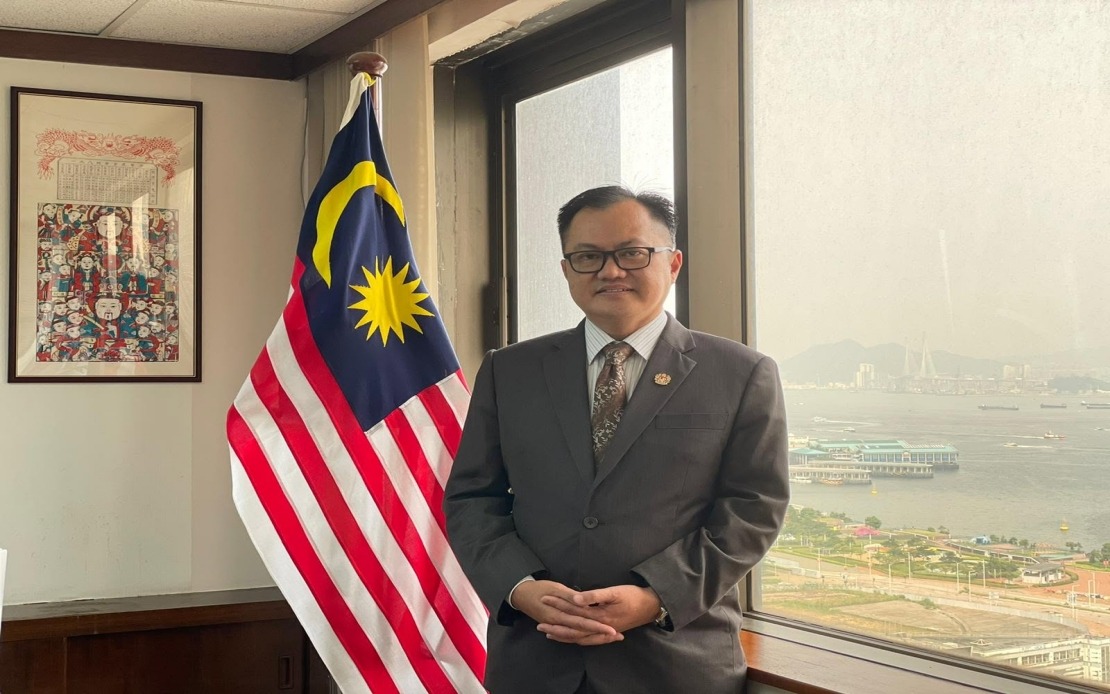
The Malaysian Consulate General in Hong Kong has formally responded to recent media coverage criticising the accessibility of voting information for overseas Malaysians during the Johor state election, asserting that it deployed comprehensive outreach initiatives designed to keep expatriates informed throughout the electoral process.
Consul General Muzambli Markam disputed characterisations suggesting that Malaysian voters abroad faced an information vacuum, emphasising instead that his mission had orchestrated a deliberate, sustained campaign to publicise election-related details through multiple channels. The consulate's strategy encompassed regular postings of advisories and procedural guides distributed via its official digital platforms, alongside a formal partnership with the Malaysian Association of Hong Kong to amplify registration deadlines and encourage civic participation among the local Malaysian community.
The consul general's remarks directly addressed an article published by the South China Morning Post on July 9, which carried the headline "Malaysians in Hong Kong locked out of state elections amid tight voting deadlines." Markam contended that this framing fundamentally misrepresented both the Election Commission's modernisation efforts and the broader Malaysian government commitment to expanding electoral access for citizens living overseas. He indicated that the consulate had explicitly briefed the journalist involved prior to publication, sharing details of the outreach programme, yet these explanations were apparently omitted from the final article.
One particularly significant element of Markam's rebuttal concerned the digital infrastructure underpinning overseas voter registration. He emphasised that Malaysia's electoral authorities had substantially upgraded the application process by centralising it through the MySPR online portal, eliminating the need for physical intermediaries and enabling expatriates to submit their registrations directly into the national system from anywhere with internet access. This technological shift represents a substantial departure from traditional bureaucratic workflows that commonly required consular involvement or in-person document verification.
Markam further argued that media criticism conflating the consulate's absence from voter statistics with administrative incompetence fundamentally misunderstood the architecture of Malaysia's modernised electoral system. Rather than representing a gap in service delivery, the deliberate non-involvement of the consulate in registration workflows reflected a carefully considered design choice prioritising security, efficiency, and direct citizen-to-government interaction. The consultant described this approach as a "streamlined and secure electoral process," positioning digital-first registration as an intentional feature rather than an oversight.
For Malaysian expatriates navigating electoral participation from Hong Kong, the distinction carries practical importance. The MySPR portal's centralisation theoretically reduces bureaucratic friction that might otherwise delay or complicate registration applications. However, the effectiveness of such digital-first approaches hinges on awareness and accessibility—precisely the concerns raised by the South China Morning Post article. Whether promotional activities by the consulate and MAHK reached sufficient numbers of eligible voters to meaningfully offset registration barriers remains a contested empirical question.
The Johor state election itself occurred amid broader discussions within Malaysia about expanding electoral franchise and accessibility for diaspora communities. As Malaysia's economy continues generating significant expatriate populations across Asia, Europe, and North America, the question of how effectively overseas Malaysians can exercise voting rights grows increasingly consequential for electoral outcomes and democratic legitimacy. The tension between digital-first infrastructure and the reality of uneven information distribution highlights structural challenges that extend beyond Hong Kong.
Markam's defence also implicitly acknowledges a significant detail: that international media outlets scrutinising Malaysian electoral practices can generate diplomatic friction. By framing the South China Morning Post's coverage as inaccurate and incomplete, the consulate signalled sensitivity to foreign commentary on domestic electoral matters. This represents a notable shift in how Malaysian diplomatic missions engage with critical journalism, moving beyond passive information provision toward active contestation of media narratives.
The Malaysian government's stated commitment to facilitating democratic participation among overseas citizens through "efficient digital infrastructure and active diplomatic engagement" encapsulates the competing priorities at play. Digital systems promise scalability and reduced friction, while diplomatic engagement—through consulates and community organisations—attempts to ensure awareness and accessibility. However, these approaches function best in tandem; autonomous digital portals cannot overcome awareness deficits among populations with limited information about electoral opportunities.
For the broader Southeast Asian region, Malaysia's experience with overseas voter engagement offers instructive lessons. As nations across the region experience increasing urbanisation and cross-border migration, expanding electoral access for diaspora populations presents both democratic opportunities and logistical complexities. The debate in Hong Kong underscores that technological infrastructure alone cannot guarantee meaningful participation without accompanying public information campaigns calibrated to reach dispersed populations effectively.
Looking forward, the tension between the consulate's claimed outreach and media reports of voter confusion suggests a need for more rigorous, transparent evaluation of overseas voter awareness and participation rates. Consular missions naturally tend to characterise their efforts generously, while journalists investigating participation barriers often encounter individuals unaware of registration deadlines or procedures. Reconciling these competing accounts requires independent verification of how many eligible Malaysian voters in Hong Kong actually received and understood registration information. The Malaysian government and Election Commission might strengthen future electoral cycles by establishing clearer metrics for overseas voter engagement and publishing detailed participation statistics disaggregated by location.

