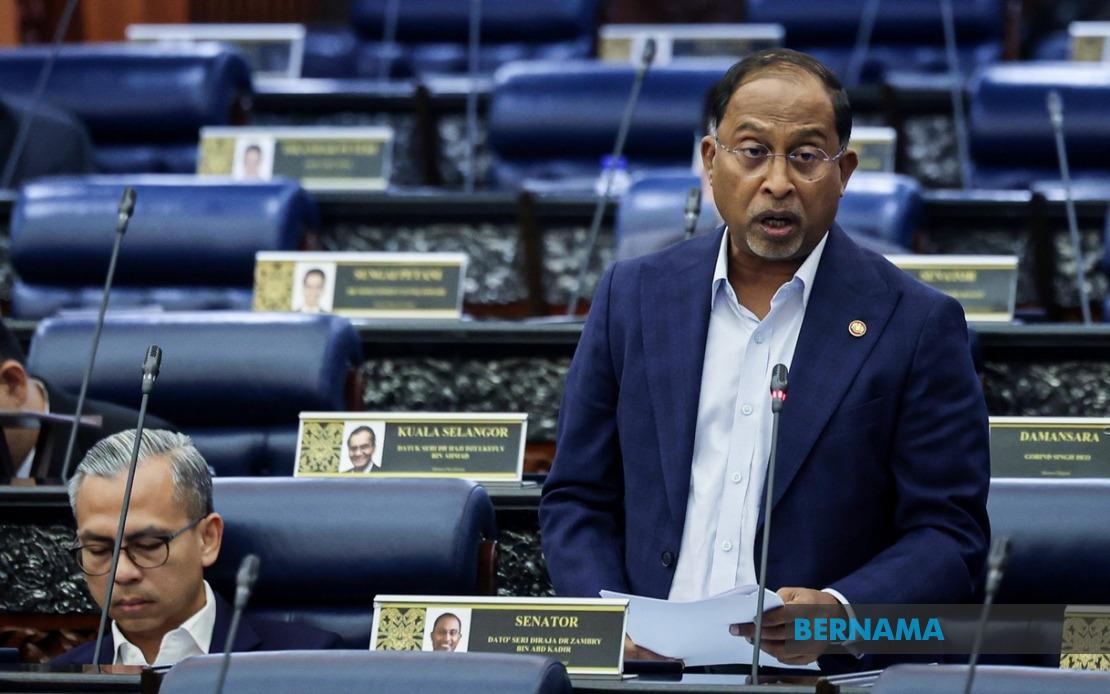
The Malaysian Higher Education Ministry is actively pursuing a strategy to strengthen and diversify academic offerings across Sabah's public higher education institutions, signalling a commitment to address long-standing regional disparities in educational access. During parliamentary Question Time, Higher Education Minister Datuk Seri Dr Zambry Abdul Kadir outlined the government's receptiveness to proposals for new programmes at Universiti Malaysia Sabah, polytechnics, and community colleges, reflecting an effort to stem the flow of Sabah-based students leaving the state for studies in Peninsular Malaysia.
The ministry's approach represents a measured expansion strategy rather than blanket growth, with each new programme proposal subjected to rigorous evaluation. Applications must demonstrate institutional readiness, alignment with identified industry requirements, sufficient student demand, and capacity to deliver quality instruction. Critically, the assessment process also screens for programme duplication across Sabah's higher education landscape, a safeguard designed to prevent wasteful proliferation and maintain financial efficiency across the public institution network.
For Southeast Asian observers tracking regional development patterns, this initiative reflects broader concerns about brain drain and the concentration of educational quality in urban centres. Sabah, despite its significant population and economic potential, has historically channelled students toward peninsular institutions, creating financial burdens on families and contributing to human capital losses when graduates relocate. By cultivating specialist programmes rooted in Sabah's distinctive characteristics, the ministry aims to create pull factors that retain talent within the state.
Universiti Malaysia Sabah stands positioned as the anchor institution driving this localised growth agenda. UMS and its branch campuses are prioritising research strengths that leverage Sabah's geographical and biological advantages: marine science and aquaculture represent logical extensions of the state's maritime economy, tropical biotechnology capitalises on rainforest biodiversity, while heritage and social sciences programmes reflect Sabah's multicultural composition. Additionally, ecotourism and business programmes address the state's tourism sector expansion, creating pathways where academic study directly feeds labour market opportunities.
Universiti Teknologi MARA's Sabah branch contributes a complementary institutional presence, concentrating on hospitality, tourism, business administration, and science technology—sectors aligned with both regional needs and student employment prospects. This division of academic labour, where institutions play to their strengths rather than replicating programmes across campuses, theoretically maximises resource efficiency and educational quality.
As of late June, Sabah's higher education infrastructure comprised 16 institutions spanning four public universities, three polytechnics, and nine community colleges. While this ostensibly represents reasonable institutional spread, the reality remains that many Sabah students still pursue qualifications outside the state, suggesting either programme shortages, perceived quality differentials, or specialisation gaps. The ministry's willingness to review and approve new offerings acknowledges these structural limitations.
Minister Zambry explicitly acknowledged that prescription of targets—such as mandating that eighty percent of available programmes remain within Sabah—proves administratively impractical and educationally counterproductive. Instead, the ministry advocates a "niche-based approach" that avoids duplication while strategically filling gaps. Legal education emerged as a priority example; Sabah and Sarawak face demonstrated workforce shortages in legal professions, suggesting that law programmes would serve identifiable, geographically-specific demand rather than creating redundant capacity.
Financial commitment underpins this expansion vision. The ministry is executing twenty-one development projects throughout Sabah valued at RM1.05 billion collectively, with RM160.6 million specifically earmarked under the 13th Malaysia Plan's first rolling plan phase through 2026. This substantial investment signals serious governmental intent, moving beyond rhetorical support toward tangible resource allocation. Such funding levels suggest infrastructure improvements, faculty recruitment, and equipment acquisition necessary for programme credibility.
The government's broader research ecosystem also sustains this agenda. Dual funding mechanisms—through both the Higher Education Ministry and the Ministry of Science, Technology and Innovation—support university research activities with commercial potential. The RDICE programme specifically targets research yielding economic value, creating incentive structures where academic institutions generate revenue streams that offset operational costs and attract external partnerships. For Malaysian and Southeast Asian perspectives on development economics, this approach reflects the "innovation economy" framework increasingly prevalent across the region.
Parliamentary scrutiny regarding student admission quotas reveals tension between aspirational targets and practical constraints. While one legislator sought assurance that Sabah students would access proportional programme places locally, the reality involves complex demand-supply dynamics varying across disciplines and institutions. Establishing artificial quotas could inflate programme offerings in sectors lacking genuine student interest, creating wasteful capacity or forcing enrolment of unmotivated students—outcomes counterproductive to quality higher education.
For Malaysian policymakers and regional observers, Sabah's experience illuminates broader federalism challenges. Peripheral regions frequently experience educational service deficits relative to core economic zones, perpetuating inequality cycles where families lacking resources cannot afford relocation for tertiary study. By strategically developing place-based, research-informed academic offerings, the ministry attempts breaking this pattern through inclusive growth principles—ensuring educational access correlates with residence rather than family wealth.
The success of this initiative ultimately depends on execution capacity. Approving new programmes requires corresponding investments in faculty development, library resources, laboratory facilities, and quality assurance mechanisms. Equally crucial is genuine employer engagement to ensure programmes evolve alongside labour market requirements rather than ossifying into obsolescence. The ministry's emphasis on programme relevance and graduate employability suggests awareness of these implementation realities, though translating policy intent into institutional practice remains perpetually challenging across Southeast Asia's higher education systems.

