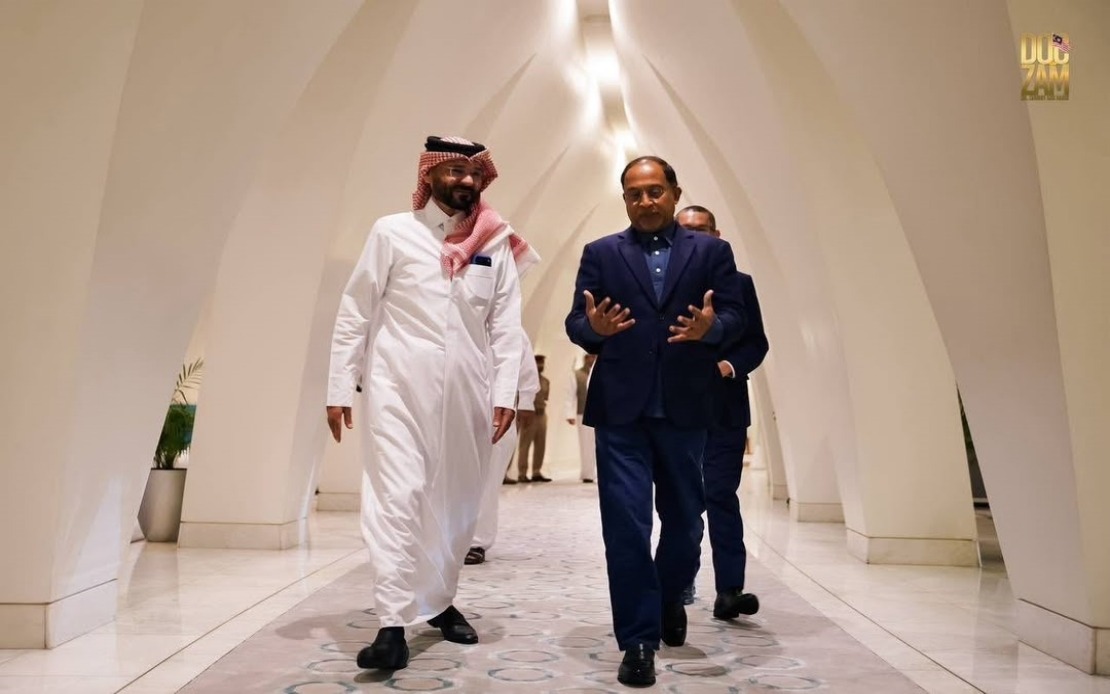
Malaysia's Higher Education Minister Datuk Seri Dr Zambry Abd Kadir touched down in Doha early on Tuesday morning as an official representative of the Malaysian government, attending ceremonial proceedings to honour the passing of Qatar's former leader, Sheikh Hamad bin Khalifa Al Thani. The minister's presence underscores the diplomatic bonds maintained between Kuala Lumpur and Doha, with his visit forming part of broader regional observances marking the death of a pivotal Gulf statesman.
Sheikh Hamad bin Khalifa Al Thani, who steered Qatar through an eighteen-year reign beginning in 1995, passed away on Sunday morning at the age of 74, according to an announcement from Qatar's Amiri Diwan. His departure represents a significant moment in Gulf politics, as he transformed the small peninsula nation into a regional and global player during his leadership tenure. The period under his governance saw Qatar emerge as a major economic and cultural force, hosting major international events and expanding its diplomatic footprint across the world.
Zambry's itinerary included a scheduled visit to Lusail Palace on Tuesday, where he was expected to meet with Sheikh Tamim bin Hamad Al Thani, the current Amir of Qatar and son of the deceased. This formal audience reflects protocol observed during high-level diplomatic visits, particularly when mourning the passing of heads of state. The meeting provides an opportunity to deliver Malaysia's formal condolences while reaffirming bilateral relations between the two nations.
In marking the occasion, Malaysia issued a statement expressing deep sympathies to Qatar's leadership and citizens. Through Zambry's social media address, the Malaysian government conveyed its respect for Sheikh Hamad's legacy and solidarity with the Qatari people during their period of collective bereavement. Such gestures of international mourning carry significance in diplomatic circles, signalling respect and continuity in inter-governmental relations despite leadership transitions.
Sheikh Hamad's tenure from 1995 to 2013 represented a formative era for Qatar's emergence on the international stage. During his leadership, the nation diversified its economy beyond hydrocarbon exports, established itself as a media powerhouse through Al Jazeera, and positioned itself as a regional mediator in various conflicts. His decision to step down in favour of his son represented a planned succession, unusual among Gulf monarchies at that time, and demonstrated a deliberate approach to institutional transition.
Qatar has declared an official mourning period spanning four days, commencing on Sunday, July 12. During this interval, all government ministries, state entities, and public institutions throughout the country remain shuttered as a mark of respect. This comprehensive closure reflects the significance attached to Sheikh Hamad's role in establishing modern Qatar and the esteem in which he continues to be held within Qatari society.
The current Amir, Sheikh Tamim bin Hamad Al Thani, ascended to leadership in 2013 and has since consolidated Qatar's position as a major global stakeholder. He has steered the nation through significant geopolitical challenges, including the blockade period that lasted from 2017 to 2021, and has expanded Qatar's hosting of international events and investments. The succession from father to son represented continuity in governance philosophy, and Sheikh Hamad's passing marks the end of direct involvement in daily affairs for the figure who architected modern Qatar's foundations.
For Malaysia, the relationship with Qatar extends across multiple dimensions, including trade, education, investment, and cultural exchanges. Qatari investors maintain substantial interests in Malaysian real estate and business ventures, while Malaysian workers and professionals operate throughout Qatar's expanding economy. The presence of a ministerial-level representative at Sheikh Hamad's funeral ceremonies acknowledges these multifaceted connections and demonstrates Malaysia's commitment to maintaining cordial ties with the Gulf nation.
Zambry's mission to Doha also carries implications for Malaysia's broader engagement with Gulf states, a region of strategic importance for Southeast Asian nations. As Malaysia seeks to diversify partnerships and secure investments in an increasingly multipolar world, maintaining strong diplomatic relationships with wealthy Gulf monarchies remains a policy priority. Such formal ceremonial attendance at significant state occasions reinforces bilateral partnerships and creates opportunities for higher-level diplomatic dialogue.
The passing of Sheikh Hamad bin Khalifa Al Thani represents the conclusion of a remarkable chapter in modern Middle Eastern history. His vision transformed Qatar from a modest Gulf state into a nation of global significance, though not without controversy regarding labour practices and geopolitical alignments. His legacy will continue influencing Qatar's trajectory under Sheikh Tamim's stewardship, and international delegations, including Malaysia's representation, gather to acknowledge a leader whose impact extended far beyond his nation's borders. The attendance of senior Malaysian officials at such ceremonies reflects reciprocal respect and the enduring importance of Gulf connections for Malaysia's foreign policy agenda.

