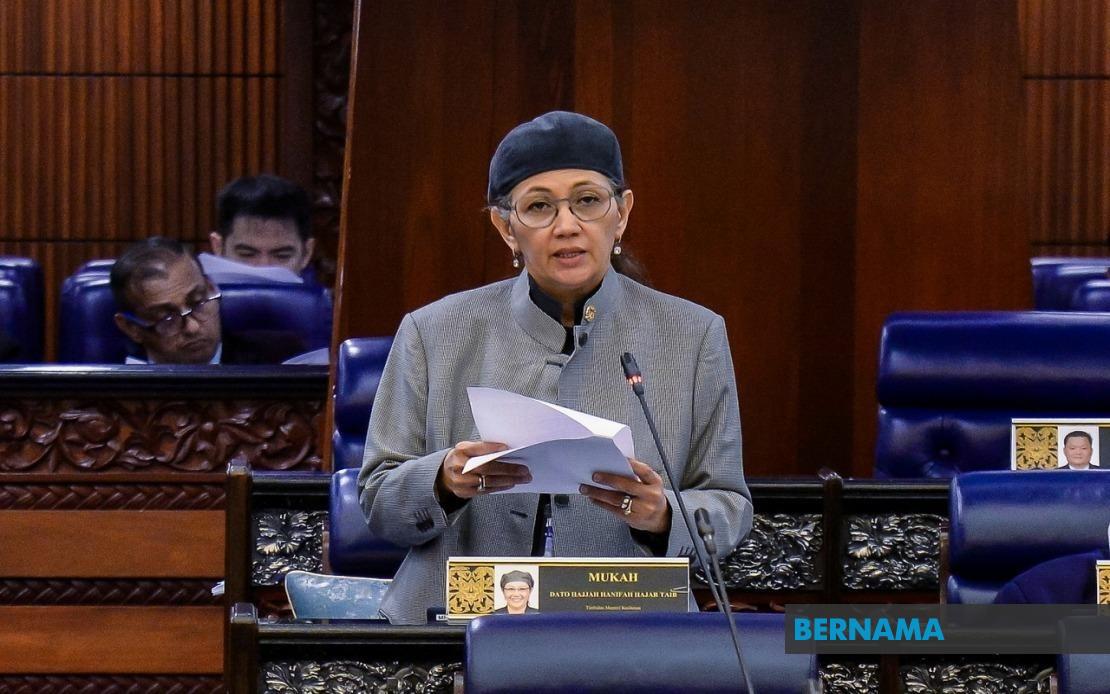
Malaysia's Ministry of Health is taking decisive action to tackle Sabah's persistent doctor shortage by appointing 560 permanent medical officers to the state, Deputy Health Minister Datuk Hanifah Hajar Taib announced in Parliament. The deployment, scheduled to commence in October 2026, represents a significant escalation in the federal government's commitment to stabilizing healthcare delivery in one of the country's most vulnerable regions. This move comes as part of a broader national initiative to fill 4,500 permanent medical officer vacancies through an accelerated two-phase recruitment programme.
The scale of Sabah's healthcare workforce challenge is underscored by realistic expectations about reporting rates. While 560 officers will receive placement offers, the ministry anticipates historical patterns will prevail, with merely around 50 per cent of appointees actually reporting for duty. This projection suggests approximately 280 doctors will ultimately arrive in Sabah, a figure that, though encouraging, still falls short of the state's documented deficit of 256 medical officers. The persistent gap between postings and actual arrivals reflects a deeper problem within Malaysia's medical workforce allocation—the reluctance of urban-trained physicians to accept postings in less developed regions, a phenomenon that continues to perplex health administrators nationwide.
Sabah's current medical workforce composition reveals the systemic pressures facing the state's health infrastructure. The state operates 2,803 established medical officer positions, yet only 1,863 posts—representing 66.5 per cent—are actively filled by permanent staff. An additional 366 positions, or 13.1 per cent of the total, are occupied by officers on study leave, effectively taking them offline for clinical work. Most concerning are the 570 vacant positions accounting for 20.3 per cent of all established posts, a vacancy rate that significantly exceeds sustainable thresholds for hospital operations. To compensate for these shortfalls, the ministry has deployed 680 contract doctors throughout Sabah, a temporary solution that creates its own problems through workforce instability and continuity issues.
The health ministry's broader context for this intervention extends beyond Sabah alone. According to the 2024 Health Indicators report, eight Malaysian states lag the national average for doctor-to-population ratios, placing Sabah among the country's most medically underserved regions. However, the ministry cited encouraging progress, noting that Sabah's ratio improved by 25.1 per cent between 2020 and 2023, suggesting that previous interventions have yielded measurable gains. This trajectory of improvement provides hope that sustained investment in medical staffing could eventually bring Sabah closer to national benchmarks, though the absolute numbers remain troubling.
The ministry's first phase of permanent officer appointments, implemented from June 2026, offers sobering lessons about the challenges ahead. Of 328 officers offered permanent positions nationwide, only 39 were designated for Sabah. This limited contingent exposed the reluctance affecting medical workforce distribution, with just 20 of the 39 assigned officers actually reporting to their posts while 19 declined their postings. This 51 per cent acceptance rate mirrors historical patterns and underscores why the ministry has begun implementing systematic reforms to incentivize postings in underserved areas.
Addressing these placement challenges, the ministry has embedded new requirements into its enhanced e-Placement system, rolled out in 2025. Contract medical officers seeking permanent appointments must now select at least one preferred posting location from designated underserved regions including Sabah, Sarawak, or Labuan. This mechanism directly links career advancement to geographic service, effectively leveraging the career aspirations of medical professionals to redirect talent toward critical shortage areas. While potentially controversial among doctors accustomed to unrestricted placement choices, the policy represents pragmatic governance in response to Malaysia's geographic health equity crisis.
The quantitative targets established through the e-Placement system underscore the ministry's strategic prioritization of East Malaysia. Sarawak receives the largest allocation with 650 permanent medical officer placements, while Sabah is designated 310 positions, together accounting for 42.7 per cent of the total nationwide quota of 2,248 permanent positions. This disproportionate concentration of resources reflects official recognition that East Malaysia faces the most acute medical workforce deficits relative to its population needs. The remaining 1,288 positions are distributed across Peninsular Malaysia, where urban centers and higher cost-of-living areas typically attract medical graduates through market mechanisms.
For Malaysian healthcare stakeholders, particularly those monitoring Sabah's trajectory, this initiative carries several implications. The phased approach allows the ministry to assess real-world acceptance rates and adjust strategies accordingly. If the second phase achieves higher reporting rates than anticipated, it would signal that the new placement requirements are yielding results. Conversely, if historical patterns persist despite the reforms, the ministry may need to contemplate more aggressive interventions, potentially including salary adjustments, housing subsidies, or mandatory service periods to shift doctor behavior.
Sabah's healthcare challenges are not purely numerical but reflect deeper structural issues within Malaysia's medical education and career development systems. Medical graduates from Malaysian universities concentrate their practice in Kuala Lumpur and other major cities, leaving peripheral regions chronically underserved. This geographic maldistribution contradicts the government's equity objectives and complicates efforts to deliver universal healthcare access. The permanent posting initiative addresses symptoms rather than root causes—the absence of compelling reasons, financial or otherwise, for doctors to build careers in less economically developed states.
Looking forward, the success of the October 2026 deployment will depend significantly on implementation fidelity and follow-up support for appointed officers. Merely posting doctors to Sabah does not guarantee retention; the ministry must ensure adequate working conditions, professional development opportunities, and social infrastructure to encourage long-term commitment. Previous campaigns to staff remote areas have foundered when such support measures proved inadequate, resulting in high turnover and renewed shortages.
The broader political context matters as well. Member of Parliament Mohd Kurniawan Naim Moktar from Kinabatangan, whose parliamentary question triggered this announcement, represents constituents directly affected by healthcare deficiencies. The government's visible response to this concern demonstrates sensitivity to regional health grievances, particularly in Sabah where healthcare outcomes have historically lagged Peninsular Malaysia. Sustaining political support for such initiatives requires demonstrable progress, making the reporting and retention rates of the October cohort crucial indicators for future policymaking.
Ultimately, Sabah's doctor shortage reflects decades of underinvestment and structural imbalances in Malaysia's medical workforce distribution. The appointment of 560 permanent positions represents meaningful progress but remains insufficient to fully address documented deficits. The true test will emerge in October 2026 when these appointments are implemented and early outcomes become apparent. Whether this initiative proves merely another incremental step or the beginning of systemic correction depends on sustained commitment, adaptive policy responses, and the willingness to implement more radical reforms if initial strategies prove inadequate.

