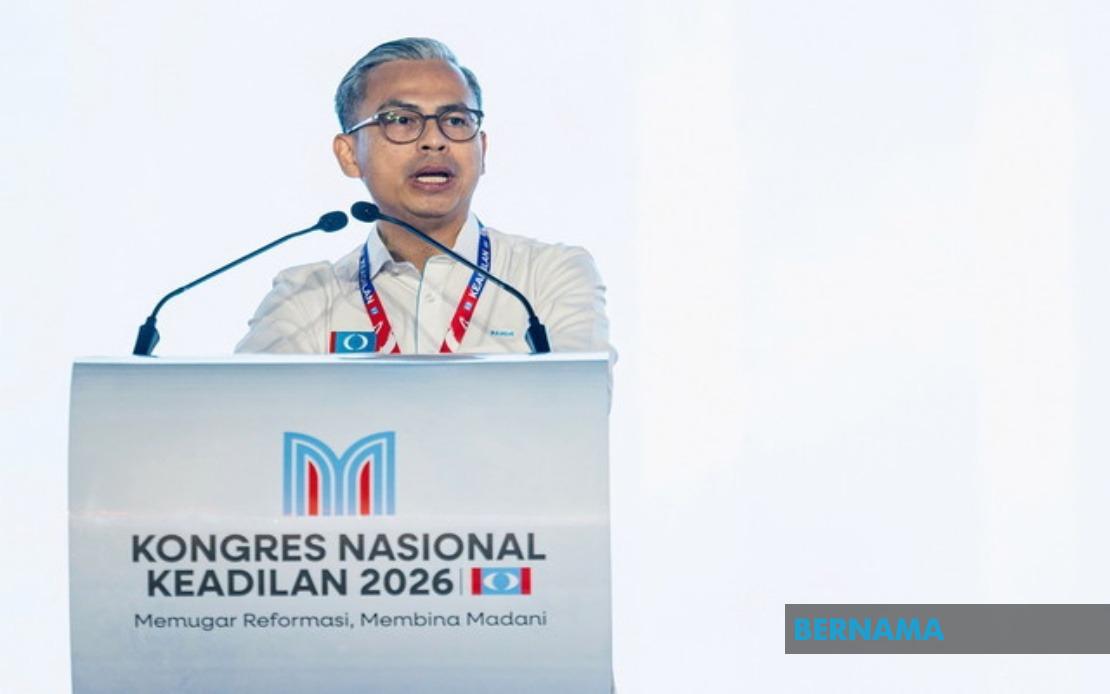
The Malaysian government faces a persistent communication challenge: while economic policies have succeeded on paper, many citizens remain unaware of or disconnected from their practical benefits. This disconnect was highlighted by Communications Minister Datuk Seri Fahmi Fadzil during the PKR National Congress in Melaka, where he acknowledged that despite strong macroeconomic performance, the government's narrative has failed to reach ordinary Malaysians in ways that resonate with their daily concerns.
Fahmi's remarks reveal a deeper strategic problem within the ruling coalition. The administration under PKR president Datuk Seri Anwar Ibrahim has implemented various economic measures and policy reforms, yet public perception lags significantly behind actual achievement. This gap represents not merely a public relations shortfall but a potential threat to political legitimacy. In a democracy, government effectiveness depends partly on citizen understanding and support—when people cannot see or feel tangible improvements in their lives, even genuine successes become politically hollow.
The Communications Minister identified a critical flaw in the government's approach: treating macroeconomic indicators as sufficient proof of success without translating these figures into human terms. What economists call the "pot economy"—aggregate growth, GDP expansion, and financial stability—means little to families struggling with rising food costs or workers concerned about employment security. Fahmi's acknowledgment that this messaging failure exists represents a significant admission that PKR's communication machinery has underperformed since Anwar's administration took office in late 2022.
To remedy this situation, PKR plans to fundamentally restructure how it delivers information to the public. Rather than relying solely on formal announcements and media releases, the party intends to decentralise communication efforts by empowering grassroots leaders and division chiefs to explain government policies directly within their communities. This approach recognises that citizens are more likely to engage with and trust information delivered through familiar local figures rather than distant central government spokespersons. The expansion of smaller, informal discussion forums represents a deliberate shift toward conversational rather than broadcast communication.
Fahmi emphasised that effective government communication must account for the emotional and psychological dimensions of public understanding. Australians and Malaysians alike respond not purely to factual information but to narratives that connect policy outcomes to their personal aspirations and concerns. By focusing solely on economic data, the government has inadvertently alienated citizens who measure success through different metrics—job security, educational quality for their children, or community wellbeing rather than national growth rates.
Combating misinformation has simultaneously become a priority for the administration. Since the recent Johor state election, the Malaysian Communications and Multimedia Commission identified over 8,410 fake accounts specifically designed to exploit sensitive 3R issues—religion, race, and the royal institution. This campaign highlights how adversaries weaponise emotional triggers to undermine public confidence in government. The coordinated spread of false information targeting these sensitive areas has demonstrably hindered the government's ability to control its own narrative, with disinformation campaigns reaching citizens before official clarifications can be issued.
The collaboration between government, MCMC, and social media platforms represents an attempt to create institutional safeguards against deliberate narrative manipulation. However, this approach walks a delicate line between combating genuine misinformation and maintaining press freedom. Fahmi's insistence that the government is "not in a mode of controlling the media" reflects sensitivity to accusations that might arise from aggressive fact-checking campaigns. The government must prove it is correcting false information rather than suppressing critical coverage, a distinction crucial for maintaining democratic legitimacy.
The PKR strategy also involves strengthening cooperation with its women's wing to reach female voters and household decision-makers. In Malaysian society, women often serve as primary decision-makers regarding household economics, education, and community welfare. By targeting this demographic through the Wanita wing, PKR hopes to translate abstract economic policies into family-level benefits and concerns. This gendered approach to communication acknowledges that effective political messaging must reach influential stakeholders through channels they already trust and utilise.
Southeast Asian governments more broadly face similar challenges as Malaysia. Rising economic nationalism, competing media ecosystems, and the fragmentation of public attention across digital platforms have made unified government messaging increasingly difficult. Malaysia's experience suggests that the traditional top-down communication model—where governments announce policies and expect automatic public understanding—has become obsolete. Citizens increasingly demand more interactive, localised, and emotionally resonant communication from their leaders.
The timing of Fahmi's speech at the PKR congress indicates that the party recognises communication as a central challenge for the 2026 general election cycle. If PKR cannot effectively demonstrate to voters that government policies have materially improved their lives, the coalition faces significant electoral vulnerability regardless of objective economic performance. The acknowledgment of communication shortfalls, while politically risky in the short term, may actually strengthen the party's position by demonstrating responsiveness to public feedback.
Moving forward, the success of these communication initiatives will depend on execution. Decentralising information delivery requires training grassroots leaders, ensuring message consistency across thousands of volunteers, and maintaining credibility when inevitable policy failures or unpopular decisions occur. The government must also navigate the tension between competing communication goals: simultaneously combating misinformation while respecting democratic discourse, reaching out emotionally while maintaining factual accuracy, and centralising strategic messaging while empowering local communicators.
For Malaysian voters, the government's renewed emphasis on communication strategy signals that leadership acknowledges the legitimacy of public concerns about policy accessibility and relevance. Whether this translates into genuine improved dialogue or remains merely rhetorical will determine whether the government successfully narrows the gap between its economic achievements and public perception. The next two years will reveal whether PKR's enhanced communication machinery can effectively translate macroeconomic success into lived experiences that voters can feel in their daily lives.

