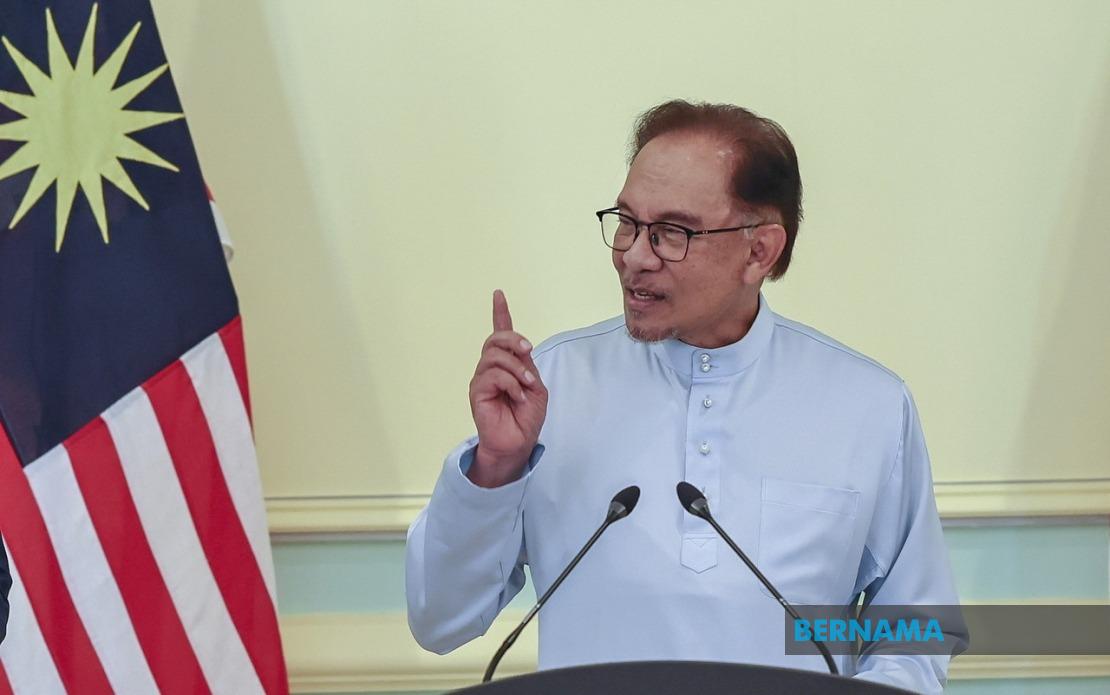
Prime Minister Datuk Seri Anwar Ibrahim's diplomatic strategy on the Gaza crisis merits recognition for weaving together moral conviction, legal frameworks, diplomatic leverage and humanitarian commitment, argues Universiti Pertahanan Nasional Malaysia's Honorary Professor Dr Mizan Aslam. The assessment reflects growing international scrutiny of how middle-power nations like Malaysia navigate complex geopolitical crises while maintaining principled positions aligned with international legal structures and humanitarian imperatives.
The scale of humanitarian devastation in Gaza has transcended the traditional Israeli-Palestinian binary, instead exposing systemic failures in how the global community protects civilians and enforces international law. After 1,000 days of conflict, the territory has witnessed 73,066 deaths and 173,514 injuries, with children bearing disproportionate harm: 21,730 killed and 59,054 orphaned. The casualty figures represent not merely numerical losses but point toward the erosion of international protection mechanisms supposedly designed to shield non-combatants from war's brutality. These statistics underscore why Malaysian policymakers have increasingly framed Gaza not as a distant regional dispute but as a fundamental test of global institutional credibility.
The infrastructure devastation parallels the human toll, fundamentally reshaping conditions for survival. Over 90 per cent of Gaza's built environment has been destroyed or severely damaged, including 92 per cent of residential structures, while nearly 90 per cent of water and sanitation infrastructure lies in ruins. This systematic destruction creates cascading humanitarian emergencies: 1.97 million people face acute food insecurity, with 641,000 experiencing famine conditions. Healthcare facilities have been particularly targeted, with 40 hospitals and 158 primary health centres damaged in 825 recorded attacks, killing 1,723 healthcare workers and detaining 362 others. The health crisis manifests in malnutrition figures that read like indicators of state collapse: 17,800 cases among children under five in 2025 and 68,996 cases of severe malnutrition reported through May 2026.
Malaysia's commitment extends beyond rhetorical denunciations to institutional legal action. The government's support for South Africa's International Court of Justice case against Israel under the 1948 Genocide Convention represents deliberate positioning within formal legal channels designed to establish accountability for alleged crimes against humanity. This approach distinguishes Malaysia's stance from purely political statements, instead anchoring the country's position within international legal architecture. For Malaysian policymakers, backing the ICJ case signalled that addressing Gaza required not merely condemning violations but activating mechanisms of legal accountability that could create lasting consequences for perpetrators.
Anwar has channelled Malaysia's diplomatic efforts through multiple institutional frameworks simultaneously. The Arab-Islamic Extraordinary Summit provided a platform for mobilizing regional consensus, while calls to strengthen the United Nations Relief and Works Agency for Palestine Refugees in the Near East (UNRWA) and curtail weapons supplies demonstrated engagement with specific operational and enforcement mechanisms. This multilayered diplomatic approach recognizes that middle powers amplify their influence not through unilateral declarations but by aligning with broader international coalitions and leveraging collective institutions. Malaysia's strategy essentially treats Gaza as an issue requiring sustained pressure across multiple diplomatic and legal venues rather than resolution through single interventions.
Material humanitarian support complements diplomatic action. Malaysia's initial allocation of RM100 million for Gaza assistance translates solidarity into tangible resource commitment at a moment when acute food insecurity and malnutrition ravage the population. The funding demonstrates that Anwar's diplomacy operates across registers: articulating principles in international forums, supporting legal accountability mechanisms, and ensuring practical humanitarian delivery. This three-pronged approach acknowledges that diplomatic victory without humanitarian mitigation leaves populations suffering, while humanitarian assistance without legal accountability leaves structural injustices unaddressed.
Anwar's framework also emphasizes negotiated resolution pathways rather than treating the conflict as permanently intractable. The Prime Minister's insistence on comprehensive political solutions—specifically the establishment of a sovereign, viable Palestinian state—positions Malaysia within the school of thought that views temporary ceasefires as necessary but insufficient. This orientation reflects recognition that durable peace requires transforming the underlying political structures that perpetuate occupation and displacement. Malaysian leadership thus advocates not for managing the crisis indefinitely but for fundamentally altering the conditions that generate it.
The approach aligns with Malaysia's historical foreign policy doctrine of 'active non-alignment', which permits the country to adopt positions based on principles and national interests rather than bloc loyalty. This framework allows Malaysia to defend civilian protection, ensure humanitarian access, promote legal accountability, and support Palestinian self-determination without subordinating these positions to great-power alignments. The doctrine provides intellectual justification for the country's independent voice in international forums, enabling Malaysia to champion causes that reflect its values without compromising strategic flexibility. For Southeast Asian readers, this represents a model of how regional nations navigate between defending human rights and maintaining diplomatic relationships.
Malaysia's individual capacity to resolve the Gaza crisis remains inherently limited, yet this constraint need not paralyze commitment. As Mizan notes, Malaysia's role involves ensuring Gaza remains before international courts, permeates global diplomatic conversations, and occupies international conscience continuously. By sustaining pressure through multiple channels—legal institutions, diplomatic forums, humanitarian mechanisms, and media attention—Malaysia contributes to the accumulation of pressure that shapes international responses over time. This patient, sustained approach rejects the illusion that single diplomatic breakthroughs can resolve entrenched conflicts while remaining engaged with mechanisms that might gradually shift dynamics.
The distinction between Anwar's approach and alternative policy models lies in translating symbolic solidarity into actionable commitments backed by institutional accountability. Many nations issue statements condemning Gaza violence without supporting legal mechanisms like the ICJ case or providing substantive humanitarian funding. Malaysia's model instead integrates moral clarity with legal framework engagement and material resource commitment. This integration suggests a maturation of Malaysia's diplomatic practice, moving beyond rhetorical gestures toward coherent strategy. For regional observers, the approach demonstrates how a middle power can exercise principled leadership while acknowledging structural limitations, neither abandoning positions nor overestimating capacity for unilateral impact.

