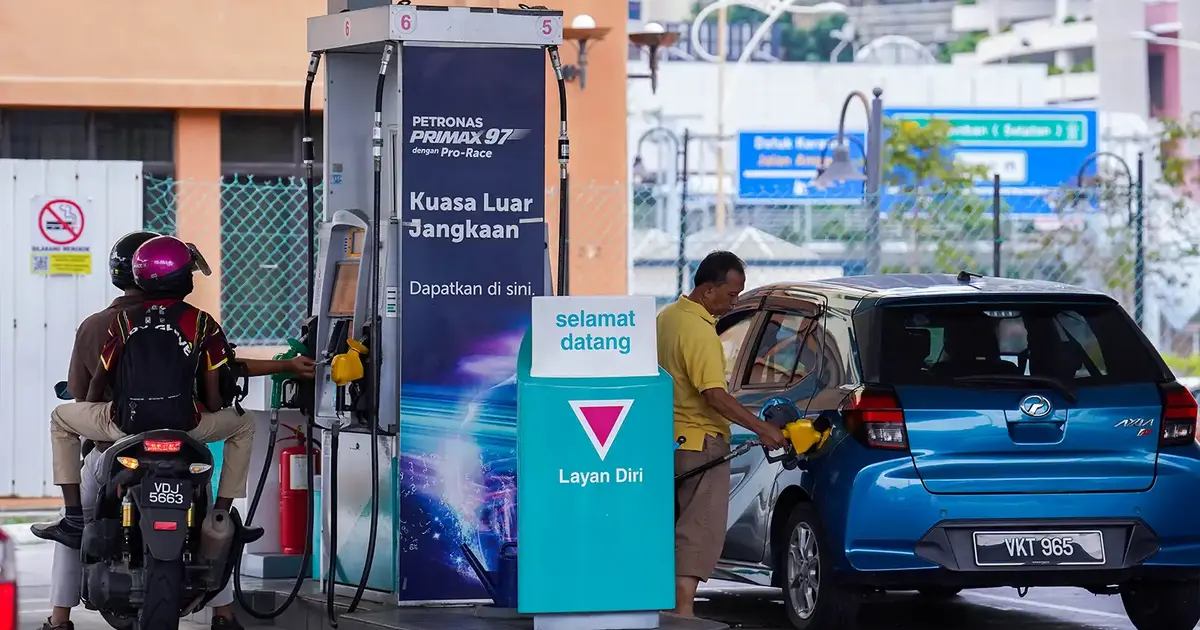
Malaysia faces mounting pressure on its fiscal position as official projections indicate that fuel subsidies will consume approximately RM40 billion from the national budget during 2026. The substantial figure underscores the ongoing financial strain that petroleum price supports place on government finances, a challenge that has persisted as crude oil markets remain volatile and global energy dynamics shift. Prime Minister Anwar Ibrahim sought to reassure the public and investors on this matter, emphasizing that Malaysia's domestic petroleum reserves and supply chains remain robust enough to meet domestic demand without disruption.
The RM40 billion subsidy burden represents a critical consideration in broader fiscal planning discussions, as this single expenditure category now rivals or exceeds several other major budget allocations across health, education, and infrastructure sectors. This concentration of resources toward price stabilization reflects the political sensitivity surrounding fuel costs in Malaysia, where petroleum products remain central to household budgets, transportation networks, and industrial operations. The government has historically used subsidies as a mechanism to shield citizens and businesses from international price shocks, though this approach carries substantial hidden costs that accumulate year after year.
Anwar's statements regarding petroleum supply adequacy are significant given recurring concerns about Malaysia's long-term hydrocarbon resources. While the nation remains a significant energy producer within Southeast Asia, production has faced gradual decline over the past decade as aging fields require substantial investment in enhanced recovery techniques. Maintaining the current export volumes while ensuring sufficient domestic supply requires careful resource allocation and strategic infrastructure investment. By publicly confirming supply stability, the Prime Minister sought to head off potential anxieties about energy security that could unsettle both domestic and foreign business confidence.
The projected subsidy cost arrives at a time when Malaysia's fiscal trajectory has drawn intense scrutiny from rating agencies, investors, and regional economists. Budget deficits have narrowed in recent years following austerity measures and revenue enhancement initiatives, yet substantial structural spending commitments remain difficult to curtail without triggering social and political backlash. Fuel subsidies occupy a particularly sensitive position because their removal or significant reduction directly affects consumer purchasing power, transportation costs, and business competitiveness across the economy.
International crude prices will ultimately determine whether the RM40 billion estimate proves accurate or conservative. Should global energy markets experience disruption—whether from geopolitical tensions, production constraints, or demand surges—actual subsidy costs could exceed projections substantially. The government's fiscal planning therefore carries inherent uncertainty tied to factors largely beyond its control, necessitating contingency reserves and flexible budgeting approaches.
Malaysia's experience with fuel subsidies mirrors broader challenges across the developing world, where governments attempt to reconcile genuine affordability concerns with fiscal sustainability. Several neighboring economies have pursued targeted subsidy programs that prioritize lower-income households while allowing higher-income earners to face closer-to-market prices. Such approaches theoretically reduce overall expenditure while maintaining a social safety net, though implementation complexity and political resistance have limited their adoption in Malaysia to date.
The energy sector's centrality to Malaysia's economy extends beyond fuel subsidies into upstream development, downstream refining, and petrochemicals production. Companies operating across these segments depend on policy consistency and transparent regulatory frameworks. Uncertainty regarding subsidy levels affects their investment decisions and profitability calculations, particularly for downstream operators who must navigate margins squeezed between regulated consumer prices and unsubsidized input costs.
Regional implications of Malaysia's subsidy trajectory warrant consideration, as neighboring nations monitor pricing decisions that influence cross-border trade and regional energy economics. Should Malaysia maintain aggressive subsidization while competitors implement targeted approaches, resource allocation efficiency diverges across ASEAN, potentially affecting competitiveness in energy-intensive manufacturing and logistics sectors that depend on fuel costs.
Looking forward, policymakers face a strategic choice between accepting escalating subsidy commitments or gradually implementing price reform measures that gradually align domestic prices with international benchmarks. Previous attempts at fuel price adjustments have encountered significant public resistance, suggesting that any future reform would require substantial political capital and extensive public communication regarding long-term fiscal necessity. Anwar's emphasis on supply adequacy suggests that the government's immediate priority centers on assuring continuity rather than confronting the underlying economics of subsidization.
The RM40 billion projection serves as a stark reminder that Malaysia's energy policy cannot remain isolated from broader fiscal realities. As global energy transitions accelerate and renewable alternatives develop, maintaining hydrocarbon-dependent subsidies represents both a growing economic burden and a policy position increasingly misaligned with global decarbonization trends. Strategic planning for the post-subsidy era, while politically fraught, grows more urgent with each fiscal year.

