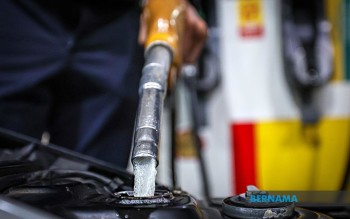
The government faces a potential monthly subsidy burden of RM3.5 billion for fuel products if international crude oil prices stabilise around US$90 per barrel, according to projections outlined by Deputy Finance Minister Liew Chin Tong in parliament this week. The breakdown shows RON95 petrol subsidies consuming approximately RM2 billion monthly, while diesel support would drain another RM1.5 billion from public coffers under such price conditions. These figures underscore the significant fiscal pressure that elevated global crude costs place on Malaysia's energy subsidy regime, an ongoing challenge for policymakers seeking to balance social welfare with budgetary discipline.
Despite the substantial subsidy commitments, Liew reassured parliament that the country's overall fiscal position remains robust and that current fiscal projections have not been revised downward. This optimism stems partly from Malaysia's position as a petroleum-producing nation, which generates offsetting revenue when international oil prices rise. The government benefits from higher crude export earnings, creating a natural hedge against subsidy increases. According to the deputy minister, each US$1 increase in crude oil prices translates into approximately RM300 million in additional government revenue, a dynamic that partially mitigates the escalating fuel support costs.
The fiscal relationship between subsidy expenditure and petroleum revenues illustrates a delicate balance embedded within Malaysia's economic structure. While consumer-facing fuel prices remain capped through subsidies—a politically sensitive intervention that shields households and businesses from price volatility—the government simultaneously captures windfall gains from selling crude oil internationally. This mechanism means that moderate oil price increases may not severely destabilise public finances, provided prices do not accelerate dramatically beyond current projections. However, the sustainability of this approach depends critically on maintaining export volumes and avoiding scenarios where oil prices climb sharply, potentially overwhelming the revenue offsets.
Looking ahead to the second half of the year, the government has indicated that fiscal circumstances will be reassessed when Prime Minister Datuk Seri Anwar Ibrahim tables the 2027 Budget in October. At that juncture, updated projections will reflect prevailing macroeconomic conditions, allowing the administration to adjust fiscal targets or spending priorities if crude oil dynamics shift significantly. This forward-looking approach suggests the government is neither complacent about subsidy risks nor locked into inflexible fiscal positions, retaining flexibility to recalibrate policy as circumstances warrant. The October budget presentation will likely serve as a critical moment for signalling whether subsidy policies require adjustment or whether the government remains confident in current trajectories.
For Malaysian consumers and businesses, the subsidy structure provides a degree of price protection that distinguishes Malaysia from many regional peers. Nations without significant petroleum revenues must either import fuel at global prices or absorb subsidy costs entirely through general taxation and borrowing. Malaysia's oil and gas wealth affords the government greater room to cushion domestic fuel costs, a capacity that underpins social stability and competitive production costs for industries dependent on energy inputs. Small and medium enterprises, particularly those in transport, manufacturing, and agriculture, benefit from suppressed fuel costs that might otherwise compress margins. However, this protection comes with fiscal opportunity costs, as resources devoted to subsidies cannot be deployed toward infrastructure, education, or other developmental priorities.
The discussion in parliament also touched upon targeted subsidy schemes, particularly the BUDI Diesel programme serving East Malaysia. Pickup truck owners in Sabah and Sarawak have received additional quota allocations of 100 litres through streamlined application procedures, reflecting government willingness to tailor support mechanisms toward specific economic groups and regional contexts. This targeted approach differs from blanket subsidies, potentially enhancing efficiency by directing assistance toward identified sectors or demographics. The deputy minister indicated openness to expanding such schemes where specific cases demonstrate legitimate need, suggesting the government views subsidy policy through a lens of operational flexibility rather than rigid uniformity.
Regional considerations underpin much of the subsidy policy discussion, particularly concerning East Malaysian states where diesel plays a larger role in transportation and agricultural economies. The BUDI scheme explicitly recognises that Sabah and Sarawak operate with different economic structures and infrastructure conditions than peninsular Malaysia, necessitating differentiated support mechanisms. Pickup trucks, essential for rural and semi-urban operations throughout East Malaysia, merit particular consideration in quota calculations. This regionalised approach acknowledges that fuel subsidy policy cannot adopt one-size-fits-all design without sacrificing effectiveness or equity across Malaysia's diverse geography.
The RM3.5 billion monthly subsidy figure, while substantial, must be contextualised within Malaysia's broader fiscal framework and the economy's size. Federal government revenues exceed RM300 billion annually, meaning that even peak subsidy costs represent a manageable proportion of overall spending, albeit a significant one. The challenge lies not in absolute unsustainability but in opportunity costs and longer-term fiscal trajectory. As demographic change accelerates Malaysia's ageing population, pressures on healthcare and pension spending will intensify, competing with subsidy commitments for budgetary resources. Policymakers must therefore consider whether fuel subsidies represent the most efficient use of public resources or whether gradual transition toward market-based pricing, coupled with targeted cash transfers to vulnerable groups, might enhance overall fiscal outcomes.
Southeast Asian neighbours offer instructive comparisons regarding fuel subsidy management. Some regional economies have pursued gradual desubsidisation combined with safety-net programmes protecting lower-income households, while others maintain comprehensive subsidy regimes. Malaysia's hybrid approach—blanket subsidies for fuel products combined with targeted enhancements in specific sectors and regions—reflects pragmatic recognition that abrupt subsidy removal risks political backlash and economic disruption. The incremental pathway Liew's remarks suggest, with ongoing reassessment and potential adjustment through budget cycles, represents a middle ground between subsidy entrenchment and precipitous reform.
Ultimately, the trajectory of international crude oil prices will determine whether the RM3.5 billion monthly subsidy projection becomes reality or whether lower prices provide fiscal relief. The government's confidence in maintaining fiscal targets despite subsidy pressures rests on petroleum revenue offsets, a dependency that underscores Malaysia's continued reliance on hydrocarbon resources. This structural reality shapes long-term policy options, particularly as global energy transitions gather momentum and fossil fuel demand patterns potentially shift. For Malaysian policymakers, balancing immediate subsidy sustainability with longer-term fiscal modernisation and economic diversification remains an ongoing tension that budget cycles and parliamentary discourse will continually revisit.

