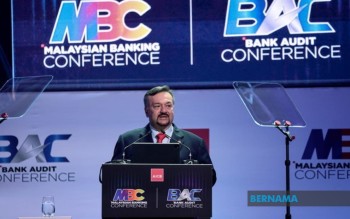
The future of Malaysia's financial system will hinge not on technology alone, but on how effectively the banking industry can marry algorithmic intelligence with human wisdom. This was the central message delivered by Minister of Finance II, Datuk Seri Amir Hamzah Azizan, during his keynote address at the Asian Institute of Chartered Bankers (AICB) Nexus 2026 Conference held in Kuala Lumpur on July 8. His remarks signal a deliberate policy shift away from purely tech-driven transformation, reflecting growing recognition that regulatory bodies and financial institutions across Southeast Asia must prioritise people alongside systems.
The minister's intervention comes at a pivotal moment for the region's banking sector, which faces mounting pressure to embrace automation, machine learning and algorithmic decision-making. While these technologies promise efficiency gains and cost reduction, Amir Hamzah's message addresses a critical anxiety: that wholesale reliance on artificial intelligence without corresponding investment in human capital could undermine the trust and integrity that underpins the financial system. His argument rests on a straightforward but often overlooked premise—that a banking network is only as strong as the judgment and ethical grounding of the people who manage it, regardless of how sophisticated the underlying technology becomes.
Central to the minister's vision is the concept of institutional resilience. Financial systems, he argued, require far more than robust regulation, adequate capital reserves and cutting-edge technological infrastructure. They need people capable of navigating complexity with discernment and moral clarity. This perspective challenges the prevailing narrative in many financial centres, where artificial intelligence is frequently positioned as a panacea for operational challenges. Instead, Amir Hamzah proposes a more nuanced model in which human beings retain responsibility for strategic decisions, ethical oversight and the exercise of judgment in situations where rules-based systems cannot account for every variable.
The minister articulated a particularly important point about competitive advantage in banking. Institutions that distinguish themselves in the coming years will not necessarily be those boasting the most advanced technological infrastructure. Rather, success will depend on cultivating workforces capable of stewarding complex systems while maintaining integrity under pressure. This reorientation away from pure technological competition toward human capability development has significant implications for Malaysia's banking talent pipeline. It suggests that educational institutions, professional bodies and employers must collectively elevate investment in skills development, ethical training and leadership preparation.
Amir Hamzah explicitly positioned the AICB as a crucial conduit for building banking sector capability at scale. Through its professional standards, qualifications, leadership development programmes and industry platforms, the organisation facilitates the creation of a workforce characterised by competence, adaptability and trustworthiness. This institutional role has become more critical as Malaysian banks expand across Southeast Asia and compete for talent and market share against regional and global players. The AICB effectively functions as a quality assurance mechanism, ensuring that professional standards remain consistent and credible across the industry.
A striking aspect of the minister's address was his articulation of shared responsibility across multiple stakeholders. He explicitly acknowledged that government, regulators, industry participants and professional bodies each bear responsibility for building a future-ready banking system, and that no single entity can succeed in isolation. This framing acknowledges the complex interdependencies within Malaysia's financial ecosystem and suggests a collaborative governance model. It also implies that transformation cannot be mandated top-down but requires alignment across institutions with different mandates, incentives and capabilities.
The minister drew attention to a foundational principle that should transcend all technological advancement: service to customers conducted with integrity. This seemingly simple statement carries profound implications. It suggests that as banking processes become increasingly automated and as artificial intelligence assumes greater decision-making authority, the sector must retain an explicit commitment to human welfare and ethical conduct. Without this anchoring principle, technology risks becoming a tool for extraction or exploitation rather than genuine service. For Malaysian consumers and small businesses reliant on banking services, this commitment to integrity represents a critical safeguard.
The timing of this message reflects broader regional concerns about artificial intelligence governance. As Southeast Asian economies embrace digital finance and open banking architectures, questions about algorithm transparency, bias mitigation and accountability have become more pressing. Malaysia, which has positioned itself as a fintech hub and Islamic finance centre, faces particular imperatives to demonstrate that its banking sector can harness technological innovation while maintaining the ethical standards expected of Islamic banking practices and consumer protection obligations.
Implementing the vision outlined by Amir Hamzah will require concrete measures. Malaysian banks will need to establish training pathways that develop both technical and ethical capabilities. Regulators must establish frameworks that hold institutions accountable not just for technological compliance but for the quality of human judgment exercised by decision-makers. Professional bodies like the AICB must enhance their standards to encompass the unique challenges posed by artificial intelligence governance. Educational institutions must redesign banking and finance curricula to include machine learning literacy alongside ethics and professional conduct.
The minister's emphasis on human capital also carries economic importance for Malaysia. As regional competition for banking talent intensifies, nations that successfully cultivate skilled, trusted professionals will attract investment and retain institutional competitiveness. Malaysia's advantage lies not in competing to become the most technologically advanced financial centre—a competition where larger economies with deeper capital resources possess inherent advantages—but in building a reputation for institutions staffed by capable, principled professionals who can manage complexity responsibly.
For regional observers, Amir Hamzah's remarks signal that Southeast Asian financial policymakers are thinking seriously about governance frameworks that accommodate technological change without abandoning foundational principles of accountability and human agency. As artificial intelligence becomes increasingly embedded in credit decisions, trading algorithms, fraud detection and customer service systems across the region, this humanistic counterbalance becomes ever more essential. The minister's message essentially proposes that Malaysia's banking sector can lead not by moving fastest, but by moving most thoughtfully—combining innovation with stewardship, efficiency with ethics, and technological capability with human wisdom.

