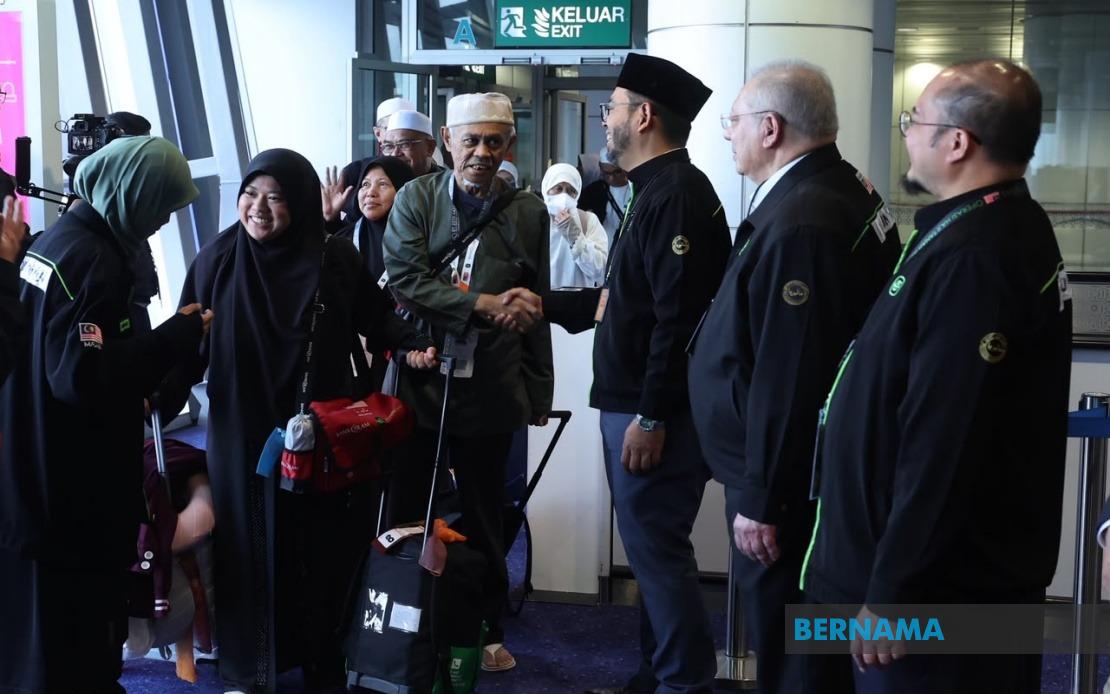
The journey home for Malaysia's haj pilgrims concluded today as 258 pilgrims of the final batch landed safely at Kuala Lumpur International Airport at 12:10 pm, marking the official end of the country's 1447H/2026 haj season operations. The Malaysia Airlines flight MH 8385 departed from Madinah late on Tuesday evening, completing a haj campaign that officials characterised as proceeding smoothly despite considerable headwinds from the ongoing conflict in West Asia and the resulting security concerns that affected travel throughout the region.
Minister in the Prime Minister's Department (Religious Affairs) Dr Zulkifli Hasan received the returning pilgrims and formally declared the haj season's conclusion before members of the press. He underscored the significance of having successfully deployed and returned all pilgrims in good health, framing the achievement as a collective accomplishment rooted in careful planning and inter-agency coordination. The minister's remarks reflected the government's relief that no Malaysian pilgrims faced complications or health emergencies that would have marred what has become an increasingly sensitive operation given geopolitical tensions affecting the Arabian Peninsula and pilgrimage routes.
The acknowledgment of regional instability carries particular weight for Malaysian policymakers and religious authorities. The Middle Eastern conflict has created unpredictable conditions for the estimated two million Muslims who undertake the haj pilgrimage annually. Malaysia, as a significant contributor to this global movement, faced the dual challenge of maintaining its reputation for excellence in haj management while navigating logistical complications arising from heightened security measures, potential flight disruptions, and heightened anxiety among pilgrims and their families. That the country achieved its objectives under such circumstances demonstrates the resilience of its haj administration apparatus.
A defining marker of this season's success came with Malaysia's receipt of the Labbaikum Diamond Award, the highest recognition bestowed by Saudi Arabia's Ministry of Haj and Umrah for world-class haj management and pilgrim services. This accolade places Malaysia among an elite group of nations recognised for excellence in administering the spiritual journey of its citizens to Islam's holiest sites. The award carries significance beyond ceremonial recognition; it validates the operational systems, personnel training, and logistical frameworks that Tabung Haji (TH) and allied government agencies have built over decades of managing one of the world's largest annual Muslim pilgrimages from a single nation.
Deputy Minister Marhamah Rosli and Tabung Haji Chairman Tan Sri Abdul Rashid Hussain joined Dr Zulkifli in welcoming the final flight, underscoring the multi-institutional nature of Malaysia's haj operations. The presence of senior leadership across religious affairs, the sovereign wealth fund managing haj finances, and related portfolios demonstrated the whole-of-government commitment required to execute this complex undertaking. These institutions collectively oversee visa processing, accommodation arrangements in Saudi Arabia, health screening, logistics coordination, and post-pilgrimage support for nearly 230,000 Malaysian haj pilgrims who departed throughout the season.
Dr Zulkifli extended gratitude to the diverse ecosystem of agencies and service providers whose contributions made the smooth operation possible. This encompassed Tabung Haji's staff, the Health Ministry's medical personnel, Malaysia Airlines and other carriers, the Immigration Department, and private logistics firms. The enumeration of these entities reflects the reality that haj operations function as a complex supply chain requiring seamless coordination between government bodies, state-owned enterprises, and commercial partners. Any breakdown in this coordination network risks jeopardising pilgrim safety and Malaysia's international standing.
A critical factor in the season's success, according to officials, resided in the discipline and commitment demonstrated by Malaysian pilgrims themselves. This characterisation acknowledges that successful haj management extends beyond administrative efficiency; it fundamentally depends on pilgrim conduct, compliance with health protocols, adherence to safety procedures, and mutual respect among the diverse cohorts sharing accommodation and transportation in Saudi Arabia. Tabung Haji's intensive pre-departure preparation courses, which have become increasingly comprehensive, appear to have cultivated the necessary awareness and behavioural standards among departing pilgrims.
The preparation infrastructure that proved effective this season included enhanced educational programming delivered before departure, implementation of the MyNIISe digital system for streamlined visa management, provision of improved physical amenities including sofa beds and superior tent accommodation in the holy sites, and crucially, round-the-clock bus services connecting major mosques with residential facilities. These refinements translate abstract administrative improvements into tangible enhancements to the pilgrimage experience, reducing fatigue-related incidents and health complications while simultaneously improving pilgrim satisfaction and their ability to focus on the spiritual dimensions of their journey.
Even as the current season closed, Malaysian authorities immediately initiated institutional learning processes designed to capture lessons and identify enhancement opportunities for future operations. Tabung Haji commenced post-mortem evaluations and reviews, a systematic approach to continuous improvement that has become standard practice in mature haj administration systems. This forward-looking orientation recognises that no single haj season represents perfection, and that each deployment generates valuable intelligence regarding operational weaknesses, evolving pilgrim needs, and potential innovations in service delivery.
The National Haj Muzakarah conference, scheduled for August, will convene stakeholders across government, religious leadership, Tabung Haji management, and potentially pilgrims and their representatives to deliberate systematically on emerging challenges and proposed enhancements for future campaigns. This consultative mechanism ensures that improvement initiatives emerge from collective reflection rather than top-down directives, and that diverse perspectives inform the evolution of Malaysia's haj management frameworks. Such institutional dialogues have become increasingly important as pilgrimage challenges evolve, including climate impacts on the Arabian Peninsula, demographic shifts in Malaysia's pilgrim population, and shifting geopolitical circumstances affecting travel safety and regional stability.
For Malaysia's broader engagement with the Muslim world and its positioning within Southeast Asia, successful haj operations carry symbolic importance beyond the immediate religious domain. Nations demonstrating excellence in haj management enhance their soft power and deepen their relationships with Saudi Arabia and other Gulf states. Simultaneously, the capacity to deliver world-class pilgrim services reinforces Malaysia's credentials as a functioning Islamic state that takes its religious responsibilities seriously, a positioning that resonates across Muslim-majority Southeast Asia and contributes to the country's regional influence and diplomatic relationships.
The safe return of this final batch and the successful conclusion of the 1447H season provide Malaysian pilgrims and their families with profound relief and satisfaction. For policymakers and religious authorities, the achievement represents validation of their institutional investments and operational strategies, even amid challenging external circumstances. Looking ahead, the systematic evaluation processes already underway will shape the contours of next year's campaign, ensuring that Malaysia's haj administration continues to evolve in response to emerging challenges while maintaining the standards of excellence that have earned international recognition and the trust of Malaysian Muslims undertaking one of Islam's central obligations.

