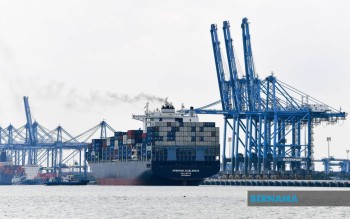
Malaysia's economic prospects for 2026 have brightened considerably, with leading investment institutions projecting substantially accelerated export growth driven by resilient demand across technology-intensive industries. RHB Investment Bank has lifted its full-year export growth estimate to 21.7 per cent, representing a substantial revision upward from its earlier prediction of 15.3 per cent. This optimism reflects Malaysia's outperformance through the opening months of 2026, when exports expanded at the impressive rate of 27.5 per cent, providing the analytical foundation for the upgraded projection.
The revision underscores how strongly Malaysia's strategic positioning in global supply chains—particularly within semiconductor manufacturing and electrical and electronics production—continues to deliver tangible economic benefits. The broader technology upcycle, coupled with sustained corporate investments in artificial intelligence infrastructure, has created a favourable external environment for Malaysian exporters. Rather than relying on a single commodity or sector, the economy's diversified export base has proven resilient in capturing demand across multiple growth vectors simultaneously.
Quantifying the benefits flowing through to the national accounts, the trade surplus ballooned to RM83.9 billion during the second quarter of 2026, a dramatic reversal from the comparatively modest RM15.3 billion surplus recorded in the corresponding period of 2025. This substantial improvement in net exports will provide meaningful upward pressure on gross domestic product calculations for the quarter, strengthening Malaysia's aggregate growth trajectory at a critical time when many regional economies face cyclical headwinds.
The electrical and electronics sector deserves particular attention as the growth engine driving these forecasts. Global semiconductor consumption remains on an upward trend, sustained by parallel waves of investment in cloud computing infrastructure, data centre expansion, electric vehicle platforms, and industrial automation technologies. These are not temporary demand spikes but represent structural shifts in how businesses and consumers deploy technology, suggesting that the tailwinds benefiting Malaysian exporters possess longevity extending well into the latter part of this decade.
MBSB Investment Bank's parallel analysis broadly validates this optimistic narrative, projecting export expansion of 18.9 per cent for 2026 compared with last year's more modest 6.6 per cent growth. The methodology differs somewhat, with MBSB emphasizing the joint contribution of technology products alongside commodity-related goods, particularly petroleum and liquefied natural gas. This complementary perspective highlights that Malaysia's export strength is not narrowly concentrated but distributed across both value-added manufactured goods and natural resource-based products, a combination that provides natural hedging against sectoral disruptions.
Yet beneath this buoyant surface lie genuine vulnerabilities requiring active management and monitoring. Geopolitical tensions, should they persist or intensify, carry the capacity to disrupt the very supply chains that currently support Malaysian export performance. Similarly, oil price dynamics remain unpredictable, and any sustained elevation in crude costs would cascade through global production systems, raising manufacturing expenses and potentially eroding the competitiveness of Malaysian producers operating on relatively thin margins in competitive global markets.
Both investment banks acknowledge the significance of protectionist trade pressures emanating from major economies, with the United States presenting particular concern given its pivotal role in global commerce and its current policy trajectory. Heightened tariff regimes or non-tariff barriers could redirect demand flows away from Malaysian suppliers or force supply chain reconfiguration that disadvantages regional producers. The technology sector's global integration means that disruptions anywhere in production networks reverberate throughout, creating cascading effects that could rapidly undermine the growth assumptions underlying current forecasts.
The import side of Malaysia's trade equation also warrants consideration, with MBSB projecting import growth of 13 per cent for 2026 compared with 6.0 per cent in 2025. This acceleration reflects robust domestic economic activity and strengthening investment momentum within Malaysia itself. Historically, rising import demand alongside export expansion signals healthy internal consumption and capital accumulation, though it also indicates growing reliance on external inputs for sustaining growth—a dynamic that exposes the economy to supply disruption risks and cost inflation pressures.
June 2026 trade data released by the Statistics Department provides empirical validation of the momentum analysts are projecting forward. Overall trade volume expanded 44.7 per cent to RM340.9 billion compared with June 2025, with exports climbing 45.4 per cent to RM177.9 billion and imports rising 43.9 per cent to RM163.0 billion. The trade surplus surged 64.9 per cent to RM14.9 billion, demonstrating that Malaysia's export machine is not merely performing to expectations but substantially exceeding them across recent months.
For Malaysian policymakers and business strategists, these developments carry important implications. The current favourable external environment provides a window of opportunity to pursue deeper economic diversification, strengthen upstream capabilities in semiconductor design and engineering, and invest in human capital to secure competitive advantages should global demand eventually soften. The investment banks' confidence rests substantially on technology sector fundamentals, but that sector's competitiveness requires continuous innovation and talent development to withstand inevitable cycles.
Regionally, Malaysia's export strength conveys particular significance given that several Southeast Asian neighbours face more challenging external conditions. As regional supply chains reorganize in response to geopolitical and trade policy shifts, Malaysia's proven capacity to attract foreign investment and manufacture sophisticated products positions it favourably for capturing additional production capacity flowing away from higher-cost or geopolitically riskier locations. The next two years will prove critical in determining whether Malaysia can convert this cyclical advantage into structural economic gains.

